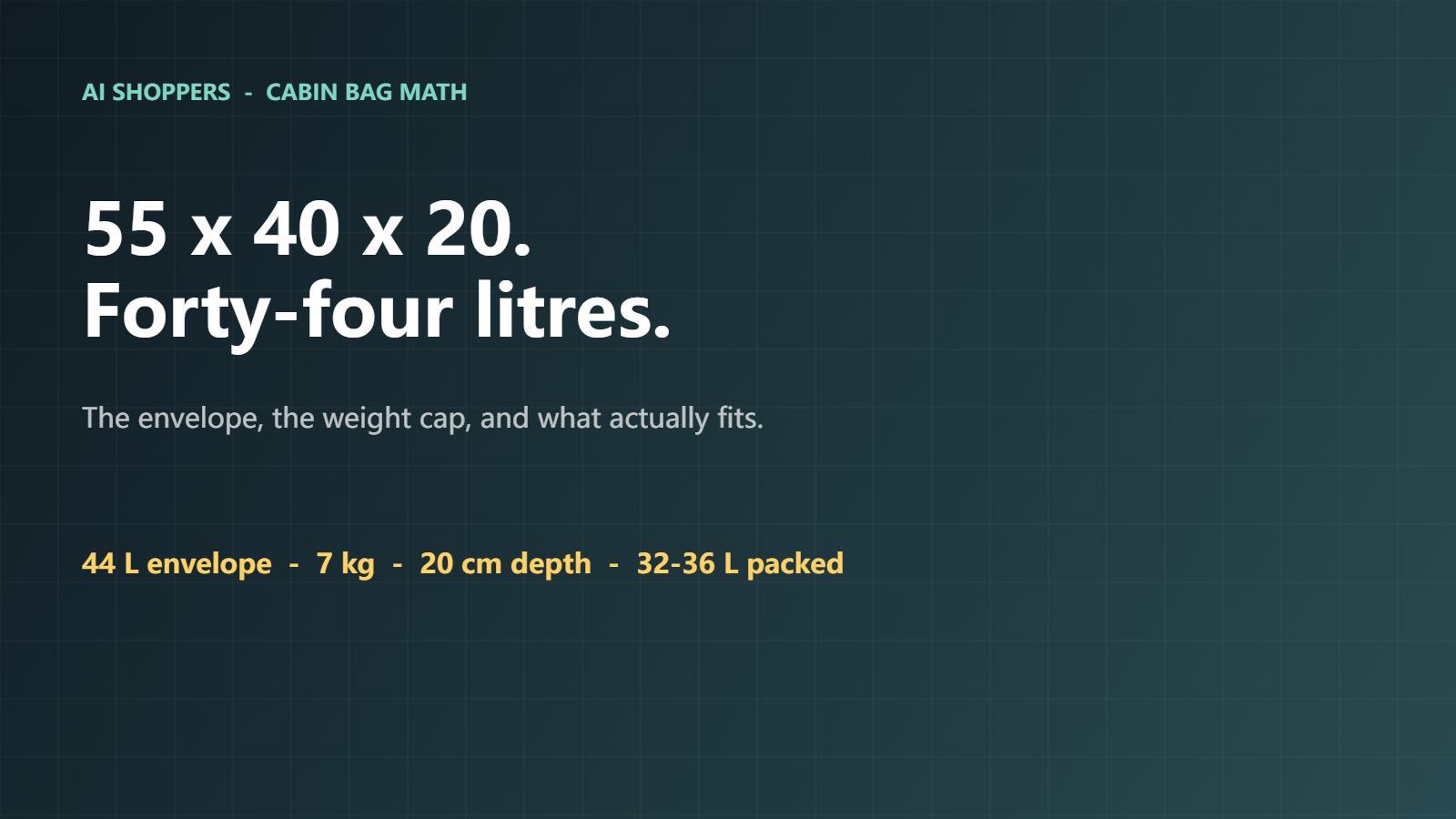
Airline cabin allowances are written as three numbers, and almost nobody packs against them. A typical limit is 55 x 40 x 20 cm plus a 7 kg weight cap – about 44 litres of envelope, less than a 40-litre backpack once handles and wheels are counted. The result is a bag that passes the scale and fails the sizer frame, usually at the gate, usually on the return leg when it is fullest.
1. The three numbers, and what they exclude
55 x 40 x 20 cm is the external envelope including wheels, handles and any pocket that bulges. A 40-litre roller often measures 55 x 40 x 23 cm empty – already 3 cm over on depth before packing. Soft bags compress; hard shells do not. That single difference decides whether you pass a sizer frame at the gate.
2. Volume versus envelope
The envelope is 44 litres (55 x 40 x 20 = 44,000 cm3). A bag claiming 40 litres fills 91% of that envelope when packed solid – and real packing leaves 15-20% air. Practically, a cabin bag holds 32-36 litres of belongings, which is why the same bag feels full at 6 kg.
3. What the weight cap does to the packing list
| Item | Weight | Volume | Verdict |
|---|---|---|---|
| 40 L roller, empty | 2.6-3.2 kg | 44 L envelope | Eats 40% of a 7 kg cap |
| 40 L soft backpack, empty | 1.1-1.5 kg | compresses to 18 cm | Best volume per kilo |
| Laptop 14 inch | 1.2-1.5 kg | 4 L | Half the soft-bag advantage |
| Five days of clothes | 2.5-3.0 kg | 18-22 L | Fits, with one laundry stop |
| Toiletries in 100 ml bottles | 0.8-1.0 kg | 4 L | The 1 L clear bag limit applies |
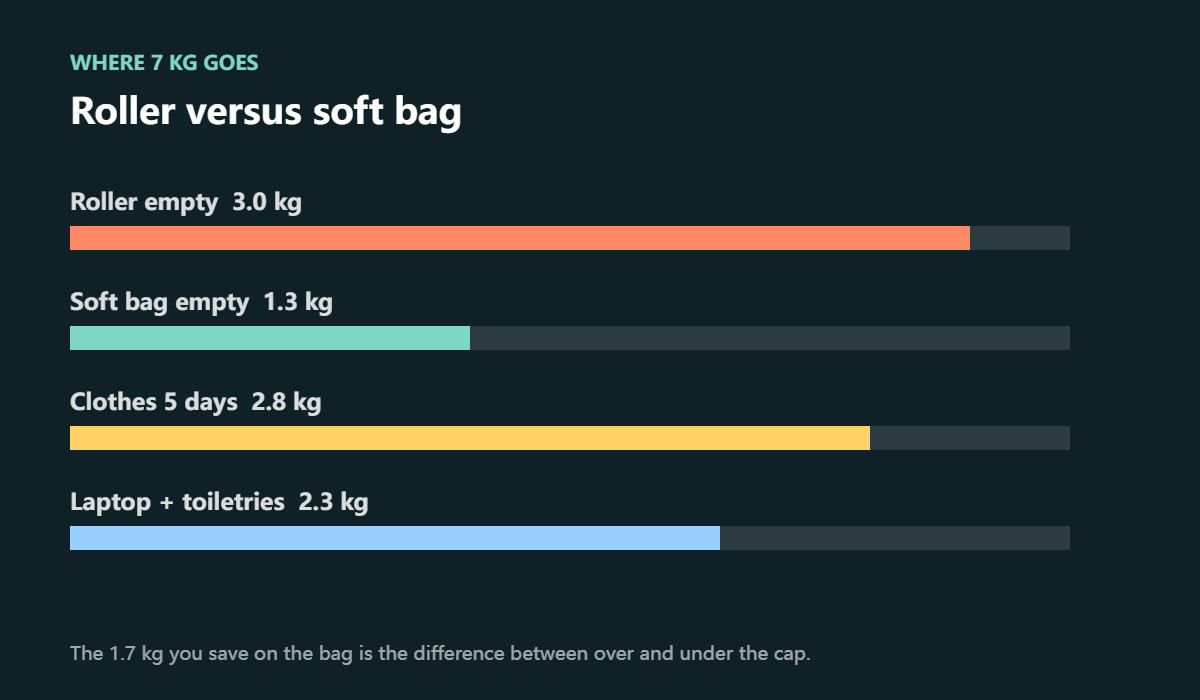
Add those up for a roller: 3.0 empty + 1.4 laptop + 2.8 clothes + 0.9 toiletries = 8.1 kg. Over the cap before shoes, chargers or a coat. Swap to a 1.3 kg soft bag and the same load is 6.4 kg – inside the limit, with room for a charger.
4. Depth is the number that fails
Sizer frames measure the smallest dimension hardest. A bag at 20 cm empty bulges to 23-24 cm when packed, because the front pocket is not structural. Soft bags with compression straps pull back to 20 cm; rigid shells cannot. If your bag has a laptop sleeve on the outside, assume it adds 2-3 cm.
5. Packing to the envelope, not to the volume
Pack flat against the 55 x 40 face rather than filling the depth. A 20 cm depth holds two layers of folded clothes (each about 8-9 cm compressed) plus a 2 cm pouch. Anything thicker – shoes, a hairdryer, a hardback book – has to go in the corners, where the envelope is wasted anyway.
6. The 7 kg cap in practice
Seven kilograms is generous for clothes and brutal for electronics. One laptop plus charger is 1.8 kg; a camera adds 0.9 kg; a power bank 0.2 kg. That leaves 4 kg for everything else, which is five days of clothes and a toiletry bag, not a week. The cap effectively forces a choice between devices and outfits – decide before you pack, not at the airport.
7. Soft versus hard, by trip type
Short trips with a laptop: soft bag, 1.2-1.5 kg, compression straps. Trips where the bag gets checked at the gate: hard shell, because it survives being thrown. Trips with fragile items: hard shell plus internal padding, and accept the 3 kg empty weight. There is no bag that is light, protective and compressible at once; pick the two that matter.
8. The sizer frame test at home
Build a 55 x 40 x 20 cm box from cardboard and pack the bag as you would for the trip. If it does not slide in without force, it will not pass at the gate. This test takes ten minutes and has saved more gate fees than any packing cube.
9. What the second bag rule allows
Most carriers allow one cabin bag plus one personal item (40 x 30 x 10 cm, about 12 litres). That personal item is where the laptop and the toiletry bag belong – which frees 5-6 litres and 2 kg from the main bag. Using both allowances properly is worth more than buying a bigger bag.
10. Five checks before you fly
- Measure the empty bag, including wheels: it should be under 55 x 40 x 20.
- Weigh it empty; anything over 1.8 kg is eating your allowance.
- Pack to the flat face, not the depth.
- Put the laptop in the personal item if the carrier allows one.
- Test the packed bag in a cardboard frame before leaving.
11. What to buy, in order
First a soft bag at 1.1-1.5 kg with compression straps. Second a flat organiser that fills a 4 cm layer instead of bulging depth. Third a 12-litre personal item that fits the laptop. Fourth a luggage scale – 200 g, and it prevents the most expensive mistake in this article.
Frequently asked questions
Is 55 x 40 x 20 cm the standard cabin size?
It is the most common economy allowance, but carriers differ. Check the specific airline: some allow 56 x 45 x 25, low-cost carriers often allow less.
Does the weight limit include the bag itself?
Yes. The 7 kg cap covers the bag and everything in it, which is why an empty roller at 3 kg is such a handicap.
Do wheels and handles count in the dimensions?
Usually yes. Measure the bag as it stands, including wheels and any handle that does not retract flush.
What if my bag bulges at the gate?
Compression straps help, and wearing the heaviest layer helps more. A bag that cannot be compressed may be charged as checked baggage.
How many litres can I actually pack?
32-36 litres of belongings in a 44-litre envelope, because real packing leaves 15-20% air. A 40-litre bag does not hold 40 litres of clothes.
Honest disclosure: dimensions and weights are typical ranges for cabin bags and airline allowances; check your carrier’s current rules before flying.
Gear referenced in this guide
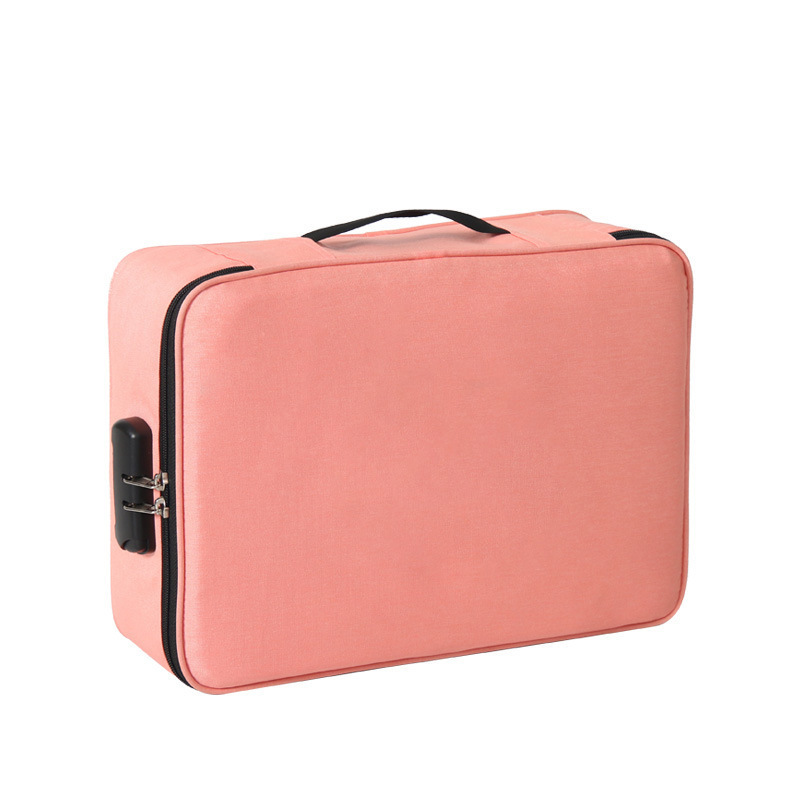
Cloth Card and Cosmetic Travel Organizer, 450 g
Fills a 4 cm layer, opens flat, and keeps the bag inside its depth limit.
$67.99
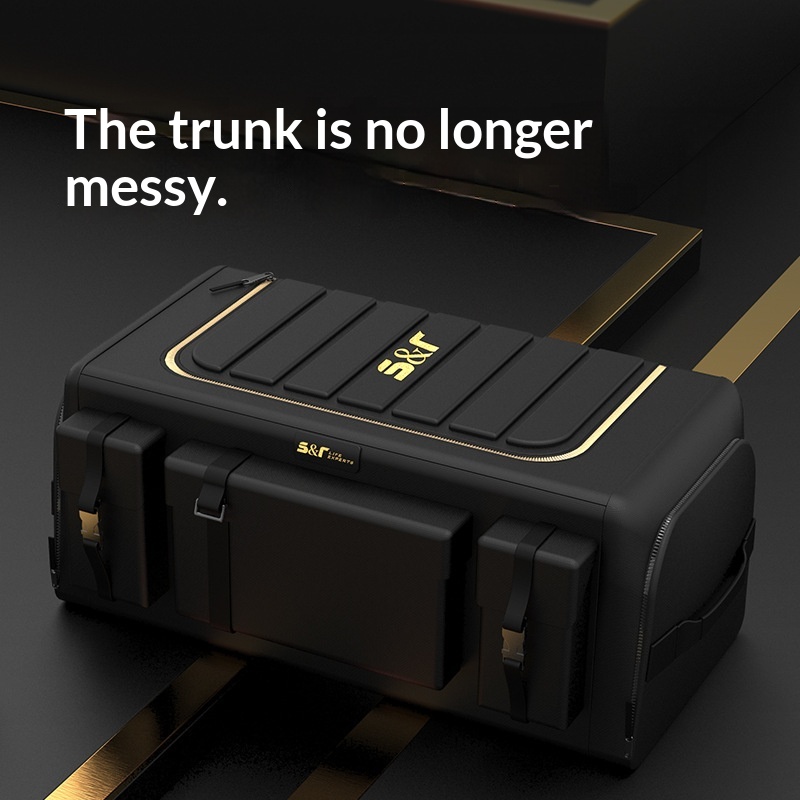
Folding Car Trunk Organizer Storage Box, 70 L Oxford
For the road-trip version of the same problem: one liftable box instead of four loose bags.
$65.99
Compare on Amazon — this category usually has more brands, sizes and price points there.
Check current prices on Amazon →
As an Amazon Associate we earn from qualifying purchases. The price you pay is unchanged. Disclosure