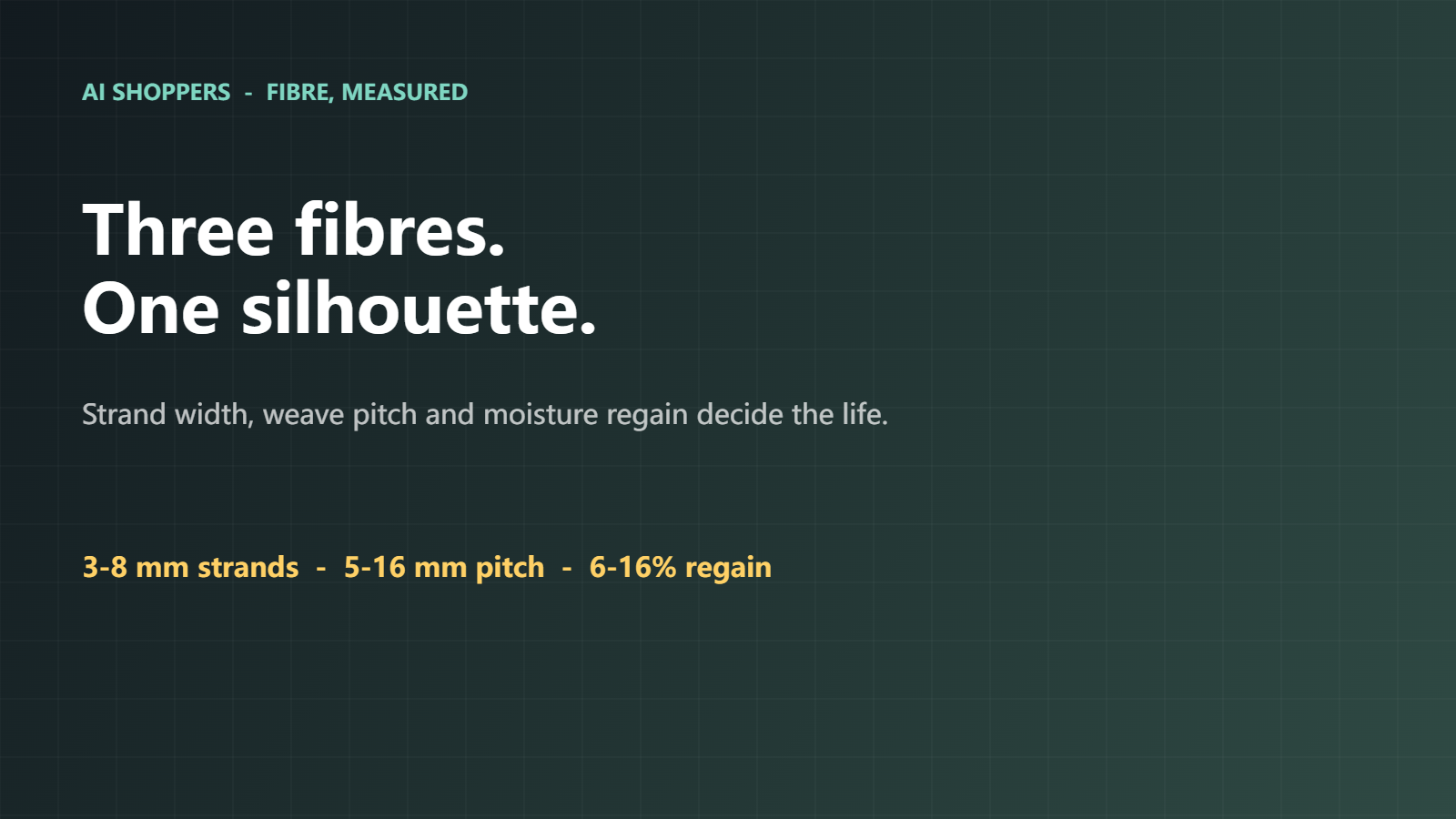
Natural-fibre storage looks like one category and behaves like three. A rattan basket, a seagrass basket and a paper-rope basket can share a silhouette and differ by a factor of three in price, by a factor of two in useful life, and completely in how they react to a damp bathroom. The differences are measurable: strand width, weave pitch, moisture regain, and the way the material behaves in the first eighteen months.
1. Strand width sets the scale
Rattan is a climbing palm, and the peeled core is split into strands typically 3-6 mm wide. Seagrass is a marine plant with thicker, coarser strands, often 5-8 mm, which is why seagrass baskets look chunkier and hold their shape with less framing. Paper rope is twisted paper, 2-4 mm, and it can be spun fine enough to imitate rattan from a metre away.
Strand width decides weave pitch: a 6 mm strand needs roughly 10-12 mm between centres to look right, a 3 mm strand packs at 5-6 mm. Denser pitch means more material, more weight and better shape retention – and it is the single best proxy for quality you can check by eye.
2. Weave pitch, measured on the shelf
| Material | Strand width | Typical pitch | Moisture regain | Fails at |
|---|---|---|---|---|
| Rattan (peeled) | 3-6 mm | 8-12 mm | 8-12% | Damp rooms, UV |
| Seagrass | 5-8 mm | 12-16 mm | 10-14% | Scratching, dry air |
| Paper rope | 2-4 mm | 5-8 mm | 6-9% | Water, heavy loads |
| Water hyacinth | 4-7 mm | 10-14 mm | 12-16% | Mould in humidity |
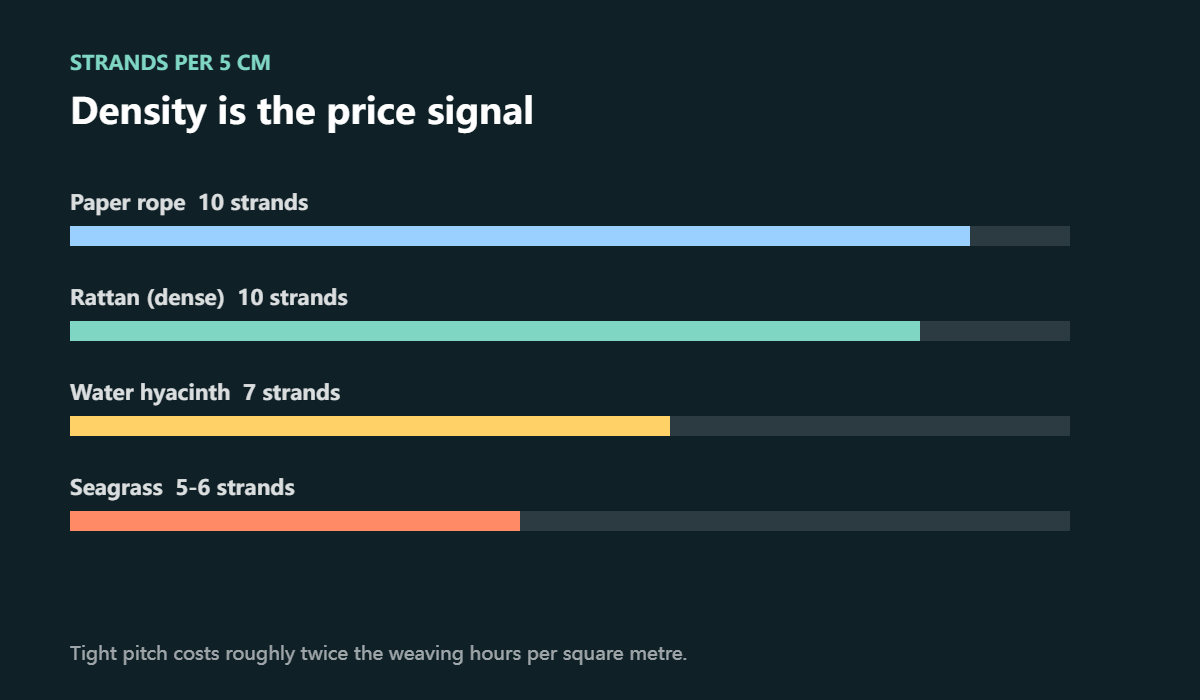
To measure pitch, hold a ruler against the basket and count how many strands fit in 5 cm. Ten strands in 5 cm is a 5 mm pitch – dense, slow to weave, expensive. Six strands in 5 cm is coarse and cheaper.
3. Why moisture regain matters more than looks
Moisture regain is how much water a fibre absorbs from the air at 65% relative humidity. Natural fibres sit between 6% and 16%; plastic is effectively zero. A fibre with 12% regain will swell and shrink with the seasons, which loosens the weave over time – a rattan basket that felt tight in winter can rattle in a humid July.
This is why the same basket performs differently in a bathroom and a bedroom. Above 60% relative humidity, mould risk rises sharply; a seagrass basket in a steamy bathroom will grow a grey bloom along the weave within a season.
4. The eighteen-month test
Three things happen in the first year and a half. Handles loosen as the fibre shrinks and stretches. The base takes a permanent set if the basket is loaded over about 8 kg. And the colour shifts: rattan yellows in sunlight, seagrass silvers, paper rope fades fastest because the ink sits on the surface rather than in the fibre.
5. What each material is actually good at
Rattan: the strongest of the three for its weight, holds shape well, takes a frame, and resists scuffing. Best for living-room storage and anything that gets dragged.
Seagrass: rigid and heavy, so it stands up empty – good for tall laundry baskets. Coarse strands scratch floors and snag knitwear; the base is usually the failure point.
Paper rope: the cheapest and the most uniform, which is why it is used for decorative sets. It is also the least water-resistant: a spilled glass leaves a permanent mark, and the weave softens under load.
6. Load capacity in practice
A 40 cm rattan basket with a proper frame carries 8-12 kg without distortion; the same size in paper rope starts to sag at 5-6 kg. Seagrass sits in between but is limited by the base, not the sides. If you plan to store books or tools, the frame and the base matter more than the weave.
7. The damp-room question
None of the three belongs in a bathroom. Above 60% humidity for hours a day, natural fibre is a mould substrate, and the weave traps water in exactly the places you cannot wipe. The correct answer for a wet room is plastic, coated metal or bamboo – and this is a case where the natural option is genuinely the wrong choice, not just a compromise.
8. How to check a basket in ten seconds
- Count strands in 5 cm: ten or more means dense weave.
- Press the base with a thumb: flex over 3 mm means a weak bottom.
- Look at the rim: a wrapped rim lasts; a cut-and-glued rim frays.
- Check the handle joints for glue squeeze-out – glued handles fail first.
- Smell it: a sharp chemical smell means a treatment you will be living with.
9. Price against weave density
At retail, a 40 cm basket in dense rattan (5-6 mm pitch) typically costs two to three times a coarse paper-rope version of the same size. Most of that is labour: hand weaving at a tight pitch takes roughly twice the hours per square metre. The material itself is a smaller share than buyers expect – which is why a cheap “rattan-look” basket and a real one can look identical in a photo and differ by years in service.
10. Care that actually extends life
Dust with a dry brush rather than a wet cloth – water drives fibre swelling. Keep baskets out of direct sun to slow yellowing. Once a year, wipe with a barely damp cloth and dry in shade for a full day before reloading. Never store a damp towel inside one.
11. When to choose plastic instead
If the basket lives in a bathroom, a kitchen beside a sink, or a garage, plastic wins on every measure that matters: zero moisture regain, wipeable, and no colour shift. The natural-fibre argument is about warmth and acoustics, not durability. Be honest about which one you are buying.
12. The summary in one line
Count the strands per 5 cm, press the base, and check the rim – density and construction predict lifespan better than the material name on the label.
Frequently asked questions
Is rattan more durable than seagrass?
For flexing and dragging, yes – rattan strands are stronger for their weight and take a frame better. Seagrass is more rigid but fails at the base and scratches floors.
Can I put a wicker basket in a bathroom?
Not recommended. Natural fibres take up 6-16% moisture and become a mould substrate above 60% humidity. Use plastic, coated metal or bamboo in wet rooms.
How much weight can a woven basket hold?
A framed 40 cm rattan basket carries 8-12 kg; paper rope sags at 5-6 kg. The base and frame matter more than the weave.
Why do baskets loosen over time?
Fibres swell and shrink with humidity, so the weave relaxes. Dense pitch and a wrapped rim slow this; repeated soaking accelerates it.
How can I tell real rattan from paper rope?
Look at the cut ends: rattan shows a solid, slightly porous core, paper rope shows a twisted sheet. Paper also feels lighter and has a uniform printed grain.
Honest disclosure: strand widths, pitches and moisture regain figures are typical industry ranges for these fibre types, not specifications for any single product.
Gear referenced in this guide
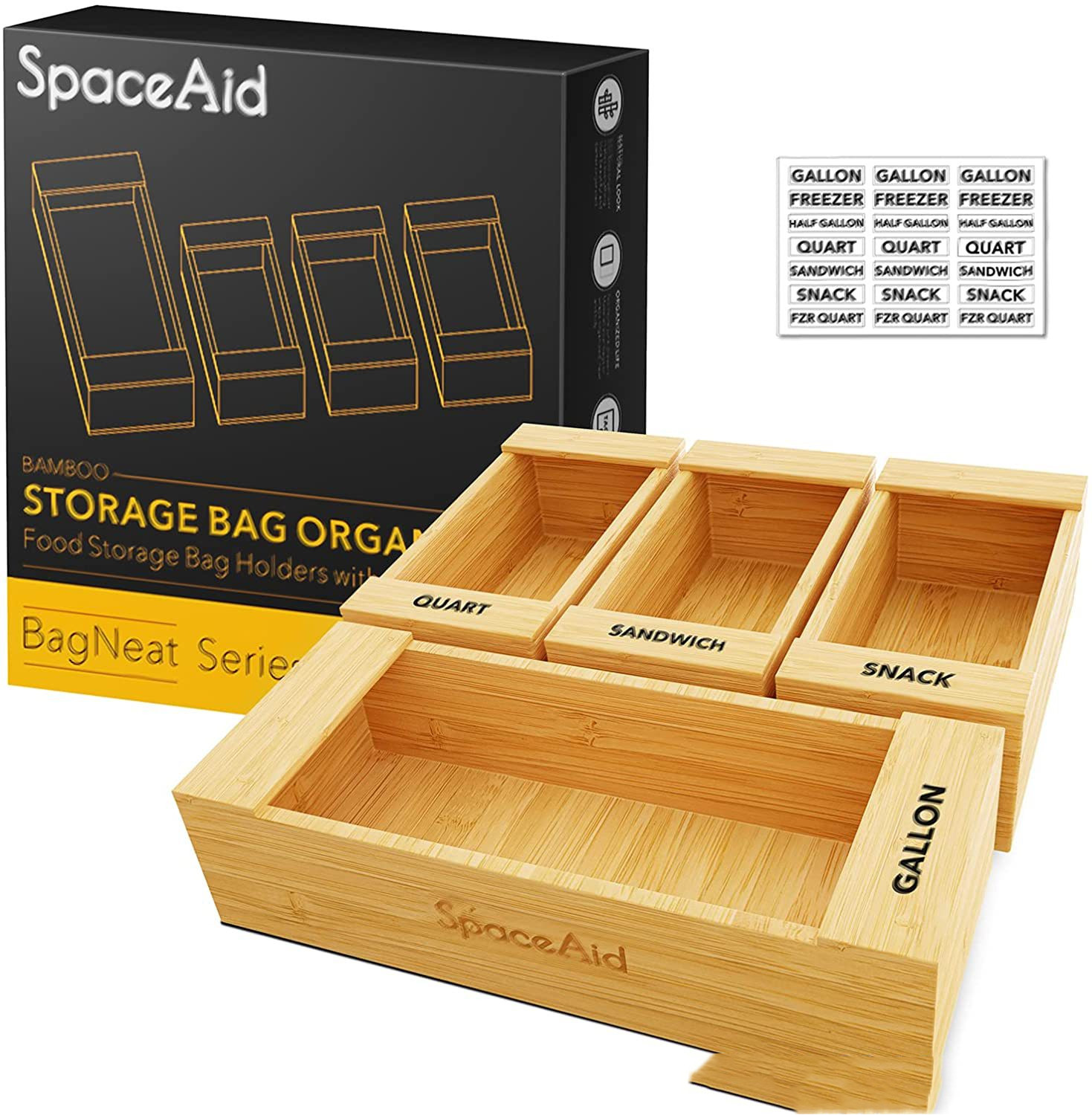
Bamboo Kitchen Drawer Organizer, Expandable
Milled bamboo: no weave to loosen, and a joint tolerance woven fibre cannot hold.
$54.99
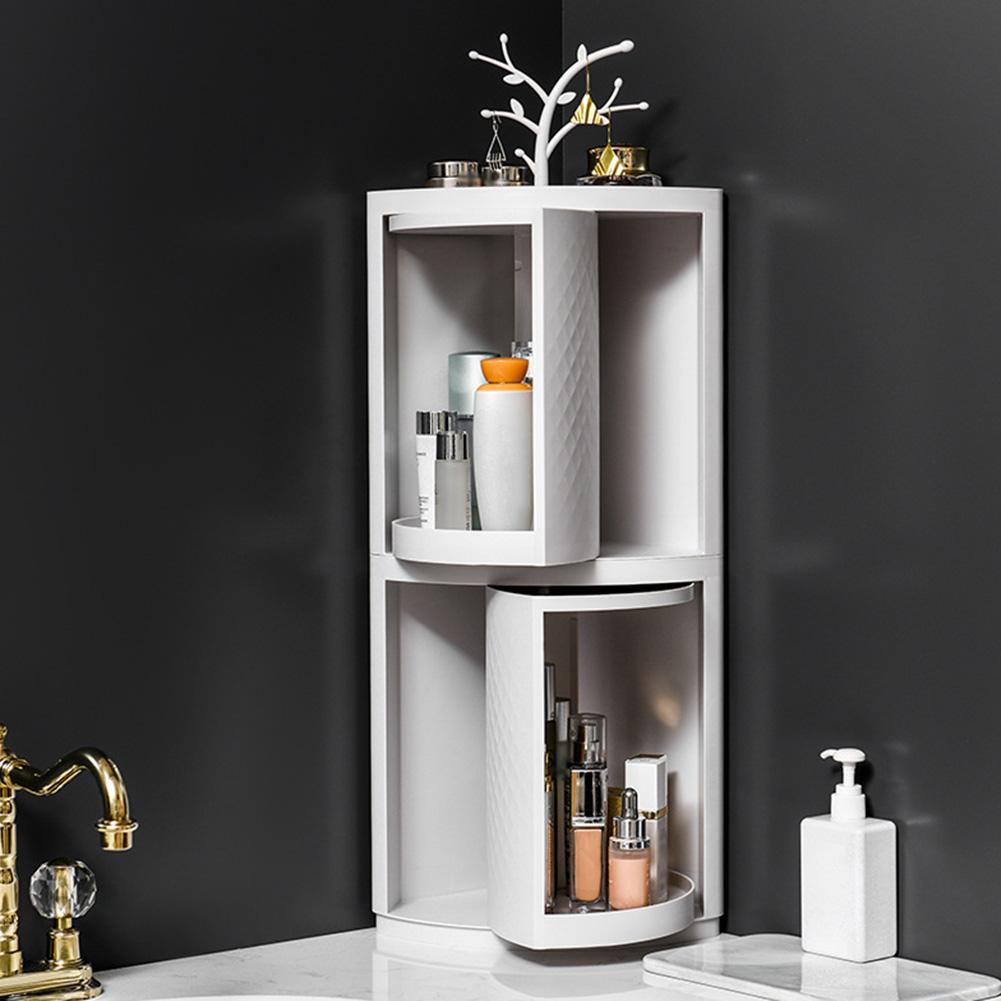
Rotatable Corner Bathroom Organizer, Wall-Mounted
For the wet room where no natural fibre belongs: PP, zero moisture regain.
$54.99
Compare on Amazon — this category usually has more brands, sizes and price points there.
Check current prices on Amazon →
As an Amazon Associate we earn from qualifying purchases. The price you pay is unchanged. Disclosure