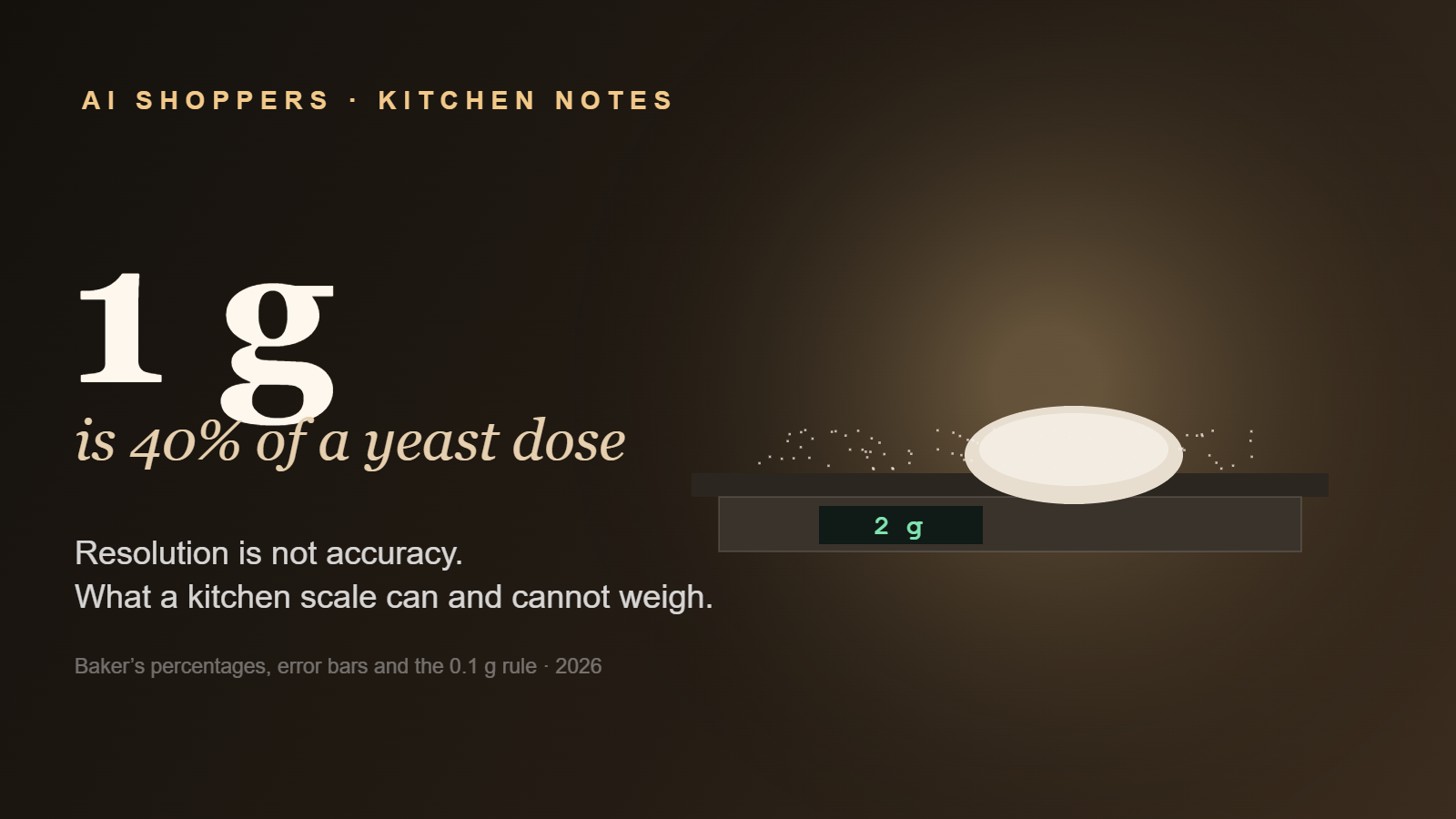
A kitchen scale that steps in 1 g is accurate enough for bread and useless for yeast. Both statements are true at the same time, and the reason is arithmetic rather than equipment quality: a display step is a fixed quantity, so its relative cost depends entirely on what you are weighing. One gram of flour in a 500 g batch is nothing. One gram of instant yeast in a 2.5 g dose is 40 percent of the ingredient.
Most baking advice treats scales as either good or bad. The useful question is narrower: at what weight does a 1 g step stop being negligible? That has an answer, and it fits on one page.
1. Resolution is not accuracy
Resolution is the smallest change the display can show. Accuracy is how close the reading is to the truth. A scale can display 1 g steps and still be off by 2 g at 500 g, because load cells drift with temperature, off-centre loads and cheap calibration. Factory specs often read something like ±(1 g + 0.1%), which at 500 g means a tolerance of about 1.5 g — larger than the step.
This matters because home bakers compare displays and assume the difference is precision. It is not. Two scales both showing 1 g can disagree by 3 g at the same load, and neither is broken. What you can control is the step, and the step is what the rest of this article measures.
2. Baker’s percentages make the error visible
Professional baking measures everything as a percentage of flour weight. A standard lean dough at 500 g flour looks like this: water 70 percent (350 g), salt 2 percent (10 g), instant yeast 1 percent (5 g). Scale the batch down to 250 g flour and the yeast becomes 2.5 g — a weight smaller than the display step.
That is the trap. Recipes written in percentages scale cleanly; the scale does not. Halve the batch and the relative error on the smallest ingredient doubles.
3. The table
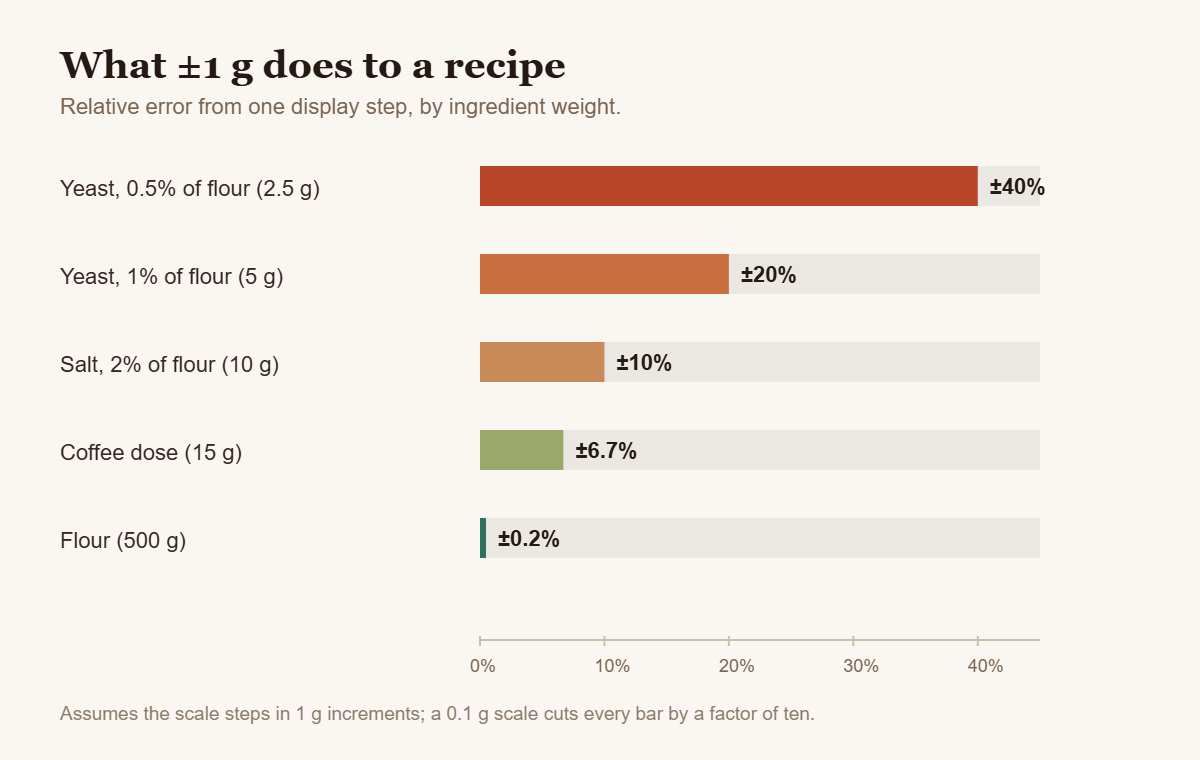
| Ingredient | Share of flour | Weight at 500 g flour | Error from a ±1 g step |
|---|---|---|---|
| Instant yeast | 0.5% | 2.5 g | ±40% |
| Instant yeast | 1% | 5 g | ±20% |
| Salt | 2% | 10 g | ±10% |
| Coffee dose | — | 15 g | ±6.7% |
| Bread flour | 100% | 500 g | ±0.2% |
The pattern is a hyperbola: halve the weight, double the relative error. Below about 5 g, a 1 g step is no longer a rounding detail — it is the difference between a 90-minute bulk ferment and a three-hour one, because yeast quantity drives timing more than any other variable in a lean dough.
4. The 0.1 g rule
Anything weighed under 5 g belongs on a 0.1 g scale. That covers yeast, salt for small batches, baking powder, citric acid, espresso dose correction and sourdough starter inoculations. A 0.1 g scale is cheap, small, and complements rather than replaces a kitchen scale: the big one handles flour and water, the small one handles the ingredients where one step equals twenty percent.
The alternative, if you only own a 1 g scale, is to weigh a larger multiple and divide. Ten grams of yeast dissolved in 100 g of water gives a solution where 10 g of liquid carries roughly 0.9 g of yeast — messy for a home kitchen, but it is the standard workaround in small test batches.
5. Tare, and the error you add yourself
Tare is not a luxury feature; it is what stops cumulative error. Weighing flour, then taring, then water, then taring again keeps every measurement independent. Weighing everything into one bowl without taring — or worse, guessing the bowl weight — adds a separate error of 50–300 g depending on the bowl, which dwarfs the 1 g discussion entirely.
Two practical habits: put the bowl on the scale before switching it on so the zero is real, and never trust a scale that powers off mid-recipe. Auto-off timers of 60–120 seconds are common and will silently reset your cumulative total.
6. Coffee is the same arithmetic with better margins
A 15 g espresso dose with a 1:16 ratio needs 240 g of water. One gram on the dose is 6.7 percent, which is roughly the difference between a 25-second and a 29-second shot — noticeable but survivable. One gram on 240 g of water is 0.4 percent, invisible. So the dose matters far more than the brew water, and it is exactly where a 1 g step is borderline.
For pour-over at 15 g per 250 g, the same logic applies: control the dose to ±0.5 g with a 0.1 g scale, and let the water go where it wants.
7. What actually matters when buying
Capacity first: 5 kg handles a mixing bowl, a stockpot and a bag of flour. Resolution second: 1 g is right for a general kitchen scale, 0.1 g for a pocket scale. Platform size third: a 15 × 15 cm platform with a 20 cm bowl is unstable, and instability reads as drift. Then repeatability — put the same 100 g weight on three times and check the display does not wander. Tare and a hold function matter more than any extra unit conversions.
Finally, ignore the marketing phrase “high precision”. Ask for the step and the tolerance separately. If the listing gives only one number, it is the step.
8. Where 1 g genuinely does not matter
Hydration is the clearest case. A dough at 70 percent hydration on 500 g of flour needs 350 g of water; shifting that by 1 g moves hydration by 0.2 percentage points, which no baker can feel. Even a 10 g error — a splash too much — moves it by 2 points, and most flours absorb within a range of several points depending on protein content and age.
Batch size decides which errors matter. Double the recipe and the yeast goes to 10 g, where a 1 g step is 10 percent; double it again and the same step is 5 percent. This is why small test batches are harder to reproduce than full ones, and why a bakery can hold a formula that a home baker cannot: the equipment is identical in kind, but the quantities are 20 times larger, so every display step counts 20 times less.
A useful rule of thumb that follows from the table: keep any ingredient you care about above 20 times the display step. On a 1 g scale that means 20 g — which is exactly why salt at 10 g is borderline and yeast at 5 g is not.
Frequently asked questions
Is a 1 g kitchen scale accurate enough for bread?
For flour, water and salt at 2 percent or more, yes. For yeast under 5 g, no — the relative error exceeds 20 percent. Use a 0.1 g scale for anything below 5 g.
Why does my scale read differently after taring twice?
Mostly load-cell drift and off-centre loading. Place the bowl in the same spot each time, let the scale settle for a second, and avoid taring repeatedly without removing the load.
Does a 5 kg scale lose precision at low weights?
Not necessarily, but many do: the same load cell covering 5,000 steps has coarser behaviour near zero. Check repeatability at 5 g, not just at 500 g.
Can I convert grams to cups instead?
You can, but volume measures of flour vary by 20 percent or more depending on scooping. Weight is the only reproducible option; that is why baker’s percentages are written in grams.
What is the single best upgrade for a home baker?
A 0.1 g pocket scale, if you already own a decent 1 g kitchen scale. It fixes the only measurement where one step is a large fraction of the ingredient.
Honest disclosure: the error figures are arithmetic from a 1 g display step and standard baker’s percentages, not lab tests of any specific scale. Your scale’s accuracy tolerance is a separate number — check the manual.
Gear referenced in this guide
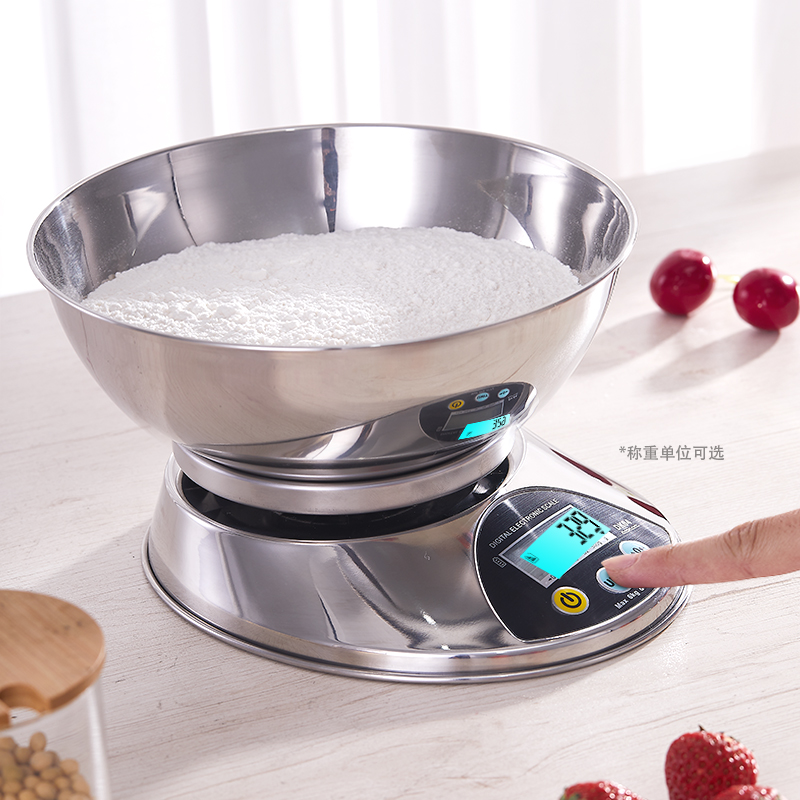
Stainless Steel Kitchen Scale with Tempered Glass Platform
1 g steps, tare, tempered glass platform — the workhorse for flour, water and portioning.
$72.99
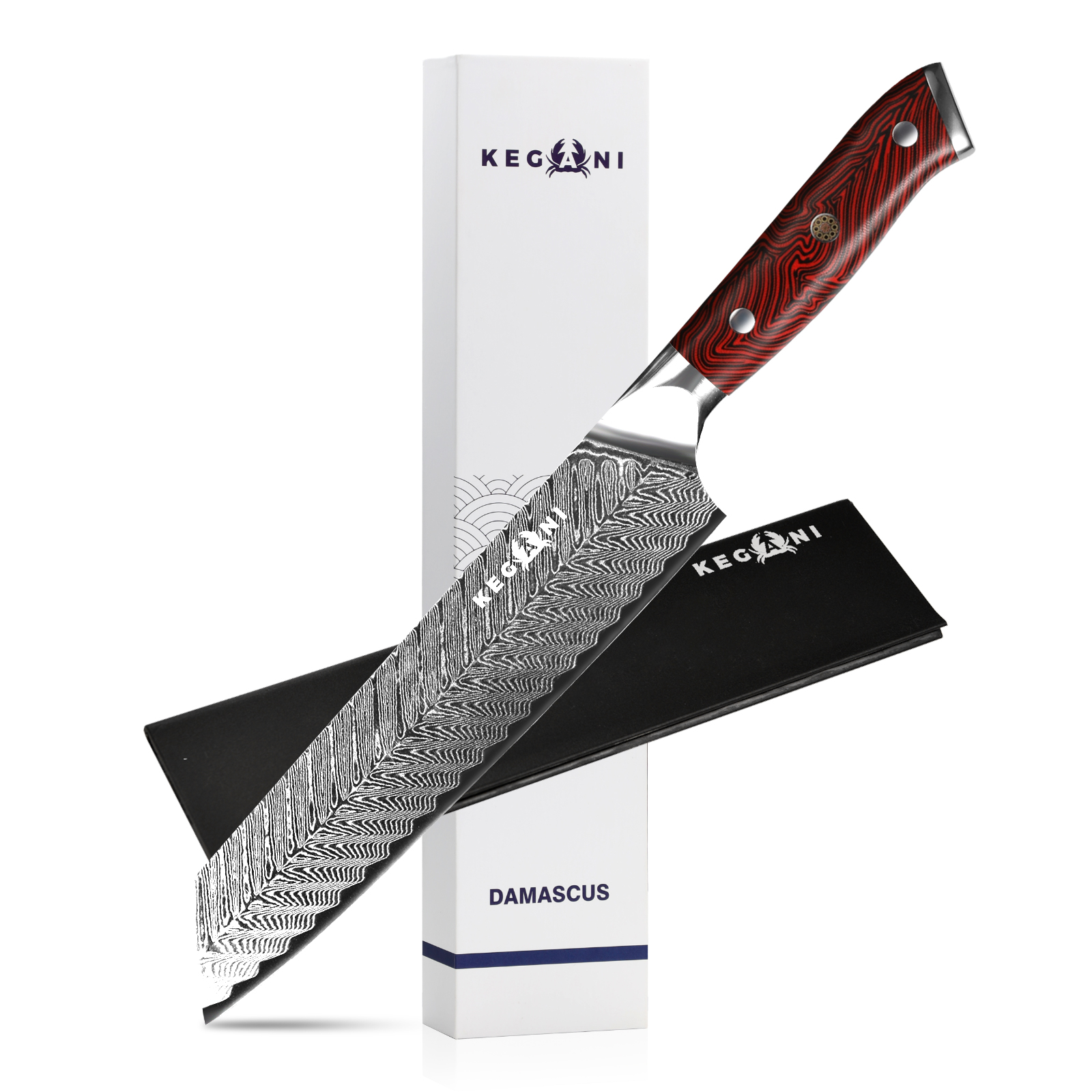
7 Inch Damascus Meat Cleaver, 73 Layers AUS-10 Steel
73 layers, 7 inch blade: the kind of tool where mass distribution matters more than specs on a page.
$102.99
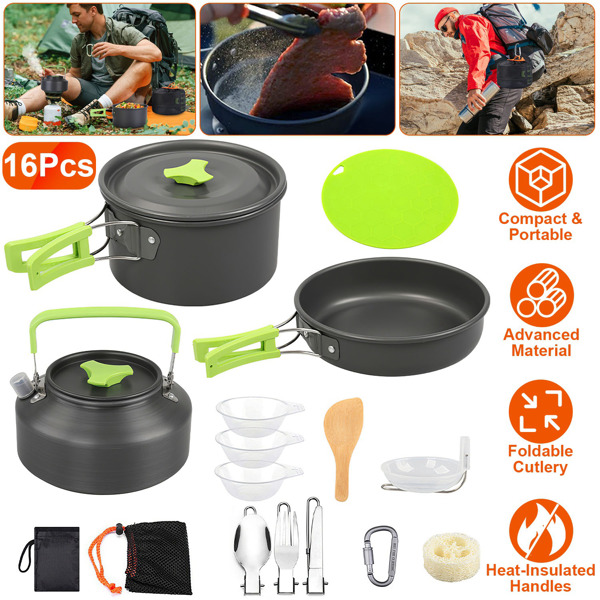
16 Piece Camping Cookware Set, Outdoor Cooking Kit
16 pieces for outdoor cooking — where approximate weights are usually good enough, and portion size is not.
$93.99
Compare on Amazon — this category usually has more brands, sizes and price points there.
Check current prices on Amazon →
As an Amazon Associate we earn from qualifying purchases. The price you pay is unchanged. Disclosure
[…] what a 1 g scale can and cannot measure, and why 60 percent humidity is the number that matters […]