Most packing advice is a list of things to buy. The useful version is arithmetic. A carry-on is a fixed box with two limits — a volume and a weight — and you will hit one of them long before you have filled the other. Here is where the litres actually go, which items compress and which simply break, and the order to pack in so that the bag closes on the first attempt.
Start with the box, not the clothes
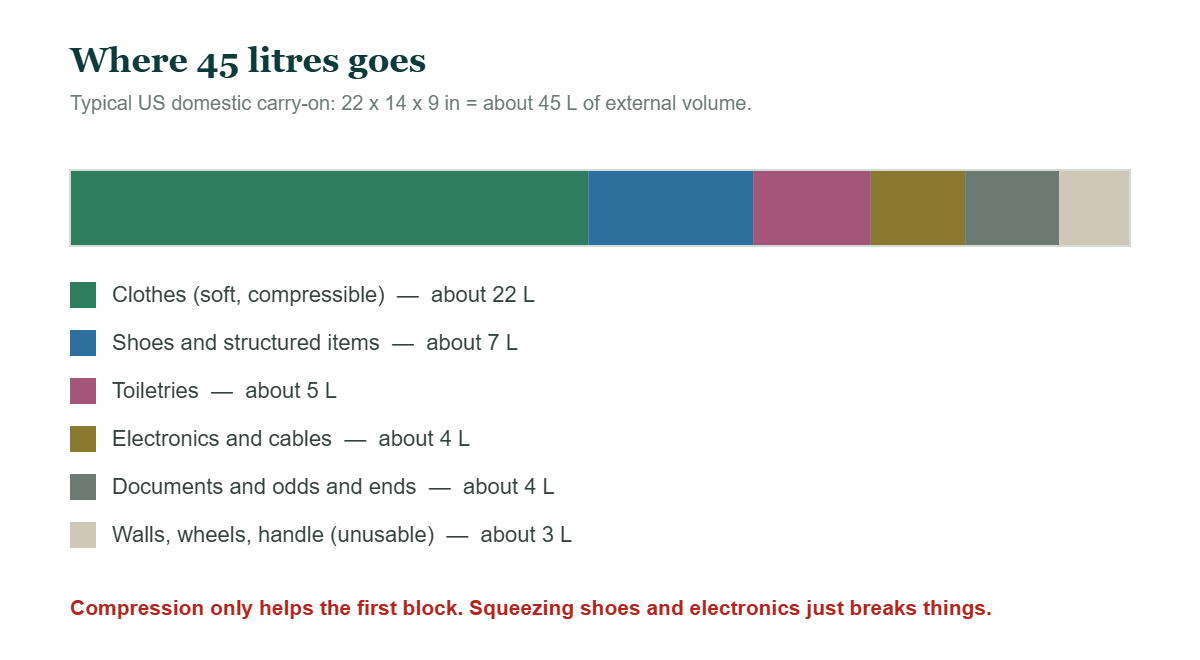
The size most US domestic carriers quote for a carry-on is 22 by 14 by 9 inches. Multiply it out and you get about 2,772 cubic inches, which is roughly 45 litres of external volume. That is the number on the outside of the bag.
The number you can actually use is smaller. A typical soft-sided bag loses two to five litres to the liner, the wheel housings and the handle channel, so plan around 40 usable litres rather than 45. Hard-shell cases with the wheels inside the footprint lose a little less; the trade is that a hard shell does not give when you sit on it.
Weight usually binds before volume
Here is the awkward part. Forty litres of clothing weighs somewhere between eight and ten kilograms, depending on how much of it is cotton. Many carriers cap a cabin bag at seven to ten kilograms, and they weigh it at the gate rather than at check-in, which is why the expensive surprises happen at the boarding door.
So the question is not “will it fit”, it is “which one runs out first”. For a weekend of soft clothes, volume runs out first. For five days of denim and trainers, weight does. Fill the bag, then stand on a bathroom scale with it before you leave the house — that one measurement answers both questions and costs nothing.
Packing cubes organise. They do not compress.
A cube set is the most misunderstood item in the category. Fabric cubes do not remove air; they group things so that the gaps between them get used. A rolled cube of t-shirts occupies almost exactly the volume of the t-shirts, the difference being that the rest of the bag can be filled with something else instead of bulging around loose clothing.
Where cubes genuinely earn their space is on arrival. You unpack a bag in one motion, you know which cube holds socks, and you stop excavating. Where they cost you space is a set that is larger than your bag, or a set of six where you needed three — the unused ones still travel with you.
What compresses, and what just breaks
Compression bags work by squeezing the air out of soft textiles. Roll-up versions are usually preferred for travel because they need no pump and open and reseal easily at a hotel; vacuum versions squeeze harder but need equipment and are awkward to repack.
| What you are packing | Typical volume saved | Worth compressing? |
|---|---|---|
| Fleece, knitwear, cotton t-shirts | About 30-50% | Yes |
| Down or padded jacket | About 50-60% | Once per trip, not every week |
| Jeans and heavy twill | About 10-20% | Barely worth the effort |
| Shoes | Effectively zero | No — stuff socks inside instead |
| Toiletries, bottles | Zero, and a leak risk | No |
| Cables, chargers, camera | Zero | No — pressure is how screens crack |
The pattern is simple: compression helps anything that is mostly air. It does nothing for anything that is mostly solid, and for a few things it is actively harmful.
The order to pack in
- 1. Weigh the empty bag. If it is already 2 kg, your weight budget is smaller than you think.
- 2. Heaviest items first, at the wheel end. It rolls better and stops the bag tipping.
- 3. Fill the shoes. Socks, chargers and a spare battery go inside the trainers — that is free volume.
- 4. Roll soft clothes, do not fold them flat. Rolls fill the gaps that flat folds leave.
- 5. Compress only the soft stack. Leave everything structured uncompressed and accessible.
- 6. Put the one thing you need at security on top. Laptop or liquids, whichever your airport wants out.
Numbers worth knowing before you fly
| Item | Typical figure | Why it matters |
|---|---|---|
| Carry-on footprint | 22 x 14 x 9 in (about 45 L) | The common US domestic size; sizers at the gate are unforgiving |
| Usable interior | About 38-42 L | Walls, wheels and handle eat the rest |
| Cabin weight cap | Often 7-10 kg, varies by carrier and fare | The limit most people actually exceed — always check your own ticket |
| Liquid container | 100 ml / 3.4 oz per bottle | Applies to the bottle size, not how full it is |
| Clear liquids bag | About 1 L | One bag per passenger in most systems |
| Pair of trainers | 3-4 L | The single biggest item people forget to count |
Those figures are the commonly published ones and they change. Your carrier and fare class are the authority, and the sizer at the gate is the final appeal court. Treat the table as a planning tool, not a rulebook.
Frequently asked questions
Do compression bags damage clothes?
Soft cotton and fleece are fine. The items to keep out are down jackets you wear often, anything with a stiffened brim or structure, and anything with a hard shell.
Cubes or compression bags — which do I buy first?
Cubes, if you want order and fast unpacking. Compression bags, if you are trying to fit a specific pile of soft clothing into a bag that is slightly too small. They are not substitutes.
Why does my bag weigh too much when it looks half empty?
Because denim, shoes and electronics are dense. Volume and weight are independent limits, and dense items break the weight limit while the bag still has air in it.
Can I use vacuum bags without a pump?
Roll-up bags breathe the air out through a one-way valve and need no equipment. If you want true vacuum compression you need a pump or a vacuum cleaner, which is why roll-ups are the travel-friendly option.
How do I keep the bag closing easily on the way home?
Pack a flat tote in the lid. It weighs nothing, and it gives you somewhere to put the things you bought without fighting the zip at the airport.
Gear referenced in this guide
Three travel items from our own range that match the sections above. None of them is required — the arithmetic is free.
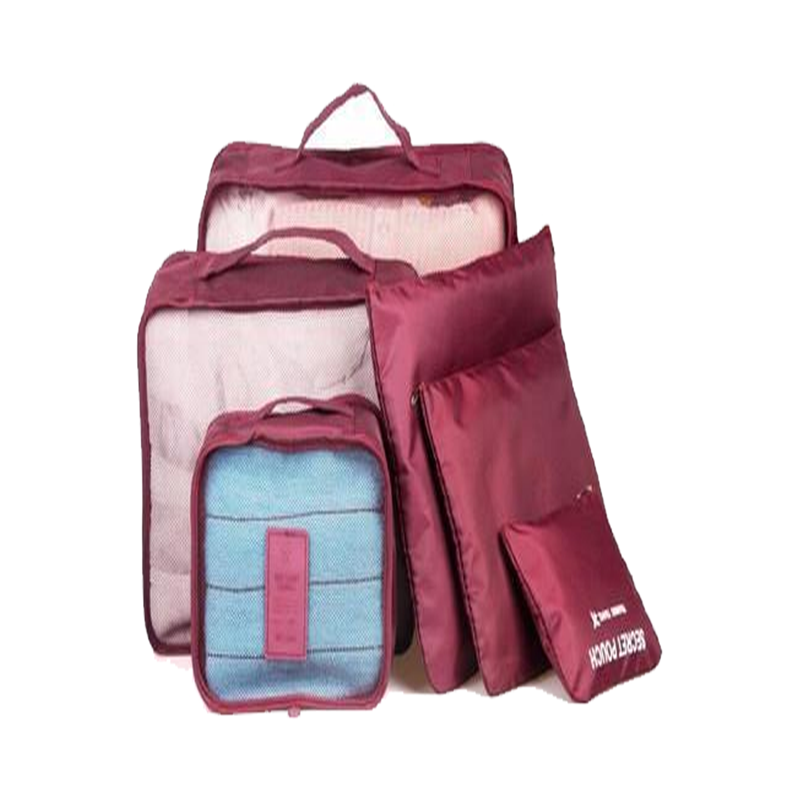 Portable Travel Luggage Packing Cubes Organizer Set (6 Pieces)$33.99View product
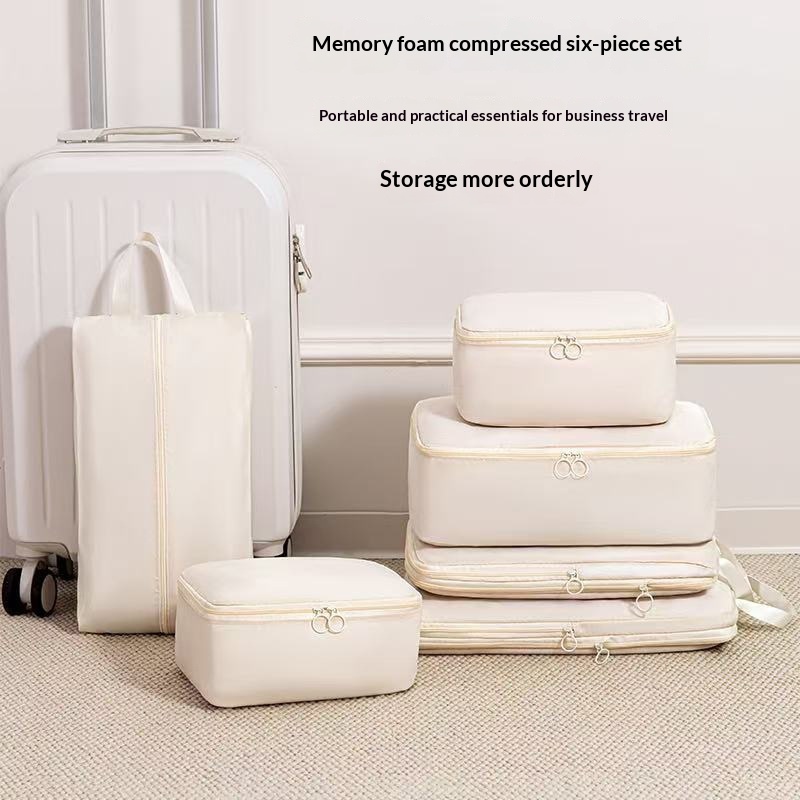 Compressible Travel Storage Bags Set (6-Piece)$44.99View product
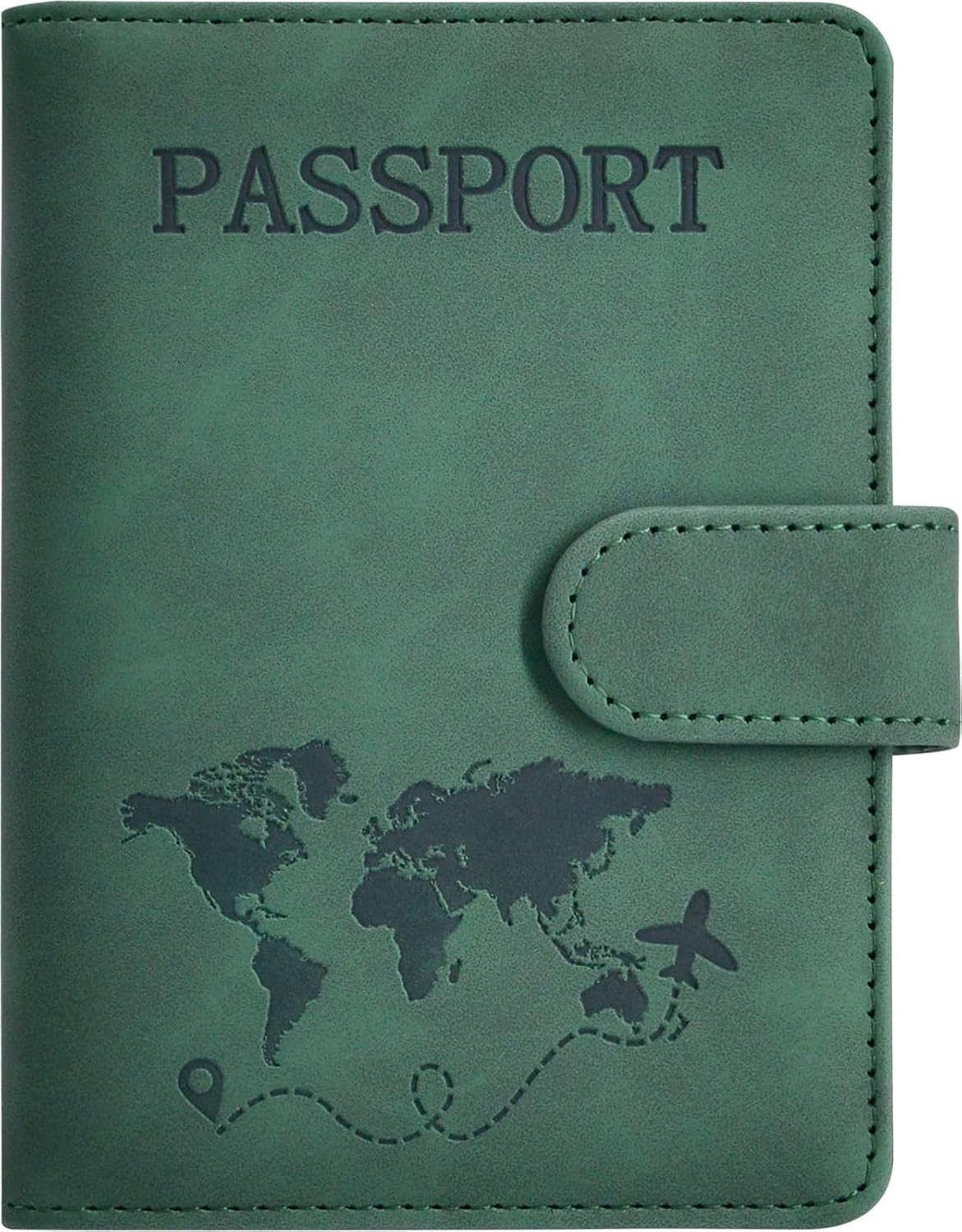 Leather Passport Holder, RFID Blocking Travel Wallet$49.99View product
Written for ai-shoppers.com. Dimensions and compression ranges are typical figures for planning, not guarantees; airline limits and fare rules vary and should be checked with your carrier.
Compare on Amazon — this category usually has more brands, sizes and price points there.
Check current prices on Amazon →
As an Amazon Associate we earn from qualifying purchases. The price you pay is unchanged. Disclosure