Kitchen tools rarely die of hard work. They die of a dishwasher cycle at 60 degrees, of a wooden handle left soaking in the sink overnight, and of being put away damp in a closed drawer. Five failures account for almost every replacement you will ever make, and four of them are free to avoid.

The five places things actually fail
Walk around your own kitchen: the same five points come up again and again, in the same order, regardless of what the tool cost.
| Failure point | What happens | The fix |
|---|---|---|
| Wooden handles | Water swells the grain, drying cracks it, detergent greys it | Hand wash, wipe dry, oil every 3-6 months |
| Cutting edges | The thin edge rolls or chips; the tool starts crushing instead of cutting | Hone often, sharpen rarely, cut on wood or plastic |
| Non-stick coatings | Overheating breaks the coating down; metal utensils scratch it | Stay under 260 C, use wood or silicone, never preheat empty |
| Joints and pivots | Detergent strips lubricant, rivets loosen, blades wobble | Hand wash, dry fully, a drop of food-safe oil |
| Stainless surfaces | Salt and acid left standing cause pitting – small dark pits that never polish out | Rinse and dry; do not leave salt on steel overnight |
One: heat and detergent
A normal dishwasher cycle runs somewhere between 55 and 70 degrees Celsius, with detergent that is deliberately alkaline – often around pH 10 to 12 – because that is what dissolves baked-on grease. That is superb for plates and quietly hostile to wood, aluminium and any glued joint.
So the dishwasher rule is simpler than most advice makes it sound. Load stainless, glass and plain ceramic. Keep out anything with a wooden handle, any aluminium pan, any knife, and anything with a coating or a bonded handle. Those items take ten seconds by hand and last five to ten times longer.
Two: wood, and the myth of soaking
Wood is a sponge with a grain, and it moves as it takes on water. Repeated soak-and-dry cycles are what open the fine cracks where bacteria collect; the grey colour people blame on age is actually detergent lifting the surface fibres.
The routine that works: wash in warm water with a little soap, dry immediately with a cloth, and let it air completely before it goes back in a drawer or a crock. Once every three to six months, rub in a thin coat of food-safe mineral oil and leave it to absorb for an hour. A well-oiled wooden spoon outlives three cheap plastic ones.
Three: honing and sharpening are not the same thing
An edge is a wedge, typically ground at 15 to 20 degrees per side for Western kitchen knives and a little shallower for Japanese-style blades. Under use the very tip of that wedge rolls over rather than wearing away.
Honing – a few strokes on a rod before you cook – stands the rolled edge back up and removes almost no metal. It takes fifteen seconds and it is the single highest-value maintenance habit in a kitchen. Sharpening, which actually grinds new metal, is a job for a stone or a service, and most home cooks need it far less often than they think: once or twice a year is plenty for a knife that is honed and hand washed.
Four: what temperature does to coatings
Non-stick surfaces are formulated to be stable to roughly 260 degrees Celsius in normal use. Beyond that – around 300 degrees and up – the coating begins to break down, and an empty pan on a high flame gets there in under two minutes. That is why the two rules for non-stick are “never preheat it empty” and “never use metal in it”. Both failures are irreversible.
Five: the storage nobody thinks about
Moisture is the common thread in nearly every failure above, and a closed drawer after a rushed wash is where it hides. Give anything with an edge or a wooden handle air before storage, and keep sharp discs and blades separated with a rack, a sleeve or the original box rather than rattling together.
How often to replace, realistically
| Item | Typical life, looked after | Typical life, dishwasher and wet storage |
|---|---|---|
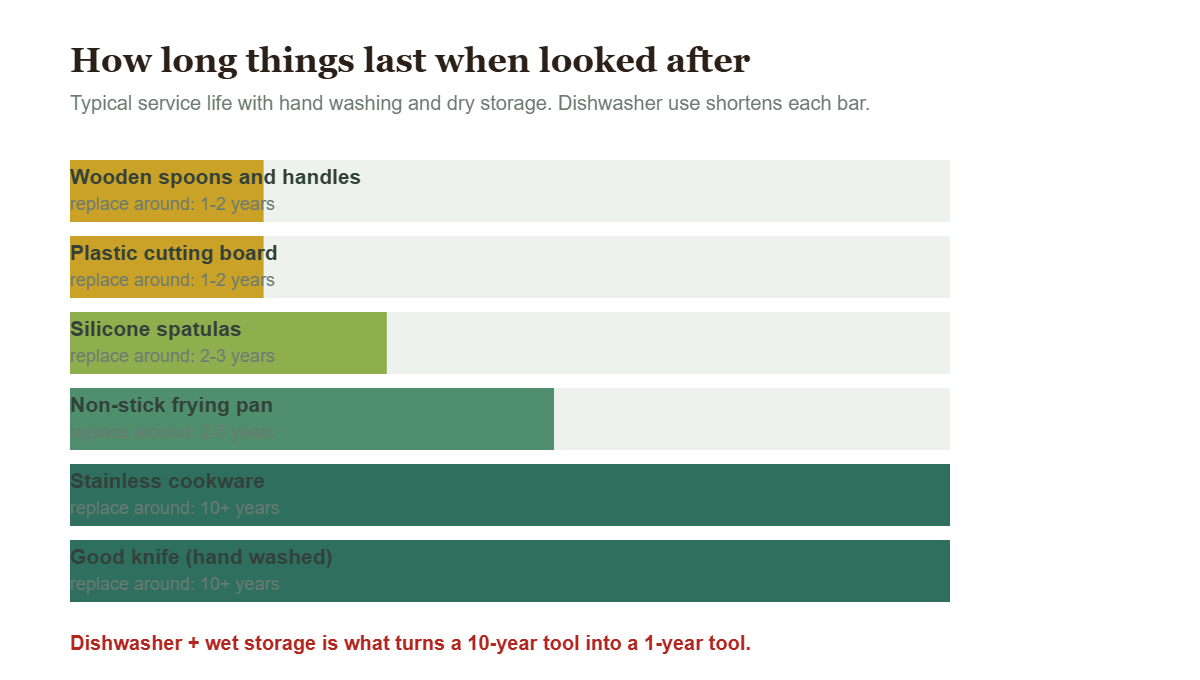
| Wooden spoons and handled tools | 1-2 years | 6 months or less |
| Plastic cutting board | 1-2 years | 1 year, warps sooner |
| Silicone spatulas | 2-3 years | 1 year |
| Non-stick frying pan | 2-5 years | 1 year |
| Stainless cookware | 10+ years | 5-10 years |
| Good knife, hand washed | 10+ years | 1-3 years |
- Dry before you store – always, including handles
- Hone before cooking, sharpen once or twice a year
- Oil wooden handles lightly every 3-6 months
- Never preheat a coated pan empty, and keep metal out of it
- Cut on wood or plastic, never glass or stone
- Keep blades and sharp discs separated in storage
Frequently asked questions
Can I put wooden-handled tools in the dishwasher occasionally?
Occasionally, yes, and it will still work. Repeatedly, no – the detergent and heat dry the grain, the handle greys and eventually loosens. If you do it once, oil the handle afterwards.
How do I know a knife needs sharpening rather than honing?
Hone it, then try a tomato. If the blade still slips on the skin after honing, the edge needs metal taken off – that is sharpening, and it is a job for a stone or a professional.
Is a scratched non-stick pan still safe?
Light scratches are common. Once the coating is flaking visibly or the pan has been run very hot and smells acrid when heated, replace it – a $25 pan is not worth the uncertainty.
What oil should I use on wooden handles?
A food-safe mineral oil is the standard choice because it does not turn rancid the way cooking oils can. Apply thinly, let it sit, then wipe off the excess.
Does stainless steel really rust?
It resists staining rather than making it impossible. Left in contact with salt or acidic food for hours, or put away wet, even good stainless will pit. Rinse and dry and it will outlast you.
Gear referenced in this guide
Three kitchen items from our own range that suit the advice above – all stainless working parts with wooden handles or a carbon-steel edge, which is exactly the sort of thing worth drying properly. None of them is required to cook well.
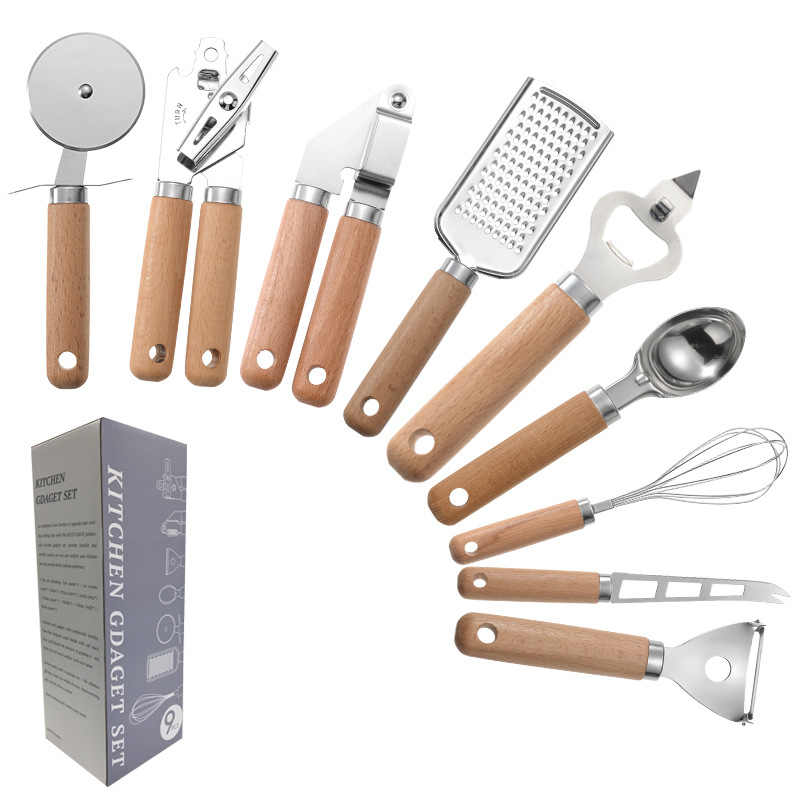 9-Piece Kitchen Gadget Set with Wooden Handles$53.99View product
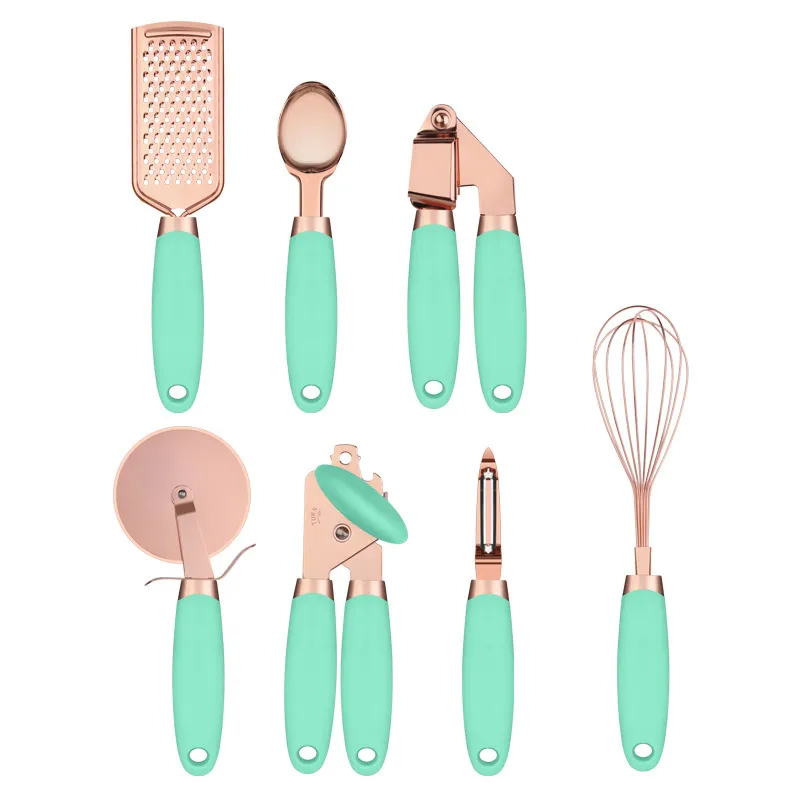 Kitchen Peeler and Gadget Set with Copper-Plated Handles$54.99View product
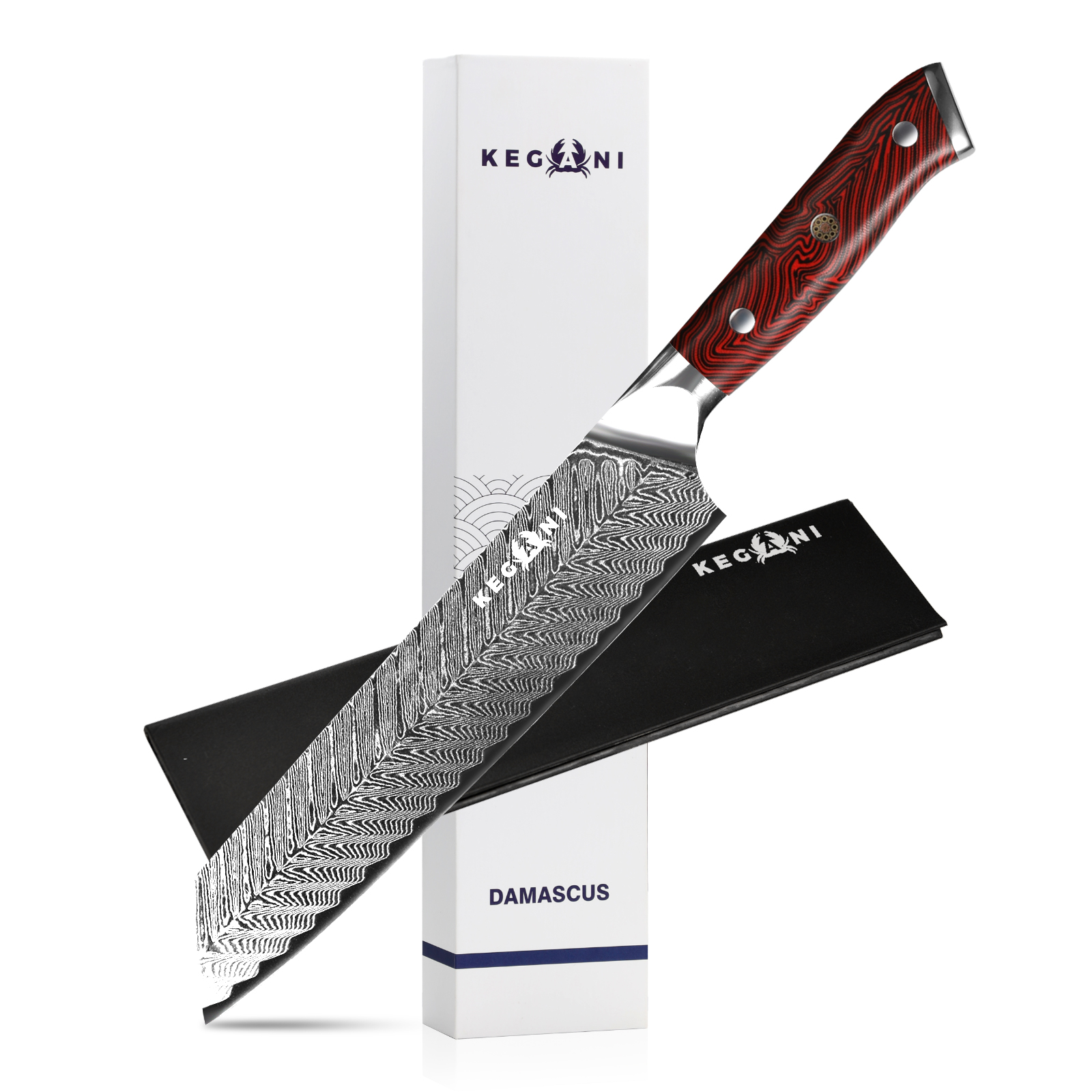 7 Inch Damascus Meat Cleaver, 73 Layers AUS-10 Steel Butcher Knife$102.99View product
Written for ai-shoppers.com. Temperatures, pH ranges and service lives above are typical figures for planning, not guarantees for any specific product; how a tool is used matters more than what it cost.
Compare on Amazon — this category usually has more brands, sizes and price points there.
Check current prices on Amazon →
As an Amazon Associate we earn from qualifying purchases. The price you pay is unchanged. Disclosure