A small kitchen does not have a storage problem. It has an arithmetic problem: a fixed number of square centimetres, and a set of objects competing for them. Measure four dimensions once – counter depth, the gap to the upper cabinets, drawer depth and the sink opening – and most of the decisions make themselves.
The four measurements worth taking
| Measurement | Typical value | What it decides |
|---|---|---|
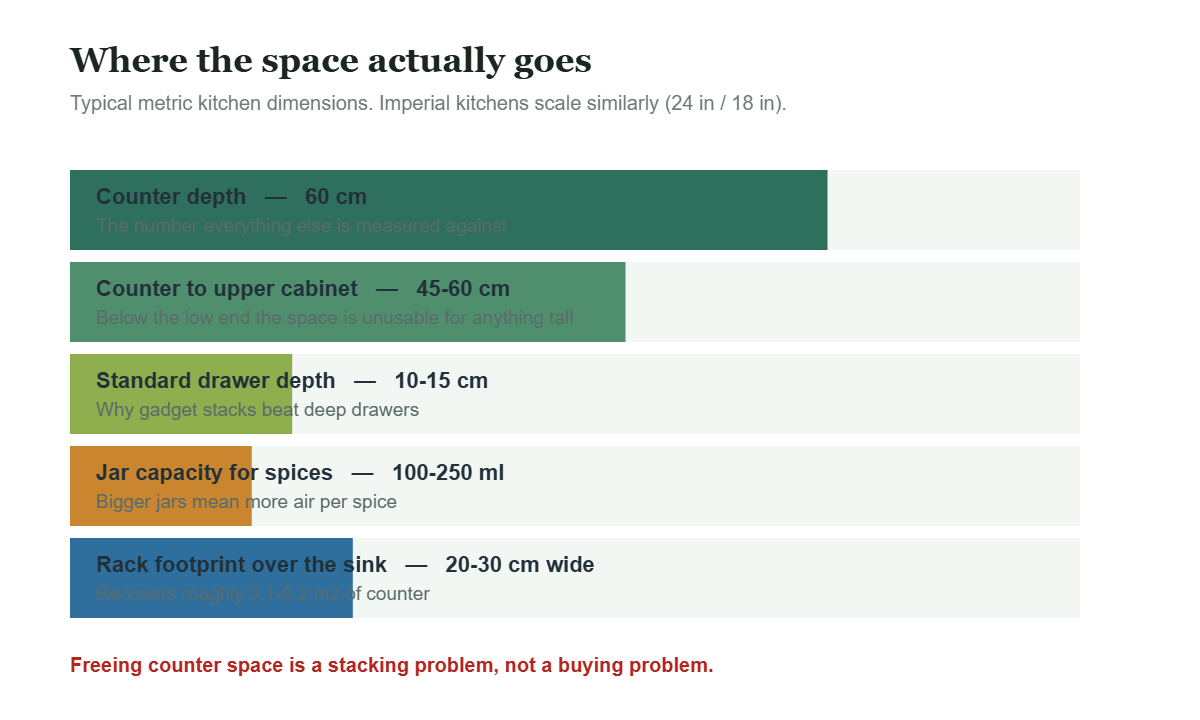
| Counter depth | 60 cm (24 in) | The depth of any appliance or rack that can live on it |
| Counter to upper cabinet | 45-60 cm | Whether a tall item fits on the counter at all |
| Drawer depth | 10-15 cm | Whether tools stack flat or tumble into a jumble |
| Sink opening width | Varies – measure yours | Which drainer or over-basin rack will actually sit |
Those four numbers cover almost every storage failure in a small kitchen. The gap to the upper cabinets is the one people forget: at 45 cm, a coffee machine or a tall jar fits; at 35 cm it does not, and the item moves to the only free surface – which is the counter you were trying to clear.
Vertical beats horizontal, almost always
When counter space is the constraint, the cheapest win is to move storage upward into volume that is already empty. A rack that sits over the sink drains where the water already goes and returns roughly 0.1 to 0.2 m2 of worktop – a meaningful fraction of a small kitchen’s usable surface. A rotating rack does the same trick for a corner: it turns dead depth into something you can reach.
Why shallow drawers beat deep ones
A 10 to 15 cm drawer holds a single layer of tools, and a single layer is what keeps them findable. Deep drawers encourage stacking, and stacked gadgets become a pile you have to sort through. If you already have deep drawers, an insert or a second shallow tray inside them recreates the single layer without buying new furniture.
Jar size is a hidden cost
Spices keep best in small containers because every opening exchanges the air above the contents. A 100 to 250 ml jar matched to what you actually use means less headspace, less oxidation and less of the shelf taken up by air. Buying larger jars because they were cheaper per gram is how a spice collection quietly goes stale.
Three moves that free the most space for the least money
First, take the sink: an over-basin rack removes the draining board’s footprint entirely and puts washing-up liquid and sponges above the water rather than beside it. Second, take the corner: a rotating rack makes the back of a corner cabinet reachable, which effectively converts storage you own but cannot use. Third, take the wall above the counter: hooks and a shallow shelf use the 45-60 cm band that otherwise only holds a kettle.
- Measure the cabinet gap before buying anything tall
- Move storage up: racks, wall shelf, rotating trays
- Keep drawers to a single layer; add inserts rather than new units
- Match jar size to usage, not to price per gram
- Clear the sink first – it is the largest single surface you can reclaim
The work triangle, rescaled for a small kitchen
Classic kitchen planning measures the distance between the three working points – sink, hob and fridge – and adds them up. The traditional guidance lands somewhere between 1.2 and 2.7 metres total (roughly 4 to 9 feet), and in a small kitchen you want to be at the bottom of that band: a triangle under about 2 metres keeps everything within a step or two, which is why tiny kitchens can actually feel convenient.
The number that ruins more kitchens than any other is the walkway. Leave at least 90 cm of clear floor between facing counters if one person cooks, and closer to 110 cm if the kitchen gets busy or a drawer opens into the gap. Storage additions are usually blamed for a cramped kitchen when the real culprit is an aisle that was never wide enough.
Frequently asked questions
How deep should a kitchen counter be?
60 cm (24 in) is the common metric standard, with 24 in in imperial kitchens. Anything deeper is unusual and anything shallower limits which appliances will sit safely.
Is a sink rack worth it in a small kitchen?
Usually yes, because it removes the draining board – one of the largest single objects competing for counter space – and puts wet items where the water already drains.
How much counter space does a rack actually free?
Roughly 0.1 to 0.2 m2 for a 20-30 cm rack, depending on how much of the counter the draining board currently occupies. In a small kitchen that is often 5-10% of the usable surface.
What should never live on the counter?
Anything you use less than a few times a week, and anything that duplicates a function: spare gadgets, extra spice jars, cleaning bottles. Each one costs a fixed footprint for occasional use.
Do corner carousels really help?
Yes, where the corner cabinet is deep enough to be awkward. They convert unreachable depth into reachable storage, which is why they are one of the few storage accessories with a measurable return.
Does the work triangle still apply?
As a sanity check, yes: keep sink, hob and fridge within roughly 1.2-2.7 m of travel in total, and prefer the low end in a small room. It is guidance, not a rule.
How much walkway do I need?
About 90 cm of clear floor between facing counters for one cook, and closer to 110 cm if two people share the space or appliances open into the aisle.
Gear referenced in this guide
Three storage pieces from our own range that match the sections above – an over-sink rack, a rotating rack and a set of square jars. None of them is required, and none of them beats measuring your own kitchen first.
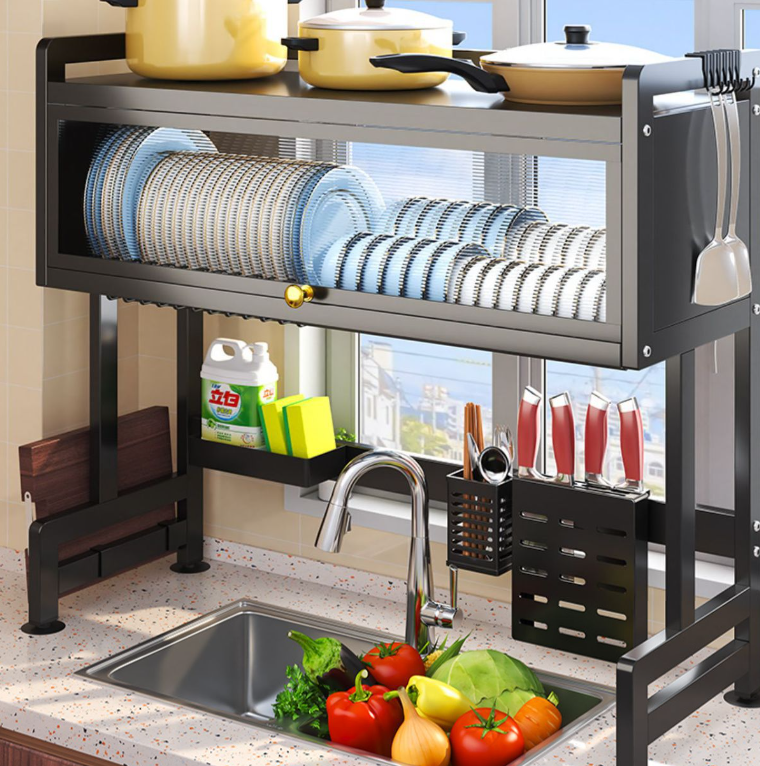 Kitchen Sink Storage Rack, Over-Basin Bowl and Sponge Holder$65.99View product
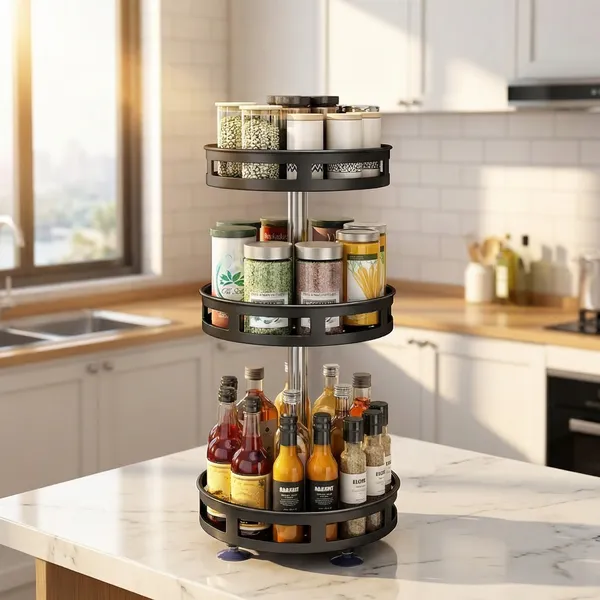 3-Tier Rotating Spice Rack Organizer, 360 Degree Steel Turntable$98.99View product
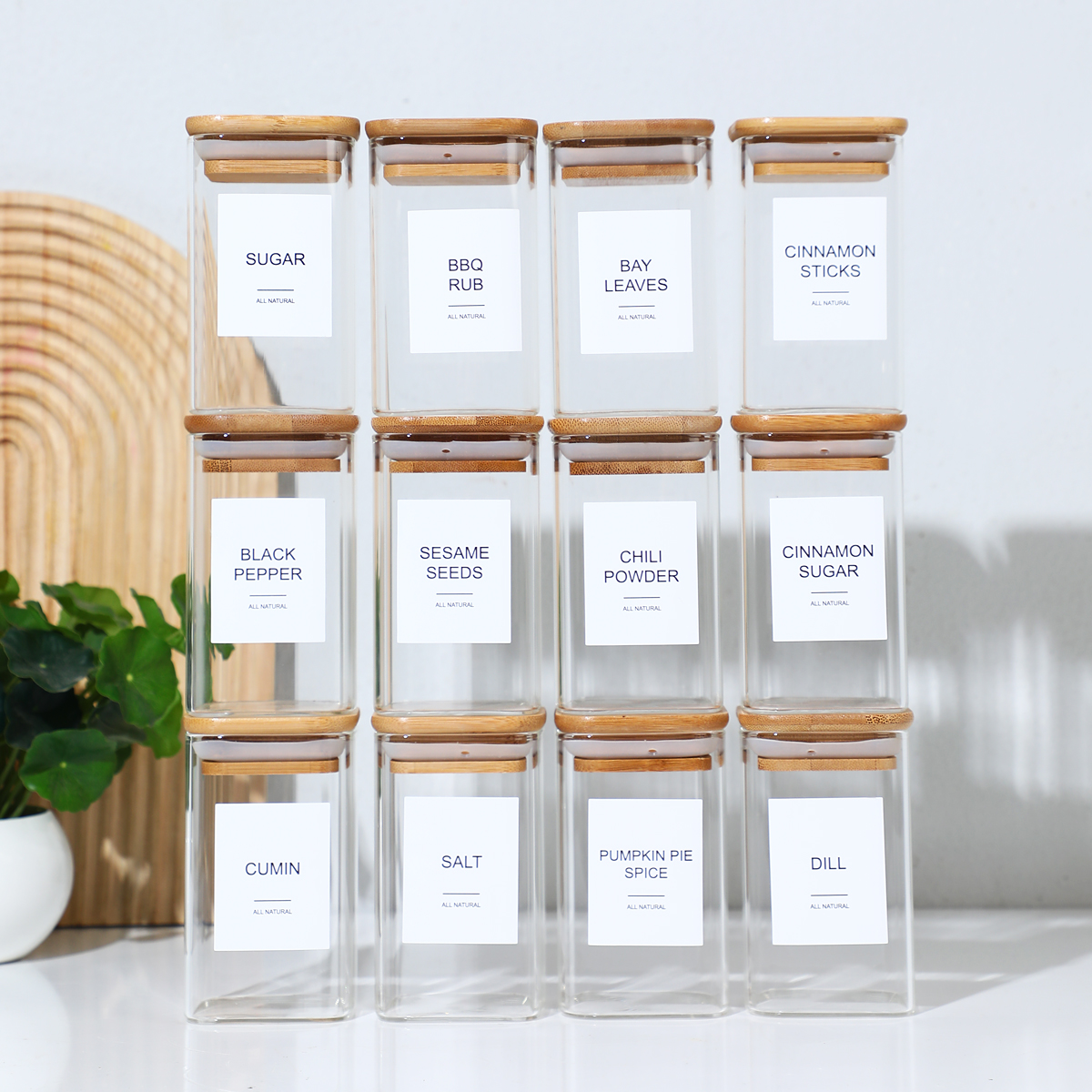 12 Pcs Square Spice Jars with 72 Stickers, Kitchen Seasoning Jars$58.99View product
Written for ai-shoppers.com. Dimensions above are typical standards for orientation rather than specifications of any product, and every kitchen differs; measure yours before buying anything that has to fit.
Compare on Amazon — this category usually has more brands, sizes and price points there.
Check current prices on Amazon →
As an Amazon Associate we earn from qualifying purchases. The price you pay is unchanged. Disclosure