The area around a sink is the wettest place most people own indoors – wetter than a bathroom on a typical day, because it is wet several times a day. That single fact explains why some kitchen items last fifteen years and others look tired after one. Here is what water, detergent and hard water actually do to the materials in that zone, and the two or three minutes of routine that decide which group an item falls into.

Why the sink zone is different from the rest of the kitchen
Cooking is wet, but it dries. A sink is wet continuously: splash from the tap, steam from hot water, drips from a draining bowl and the condensation that collects under the cabinet floor. Add detergent – alkaline, by design, because that is what dissolves grease – and you have a small environment that attacks finishes, joints and wood at the same time.
The practical question is never “is this material waterproof?” It is “does this material get to dry?” A wooden board that drains lasts years; the same board sitting in a puddle at the bottom of a sink splits at the base within a season.
The materials, honestly compared
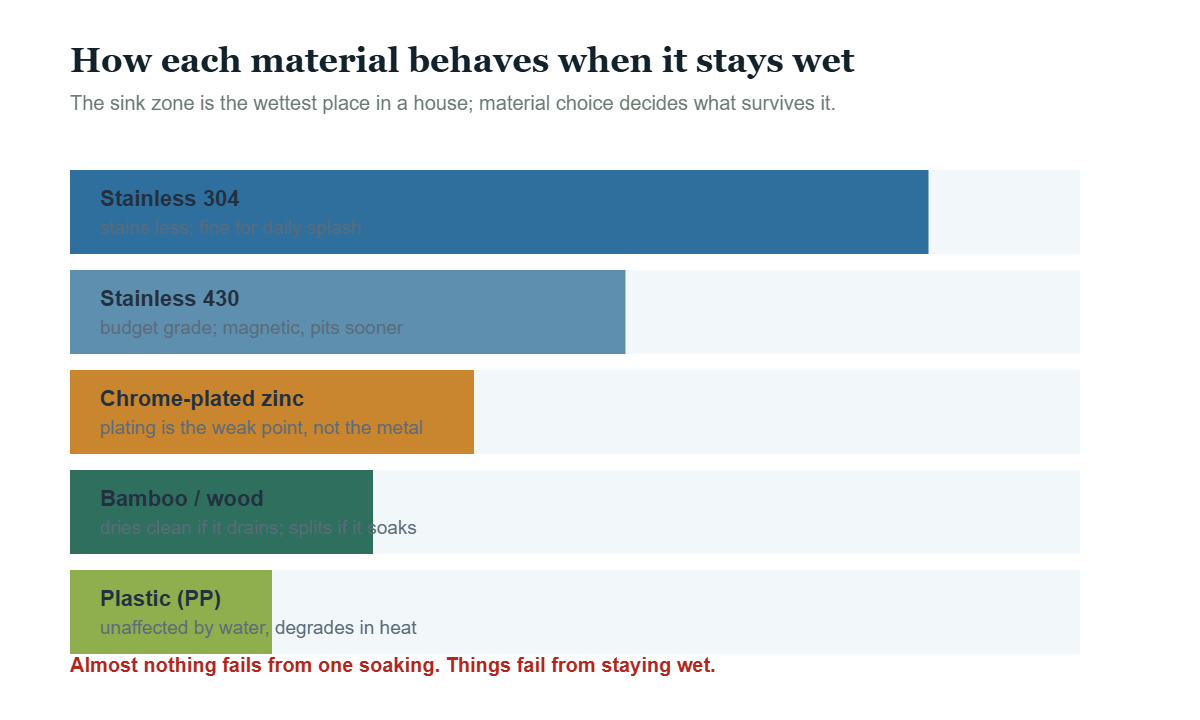
| Material | What it does well | Where it fails |
|---|---|---|
| Stainless steel 304 (18/8) | Resists food acids and tap water; the default for sinks and racks | Pits if salt or acid is left standing on it |
| Stainless steel 430 | Cheap, magnetic, fine for liners | Noticeably less corrosion-resistant than 304 |
| Chrome-plated zinc | Bright finish at low cost | The plating – often only tens of microns – wears through, then the zinc underneath corrodes |
| Bamboo and wood | Dries clean, resists moisture better than softwood | Splits or grows mould if it never dries; bases take water first |
| Polypropylene (PP) plastic | Unaffected by water and most detergents | Distorts under heat; ages from UV and hot cycles |
Drainage is geometry, not luck
Everything in this zone should shed water rather than collect it. Three details do most of the work: a rack that sits over the basin so drips fall where the water already goes; a tray or rack with open slats instead of a solid base, so air reaches the underside; and nothing flat sitting directly on the counter, because a film of water trapped under an object never evaporates.
Drains themselves are slope-driven: waste pipes are installed at a fall of roughly 1 to 2 percent, which is about 1-2 cm per metre. That is why a sink that drains slowly is usually a blocked or wrongly-sloped pipe rather than a design mystery – and why standing water in a cabinet is worth investigating immediately rather than mopping up.
Hard water is a materials problem
Water hardness is measured in milligrams per litre of calcium carbonate equivalent. Under about 60 mg/L is soft; 120-180 is moderately hard; above roughly 180 is hard. Once you are in the harder bands, heating water deposits limescale, and limescale is what makes metal look tired long before it fails.
The fix is chemistry rather than scrubbing: limescale is alkaline, so a weak acid – vinegar or a citric-acid solution – dissolves it. Abrasive pads do the opposite, scratching the surface so that the next layer of scale grips better. Wipe metal dry after use and you remove most of the deposit before it becomes visible.
What actually fails first
| Component | Typical failure | What prevents it |
|---|---|---|
| Plated finishes | Plating wears through, then the base metal corrodes | No abrasives; dry after use |
| Joints and rivets | Detergent strips lubricant, fittings loosen | Rinse and dry; occasional drop of oil |
| Wooden bases | Water wicks up, the base swells and splits | Drain, never soak, oil once a year |
| Glued seams | Constant humidity softens the adhesive | Keep out of the dishwasher |
| Rubber seals | Hardens and cracks with heat and detergent | Rinse with fresh water; avoid hot soaking |
The three-minute routine
First, rinse rather than soak: thirty seconds under the tap removes detergent before it can work on a finish. Second, stand everything so water runs off – bowl upside down, rack slats clear, nothing flat on the counter. Third, wipe the metal and the counter edge with a dry cloth, which is the step that removes both the water film and the beginning of any scale.
Once a week, take the rack out and clean the space underneath it. That hidden strip is where the cabinet floor stays damp longest, and it is the first place to smell or discolour.
- Does water run off it, or sit in it?
- Is anything flat resting directly on the counter?
- Is the metal wiped dry after use?
- Is the space under the rack cleaned weekly?
- Is the water hard enough to need a citric-acid soak once a month?
Frequently asked questions
Is 304 stainless good enough for a kitchen sink area?
For almost every home, yes. It resists food acids and tap water well; the main rule is not to leave salt or acidic food standing on it for hours.
How do I remove white spots from metal?
That is limescale, and it is alkaline – so a weak acid dissolves it. Vinegar or a citric-acid solution, left for a few minutes and wiped, works better than scrubbing, which scratches the surface.
Can bamboo items live next to a sink?
Yes, provided they drain and dry. Bamboo resists moisture well, but any wood product that sits in water at the base will eventually swell and split there.
Why does the cabinet under my sink feel damp?
Usually a small leak, condensation, or a rack that drips into the cabinet rather than the basin. Standing water there is worth investigating, not just wiping up.
Is a dishwasher safe for sink-area accessories?
Often not. The combination of prolonged heat and alkaline detergent is what strips plating and softens glued joints. Hand washing and drying is the safer default.
Gear referenced in this guide
Two items from our own range that suit the advice above – an over-basin rack that drains by design, and a bamboo organizer for the drawer beside the sink. Neither is required; the routine matters more.
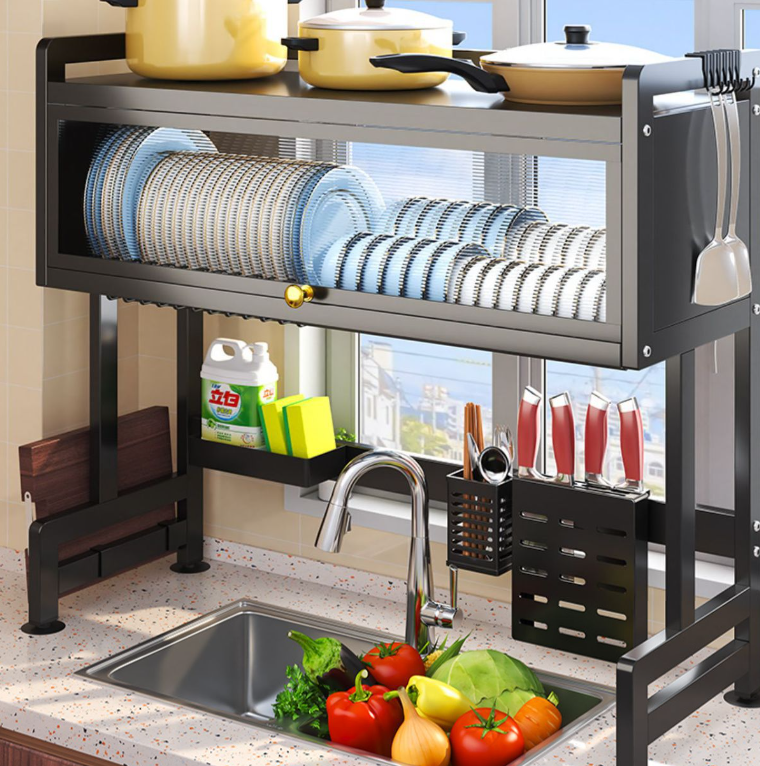 Kitchen Sink Storage Rack, Over-Basin Bowl and Sponge Holder$65.99View product
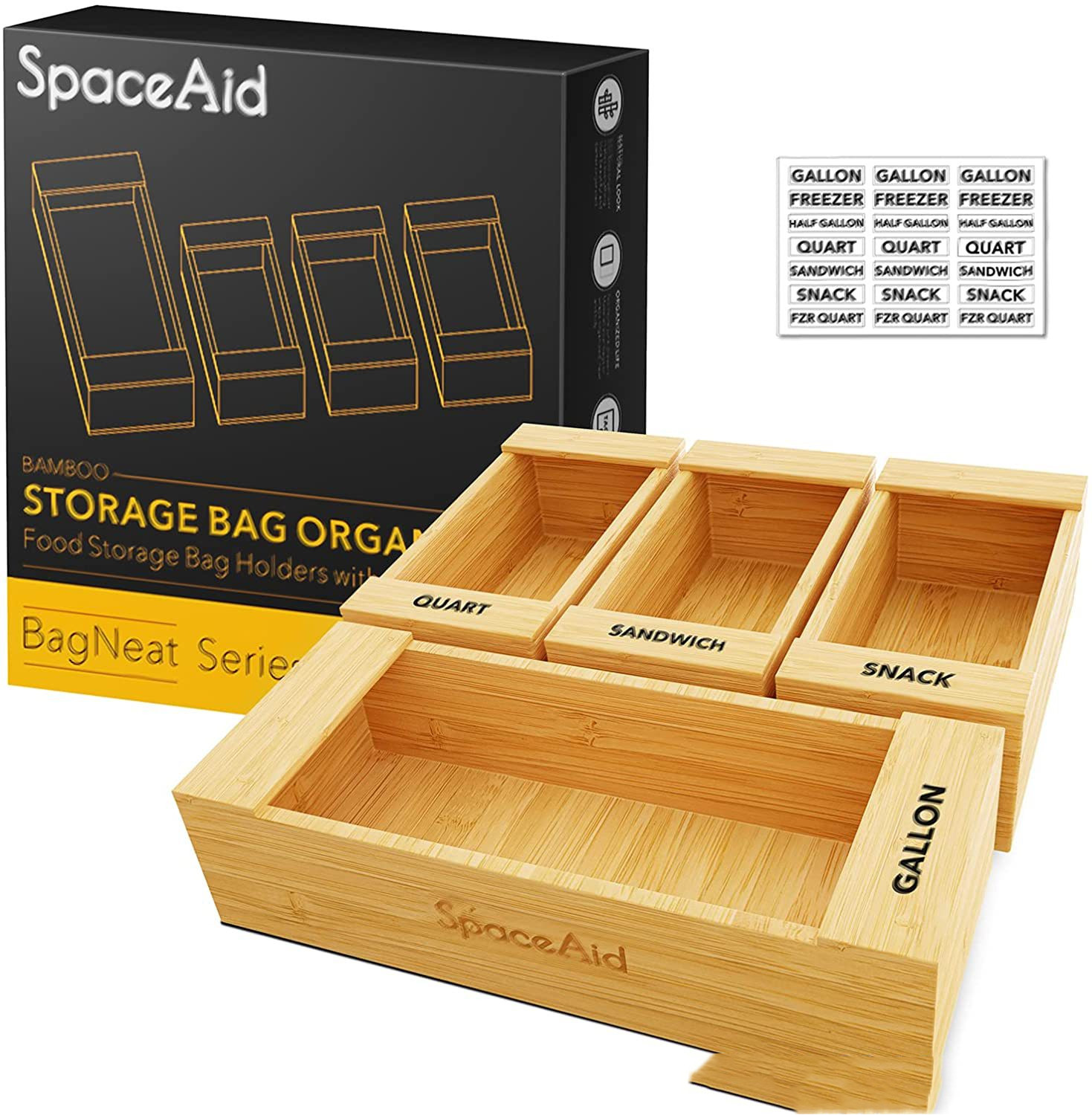 Bamboo Kitchen Drawer Organizer Box, 30.5 x 10.2 x 7.6 cm$53.99View product
Written for ai-shoppers.com. Hardness bands, drain slopes and material behaviour above are typical published figures for orientation rather than guarantees for any product; your local water and your own habits will move them.
Compare on Amazon — this category usually has more brands, sizes and price points there.
Check current prices on Amazon →
As an Amazon Associate we earn from qualifying purchases. The price you pay is unchanged. Disclosure