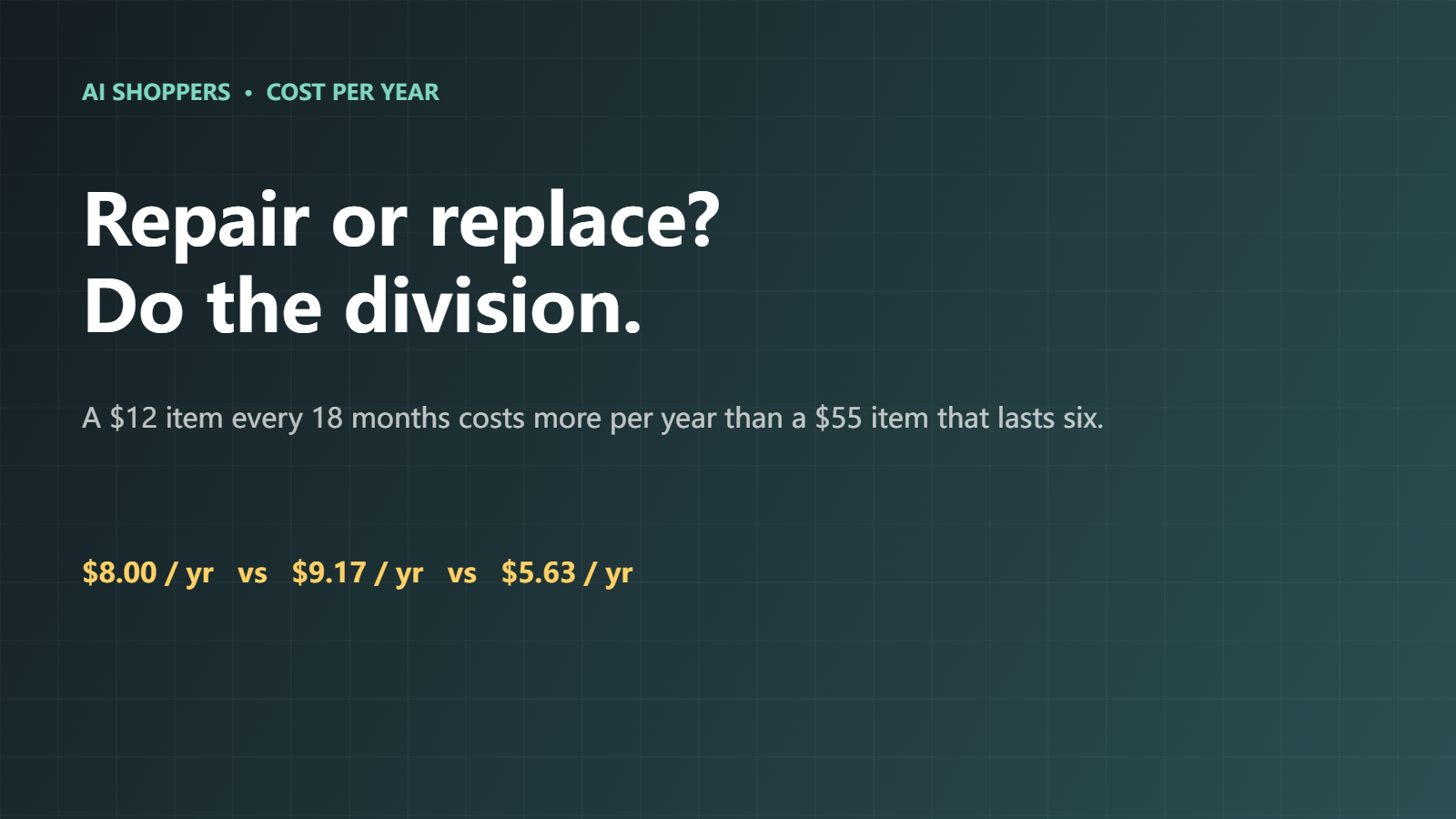
Most buying advice compares two products at the moment of purchase. That is the wrong window. The number that matters is cost per year of use, and it changes the answer more often than people expect. A $12 item replaced every eighteen months costs more annually than a $55 item that lasts five years – and the cheap one also fails at the least convenient moment. This piece builds the model, with the numbers that actually move it.
1. Cost per year, not sticker price
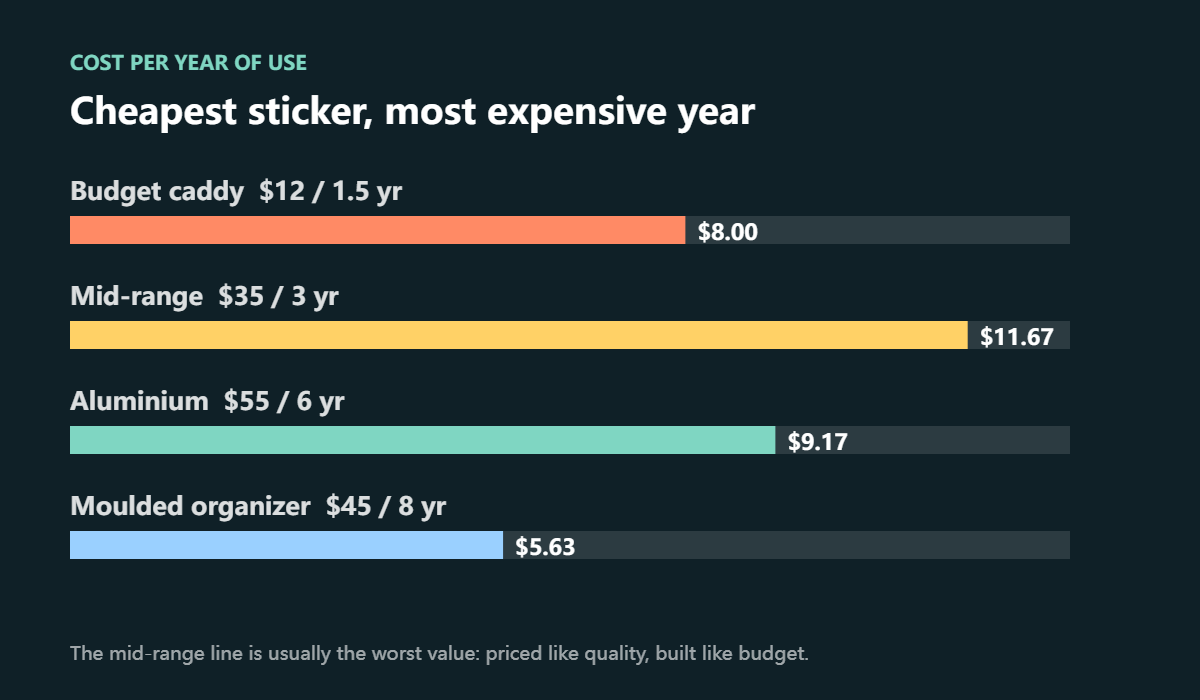
The formula is simple: purchase price divided by years of service, plus the cost of the failures that happen in between. A $12 shower caddy that rusts through in 1.5 years costs $8 per year. A $55 aluminium caddy that lasts 6 years costs $9.17 per year – close, but the second one did not drop your bottles on the floor in year two, and did not require a second order, a second delivery window and a second round of packaging.
Add the failure cost and the gap widens. Replacing an item means a 7-15 day delivery window in the US (10-20 days for the UK, Canada and Australia), a trip to the recycling bin, and the labour of re-drilling or re-sticking. If your time is worth anything, the cheap item is not cheap.
2. The break-even calculation
| Item | Price | Service life | Cost / year | Failures in 5 years |
|---|---|---|---|---|
| Budget caddy | $12 | 1.5 years | $8.00 | 3 |
| Mid-range caddy | $35 | 3 years | $11.67 | 1 |
| Aluminium caddy | $55 | 6 years | $9.17 | 0 |
| Budget organizer | $9 | 1 year | $9.00 | 4 |
| Moulded organizer | $45 | 8 years | $5.63 | 0 |
The interesting line is the mid-range one: it costs more per year than either the budget or the premium option, because it is priced like quality and built like the cheap version. Mid-range is where the worst value usually hides.
3. What actually kills small home goods
Four failure modes account for most replacements, and only one of them is wear.
- Water and standing moisture. A flat tray that holds a 2-3 mm film turns into biofilm within a week; uncoated steel at a weld starts spotting in months.
- Load beyond the fixing. Adhesive plates hold 3-5 kg when new; a shelf carrying 8 kg of full bottles will come down, usually at 2 a.m.
- UV and heat. Plastic left in sun goes chalky and brittle; a hot pan against PP deforms it permanently.
- Cleaning. Abrasive pads and solvent sprays remove coatings faster than daily use does.
None of these are random. Each one is predictable from the material and the mounting, which is why the material line on a listing matters more than the marketing copy.
4. When repair genuinely wins
Repair beats replacement when the failure is at a joint, a fixing or a coating – not when the structure itself has gone. A caddy whose adhesive failed needs a $3 screw kit, not a new caddy. A shelf with one stripped bracket needs a bracket. A plastic box with a cracked lid is usually finished, because the hinge is moulded in.
The rule of thumb: if the replacement part costs less than 25% of a new unit and the failure is not structural, repair. Otherwise replace, and replace upward – buy the material that fails in the way you can tolerate.
5. The purchase checklist that saves the most money
- Compare cost per year, not price. Divide by a realistic service life, then add one failure.
- Check the fixing before the finish: screws for anything over 5 kg, adhesive only under it.
- Prefer designs that drain, ventilate and come apart for cleaning.
- Read the material: PP for wet rooms, aluminium where weight matters, 304 stainless near food, 316 near salt.
- Keep the 30-day return window in mind – most early failures show up in the first month, not the second year.
6. What the model does not capture
Two things resist arithmetic. The first is fit: a $60 organizer that does not fit your corner is worth less than a $20 one that does, because the expensive one will sit in a cupboard. Measure first – a 40 cm wall either side of a corner, a 25-30 cm gap under a bed, a 90-150 cm reach band. The second is the cost of the failure itself: a caddy that falls takes tiles with it, and that repair dwarfs the price difference between the two products.
7. The twelve-month audit
Set a reminder once a year and walk the room with a cloth and a torch. Four checks catch almost everything before it becomes a replacement: squeeze every adhesive mount to see if it has gone soft, look at the underside of metal for the first orange pinpricks, press the base of every plastic box for the chalky feel of UV damage, and open the drawer that sticks – swollen wood and a bent runner are the two failures that quietly ruin a cabinet.
Write down what you find with the month. A shelf that failed in month 9 of a 60-month expectation is a product problem; the same shelf failing in month 54 is simply the end of its life. That distinction is the difference between replacing the same mistake and replacing a tool that did its job.
8. Where the model bends: second-hand and spares
Cost per year assumes you buy new, and that is not always the best trade. A solid metal rack bought second-hand for a third of retail, with no moving parts to wear, can beat every new option in the table – the material is already proven, and the environmental cost is already paid. The same applies to spare parts: a replacement bracket at 10% of the unit price resets the clock for another three to five years.
What does not work is buying cheap spares for a good product. A $2 bracket on a $60 rack usually fails at the screw hole, and when it goes it takes the shelf with it. Buy the part from the maker or not at all.
One more number worth keeping: the delivery window. Replacing an item costs 1-3 business days of processing plus 7-15 days of transit in the US, or 10-20 days for the UK, Canada and Australia. A planned replacement in month 50 costs nothing but a click; an emergency replacement in month 51 costs a week of living around a gap on the wall.
Frequently asked questions
Is expensive always better value?
No. The mid-range is usually the worst value: priced like quality, built like the budget version. The best value sits at the top of the material quality curve, not at the top of the price curve.
How long should a bathroom caddy last?
Coated steel in a wet room: 1.5-3 years before spotting or flaking. Aluminium with a cured finish: 5-6 years. The difference is the finish and the drainage, not the brand.
When is repair the right call?
When the failure is at a joint, fixing or coating and the replacement part costs under 25% of a new unit. Structural cracks in moulded plastic are usually the end.
Does a 30-day return window matter that much?
Yes – most manufacturing faults surface in the first weeks. Opening the parcel, assembling and loading the item within the window is the cheapest insurance you will ever buy.
Where do the delivery windows come from?
US 7-15 days, UK/Canada/Australia 10-20 days, US-warehouse items 3-7 days, after 1-3 business days of processing. Longer windows mean a slower lane and, usually, a heavier parcel.
Honest disclosure: prices and service lives in the table are illustrative ranges for comparison, not quotes or warranties.
Gear referenced in this guide
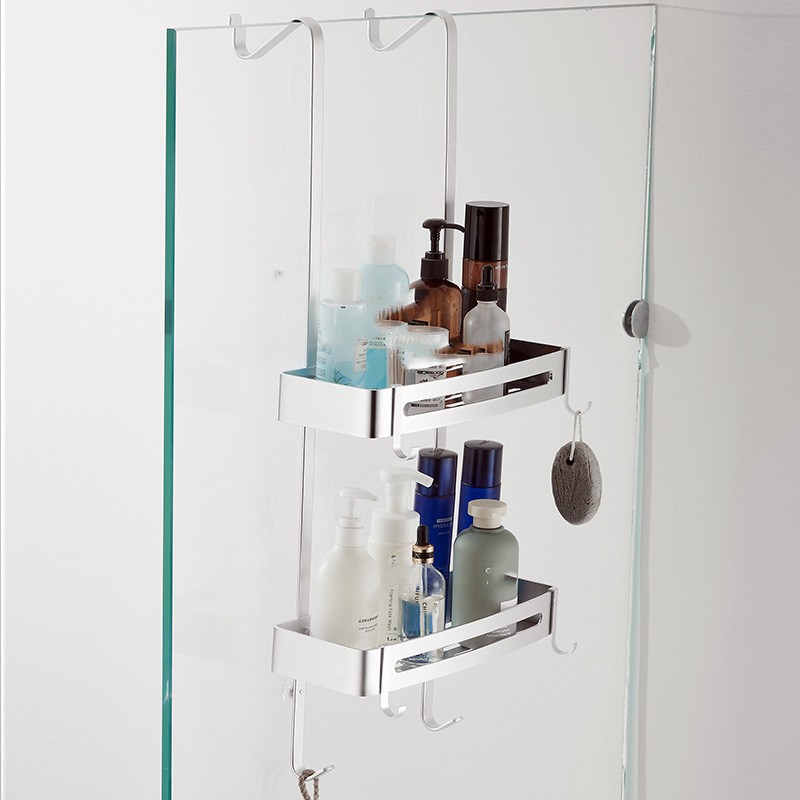
Aluminium Hanging Shower Caddy, Double Basket
Hollow aluminium and slot drainage: the column that pays for itself in year three.
$63.99
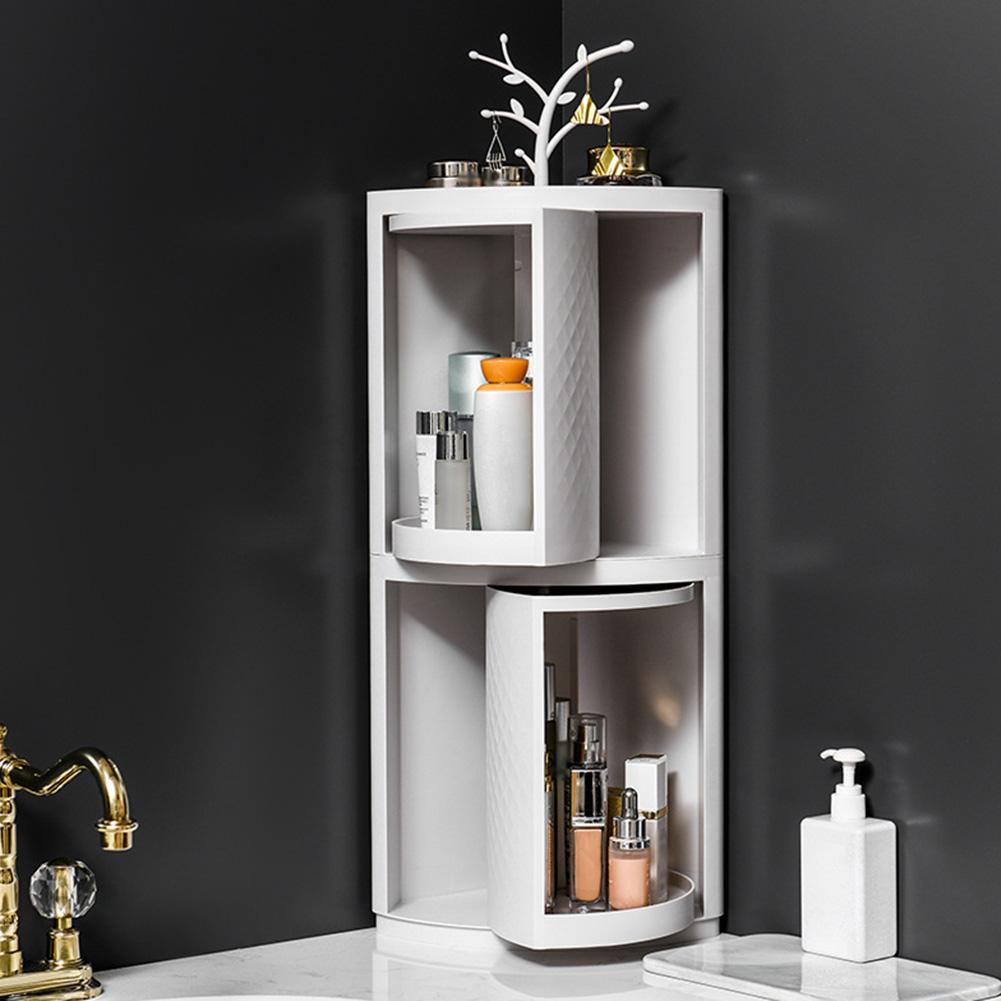
Rotatable Corner Bathroom Organizer, Wall-Mounted
Injection-moulded PP, wipe-clean, and it uses the dead corner instead of a shelf you do not have.
$54.99
Compare on Amazon — this category usually has more brands, sizes and price points there.
Check current prices on Amazon →
As an Amazon Associate we earn from qualifying purchases. The price you pay is unchanged. Disclosure