A recipe says one cup of flour. You scoop the cup into the bag, level it off, and you have just added about 25% more flour than the person who wrote the recipe – because they spooned theirs in and levelled it. Nothing about your kitchen is wrong. The unit is. Here is what the numbers actually are, and where switching to a scale stops the argument.
The units people assume are standard are not
A US cup is 236.6 millilitres. A metric cup is 250 millilitres. A traditional UK cup is about 284 millilitres. Those three are within shouting distance of each other, which is exactly why nobody notices until a cake comes out wrong.
Spoons diverge less but still diverge: a US tablespoon is about 14.8 millilitres, a metric tablespoon is 15, and a US teaspoon is about 4.93 millilitres against a metric 5. Three teaspoons make one tablespoon in both systems, so that one at least survives translation.
Same volume, different mass
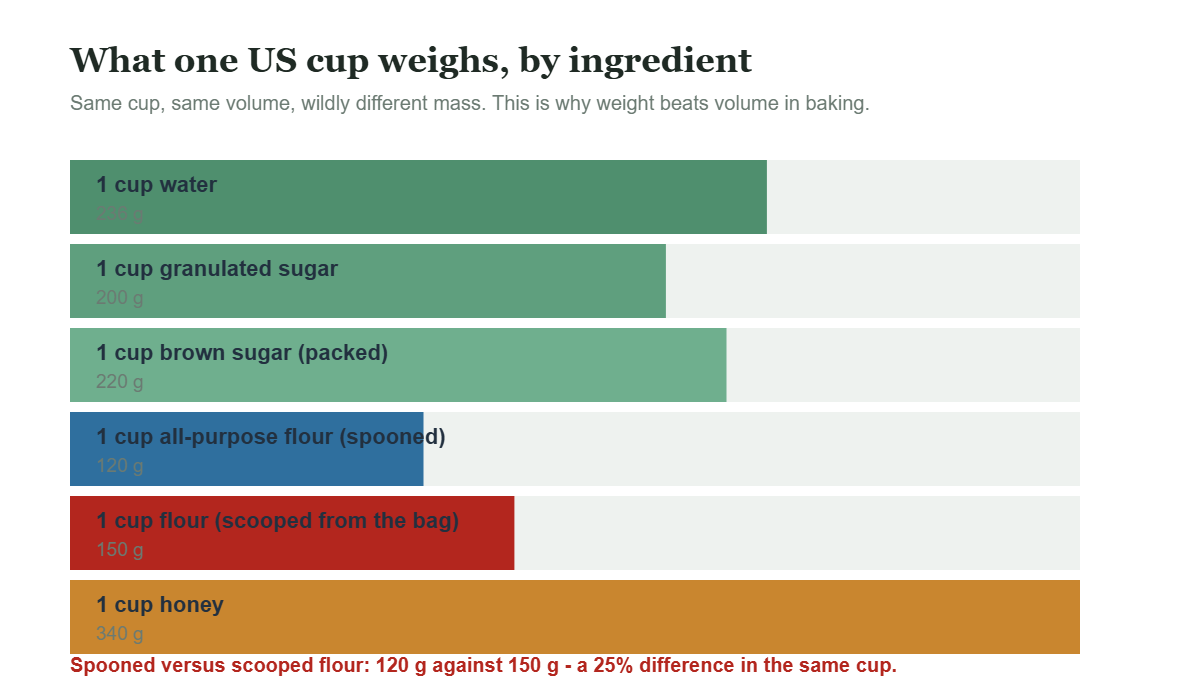
| Ingredient | Weight of 1 US cup | Note |
|---|---|---|
| Water | 236 g | The reference point – 1 ml = 1 g |
| All-purpose flour, spooned and levelled | About 120 g | The number most bakers use |
| All-purpose flour, scooped from the bag | About 150 g | Compaction – up to 25% more flour |
| Granulated sugar | About 200 g | Fine crystals pack predictably |
| Brown sugar, packed | About 220 g | “Packed” is a real instruction |
| Honey or syrup | About 340 g | Dense and sticky; use oil on the cup |
| Butter | 227 g (2 sticks) | One stick = 113 g = 1/2 cup |
This is the whole problem in one table. A cup of flour and a cup of honey differ in mass by nearly a factor of three. Any recipe written in cups is describing volume while expecting a particular mass, and the two only line up if you measure the way the writer did.
The conversion numbers worth remembering
You do not need a wall chart. Six conversions cover almost every recipe you will meet.
| From | To | Exact-ish figure |
|---|---|---|
| 1 US cup | Millilitres | 236.6 ml |
| 1 US fluid ounce | Millilitres | 29.57 ml |
| 1 ounce (weight) | Grams | 28.35 g |
| 1 pound | Grams | 454 g |
| 1 kilogram | Pounds | 2.205 lb |
| Oven 350 F | Celsius | 177 C – most dials round to 180 C |
Why a scale settles it
A recipe in grams is unambiguous in a way a recipe in cups can never be, because the writer has already resolved the compaction question for you. It is also faster: one bowl on a scale, zeroed between additions, instead of three cups to wash.
Kitchen scales are usually accurate to about a gram in the range you care about, and the useful features are unglamorous: a tare button, a platform large enough for a mixing bowl, and a display that does not switch off while you are still pouring. If a scale claims 0.1 g precision but the platform is the size of a phone, it is built for coffee, not for baking.
Two habits that fix most of it without buying anything
The first is the spoon-and-level method: stir the flour to loosen it, spoon it into the cup, then sweep the top level with the back of a knife. Never tap the cup down and never scoop directly from the bag – both compact the flour and both push the weight towards that 150 g figure.
The second is to write the weight in the margin the first time a recipe works. A recipe that worked at 120 g of flour keeps working at 120 g of flour, next year, in a different kitchen, with a different brand of flour. That single scribble turns a lucky success into a repeatable one.
- Stir, spoon, level – never scoop straight from the bag
- Check which cup your recipe means: 236.6 ml, 250 ml or 284 ml
- Weigh liquids too: 1 ml of water is 1 g, so a scale works for both
- Zero the scale between additions, in one bowl
- Write the gram weights in the margin once a recipe works
Pinches, dashes and smidgens are not units
Once you start weighing, the vague words in old recipes become the next thing to fix. A pinch is usually defined as about one sixteenth of a teaspoon, around 0.3 g. A dash is about one eighth of a teaspoon, roughly 0.6 g. A smidgen is half a pinch, about 0.15 g. None of them is a standard, and none of them has ever been enforced by anyone – they are instructions about relative size, not measurements.
What matters for consistency is that a teaspoon of one ingredient is not a teaspoon of another. Table salt is about 6 g per teaspoon, baking powder about 4 g, instant yeast about 3 g and ground cinnamon closer to 2.5 g. Four ingredients, four different masses, one identical spoonful – which is precisely why a scale that resolves to a gram is more useful for a spice blend than a set of measuring spoons that only promises a shape.
The practical compromise is to keep the spoons for the small stuff and write your own gram values next to them once you have dialled a blend in. Salt at 6 g per teaspoon becomes a number you can scale; “a pinch” never will be.
Frequently asked questions
Is measuring by weight really more accurate than by volume?
For dry ingredients, yes – dramatically. The same cup of flour can weigh 120 g or 150 g depending on how it was filled. Liquids are far less sensitive, which is why cups survive in liquid-only recipes.
Do I need a 0.1 g precision scale for baking?
No. One gram of resolution is plenty for bread and pastry. Sub-gram precision matters for coffee and small spice blends, not for a 500 g dough.
Why does my recipe say “packed” brown sugar?
Because it is a real instruction with a real effect: packed brown sugar weighs about 220 g per cup, loosely filled it weighs noticeably less. If the recipe says packed, pack it down.
Are oven temperatures interchangeable between F and C?
Not exactly. 350 F is about 177 C, and most dials round to 180 C. That small gap rarely matters, but it is one more reason a recipe in weights plus a thermometer beats one in cups plus a dial.
How should I store the flours and sugars I measure from?
Airtight, and labelled. Humidity changes how flour behaves as much as how it measures, and a jar that keeps moisture out keeps your weights consistent between bakes.
How much is a pinch in grams?
Commonly around 0.3 g per pinch and about 0.6 g per dash. They are informal relative measures rather than standard units, so a scale is the only way to make them repeatable.
Does a teaspoon of salt weigh the same as a teaspoon of yeast?
No. Table salt is roughly 6 g per teaspoon and instant yeast roughly 3 g. Same spoon, double the mass – which is why converting spoon measures to grams is worth doing once, per ingredient.
Gear referenced in this guide
Three kitchen items from our own range that suit the advice above – a scale, spice jars and a rotating rack for the things you measure in pinches rather than cups. None of them is required to cook well.
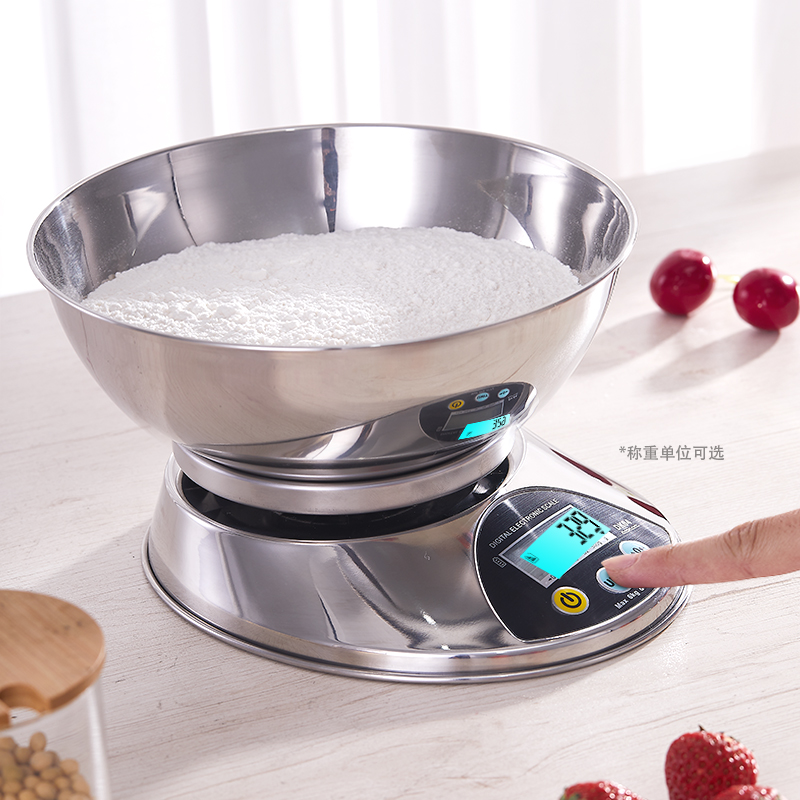 Stainless Steel Kitchen Scale with Tempered Glass Platform$72.99View product
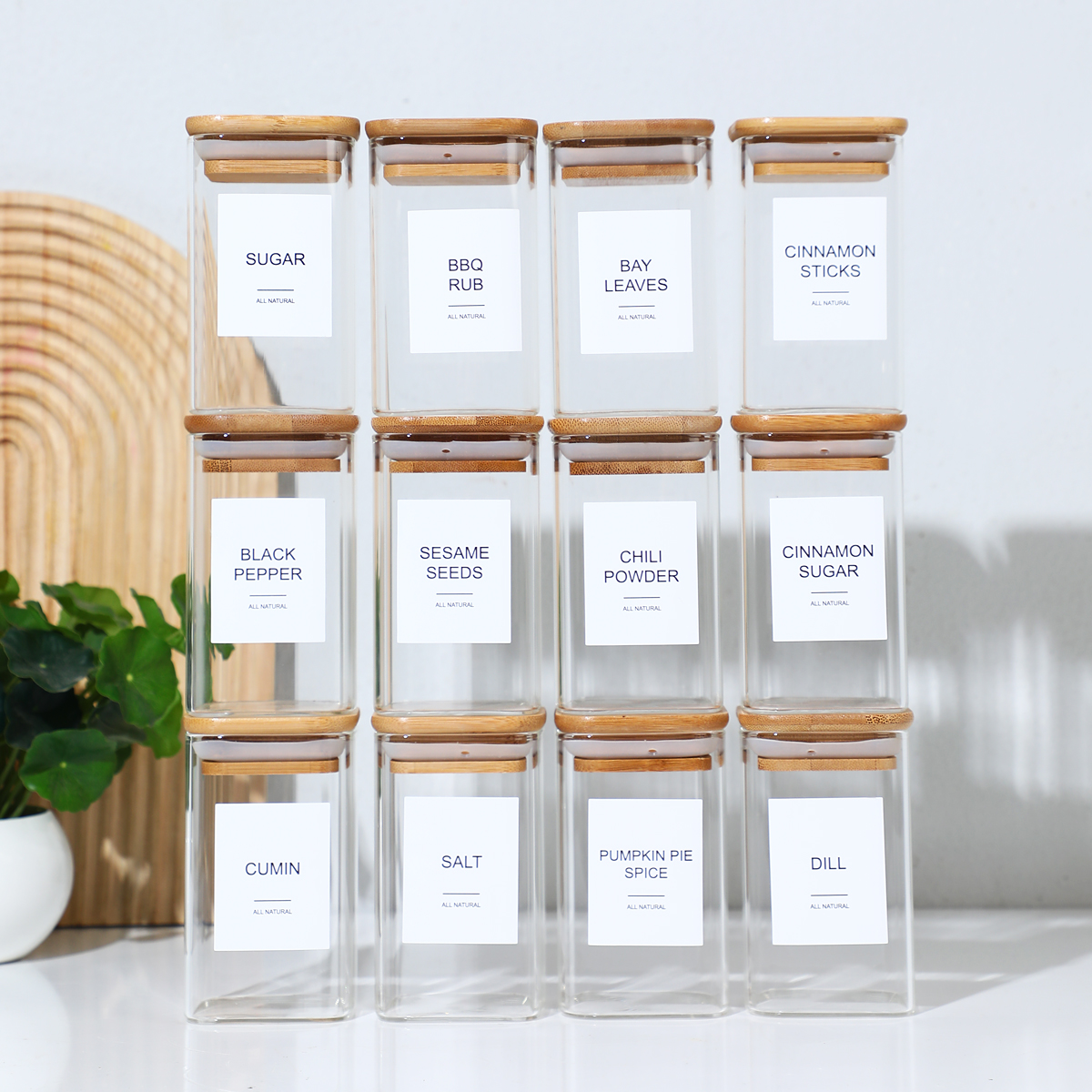 12 Pcs Square Spice Jars with 72 Stickers, Kitchen Seasoning Jars$58.99View product
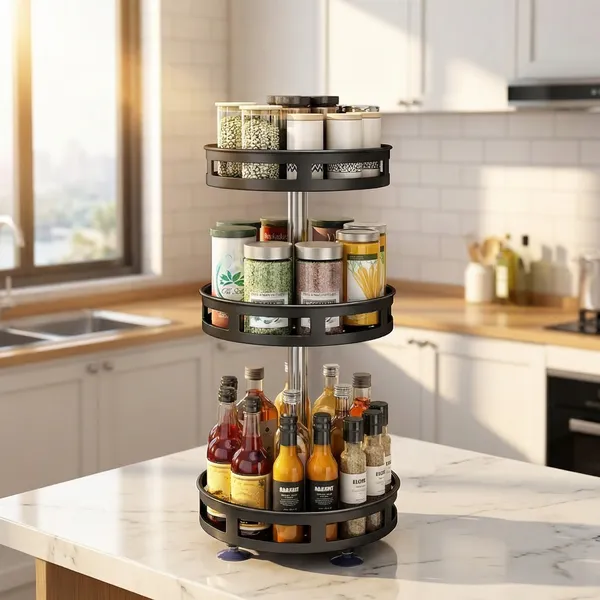 3-Tier Rotating Spice Rack Organizer, 360 Degree Steel Turntable$98.99View product
Written for ai-shoppers.com. Cup sizes, gram weights and conversions above are standard published values; brands and how a cup is filled will move the dry-ingredient figures by a few percent, which is the entire point of the article.
Compare on Amazon — this category usually has more brands, sizes and price points there.
Check current prices on Amazon →
As an Amazon Associate we earn from qualifying purchases. The price you pay is unchanged. Disclosure