Both tools look like a handle with a wheel on the end, and both are sold with the same promises. They are not the same object. One is a stone at room temperature that you put in the fridge; the other is a sealed chamber of gel that lives in the freezer. The difference is not the material – it is how cold the head gets and how long it stays that way, and that is what decides which one is worth owning.

What the tool actually does
Strip away the marketing and there is one physical action: a cold, smooth surface is rolled across the skin, and the skin surface cools. That cooling is the entire effect. Anything a roller does beyond that – the motion, the pressure – you can do with your hands.
So the useful questions are narrow. How cold does the head get? How long does it stay cold? How smooth and hygienic is the surface? Everything else on the packaging is decoration.
How cold, and for how long
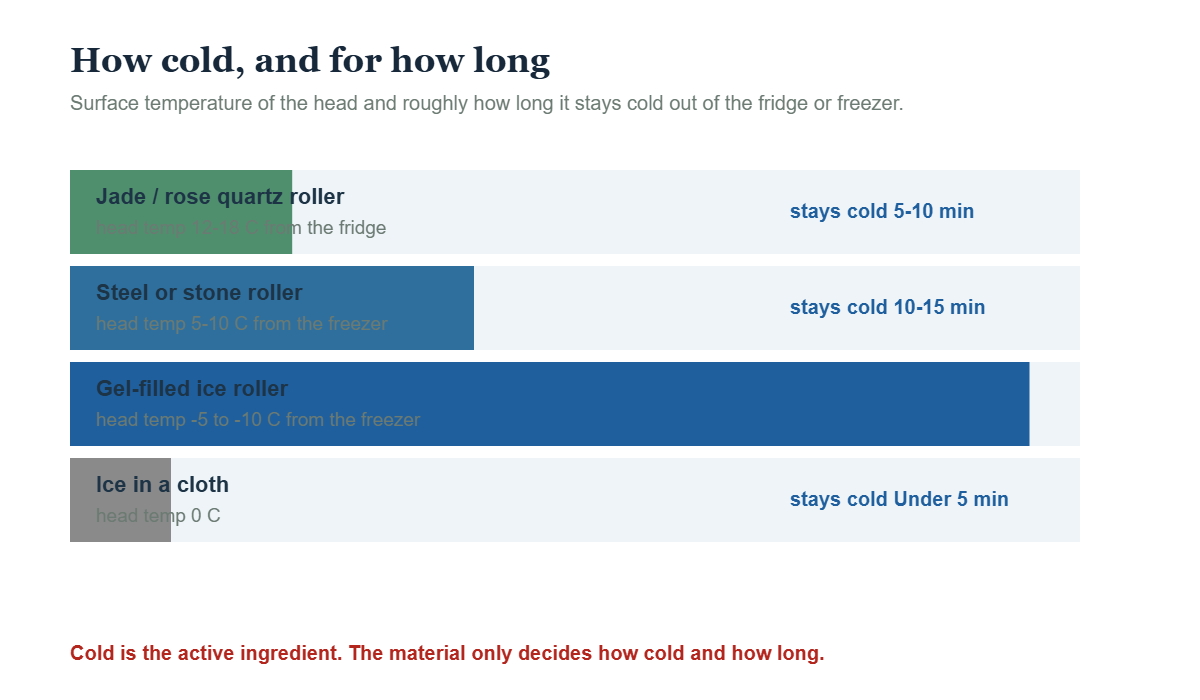
| Tool | Head temperature | Stays cold | Notes |
|---|---|---|---|
| Jade or rose quartz roller | 12-18 C out of the fridge | 5-10 minutes | Low thermal conductivity: feels cool, but holds very little cold |
| Steel or stone roller | 5-10 C out of the freezer | 10-15 minutes | Higher thermal mass than stone in a thin frame |
| Gel-filled ice roller | -5 to -10 C out of the freezer | 20-30 minutes | Designed to be frozen; the head is the whole point |
| Ice cubes in a cloth | 0 C | Under 5 minutes | Free, uneven, and drips |
The table explains the whole argument. Stone rollers have low thermal conductivity, which is why they feel immediately cold in the hand – and also why they carry very little cold into the skin. A gel roller taken out of a freezer at -18 C and used for ten minutes is doing something the stone simply cannot do, whatever it looks like.
Dwell time matters more than temperature
A single pass with anything is worth almost nothing. The cooling effect on the skin builds over minutes of continuous contact, which is why the standard advice is to keep rolling for around five to ten minutes rather than thirty seconds. If a tool only stays cold for four minutes, that is a real limitation – not because it is badly made, but because physics has already decided.
Materials, cleaning and skin
Both tools touch your face and both sit in a bathroom, so cleaning is not optional. A smooth, non-porous surface wipes clean in seconds; a porous one holds product residue and needs more care. Wash the head with mild soap after use, dry it completely, and do not share it.
Use them on clean skin, with a little slip – a light moisturiser or facial oil – so the wheel glides instead of dragging. Dragging is what causes the redness people mistake for a result. If the skin is already irritated, broken or sunburnt, cold does not fix it; leave the tool in the drawer.
Which one to buy
| If you want… | Buy |
|---|---|
| A cool, pleasant step in a routine you already do | A stone roller is fine, and it looks good on a shelf |
| Sustained cold for five to ten minutes | A gel-filled ice roller kept in the freezer |
| Cold on a specific area after sun or in heat | Gel roller, or a chilled spoon for a small area |
| Portable cooling while travelling | Stone roller – a gel roller needs a freezer at the other end |
- Can the whole head be frozen, or only chilled?
- Does the head detach for cleaning?
- Is the surface smooth with no seam that can catch hair?
- How long does it stay cold in your hand – test that, not the description
- Is the frame tight enough that the wheel does not wobble?
Frequently asked questions
Does a jade roller do anything a cold spoon cannot?
Physically, very little – both are just cool surfaces. The roller is smoother, easier to hold and easier to keep clean, which is a fair reason to prefer it.
Should I keep the roller in the freezer?
A gel-filled roller, yes – that is what it is for. A stone roller can be chilled in the fridge, but freezing stone is not recommended, as the temperature shock can crack an imperfect piece.
How long should I roll for?
Around five to ten minutes of gentle passes, which is roughly how long a proper ice roller holds its temperature. Short, repeated sessions beat one long one only if the head keeps its cold.
Will it reduce puffiness permanently?
Cooling the skin surface produces a temporary tightening that fades as the skin warms again. It is a short-term, cosmetic effect – not a treatment for anything.
Can I use either one every day?
If the skin tolerates it, a short daily session is common. Stop if the area becomes irritated, and do not use cold tools on broken or sunburnt skin.
Gear referenced in this guide
Two tools from our own range that match the sections above – one gel-filled and freezer-ready, one stone. Neither is required to cool your face; an ice cube in a cloth is free.
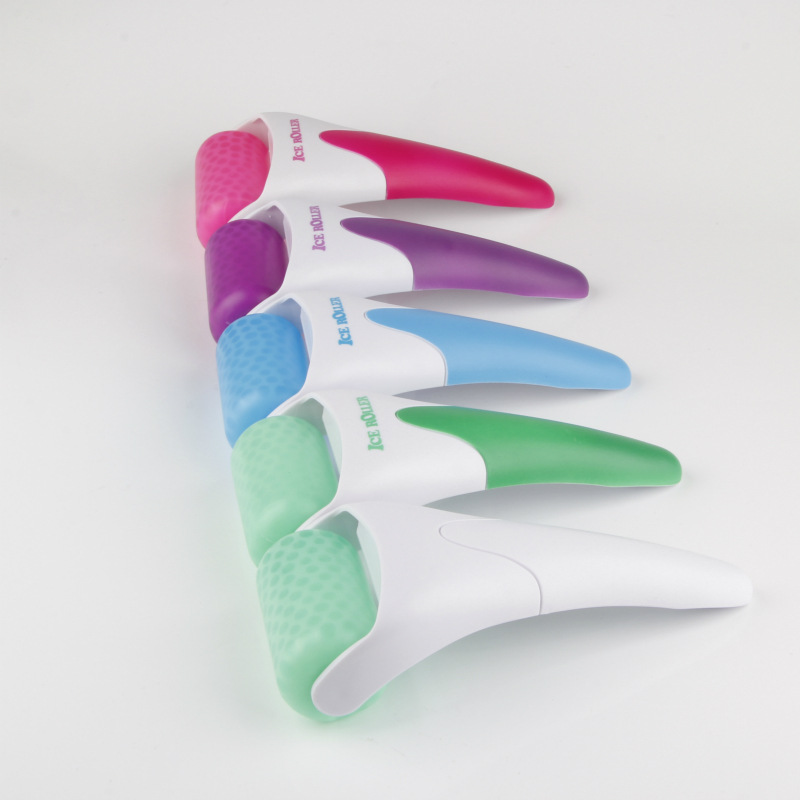 Cold Facial Ice Roller for Puffy Eyes and Skin Cooling$37.99View product
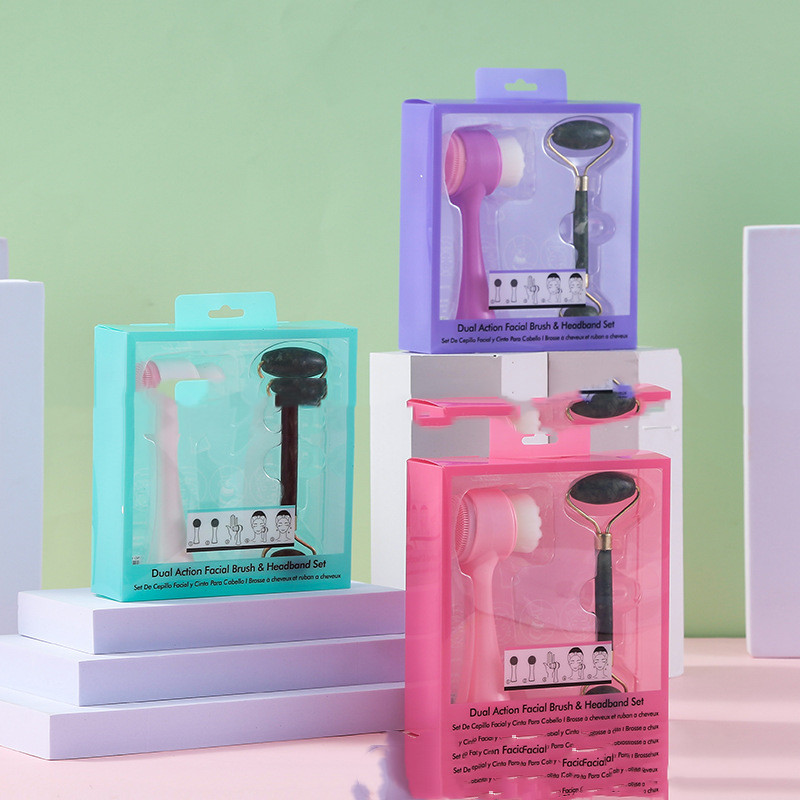 Jade Roller and Facial Cleansing Brush Set$34.99View product
Written for ai-shoppers.com. Temperatures and timings above are typical values for orientation rather than laboratory measurements; what your freezer runs at and how you roll will move them. This is a cosmetic tool, not a medical device.
Compare on Amazon — this category usually has more brands, sizes and price points there.
Check current prices on Amazon →
As an Amazon Associate we earn from qualifying purchases. The price you pay is unchanged. Disclosure