Desks do not get messy because people are untidy. They get messy because something in the setup is at the wrong distance, so objects accumulate wherever a hand happens to land. Fix five measurements and the clutter stops coming back – and none of the five requires buying anything expensive.
Start with depth, because it fixes everything else
A desk between 60 and 80 cm deep gives you three zones: a strip at the back for the screen and a lamp, a working area in the middle, and a shallow band at the front edge for your hands and keyboard. Below 60 cm the screen ends up too close and the middle zone disappears, which is exactly when items start migrating to the edges.
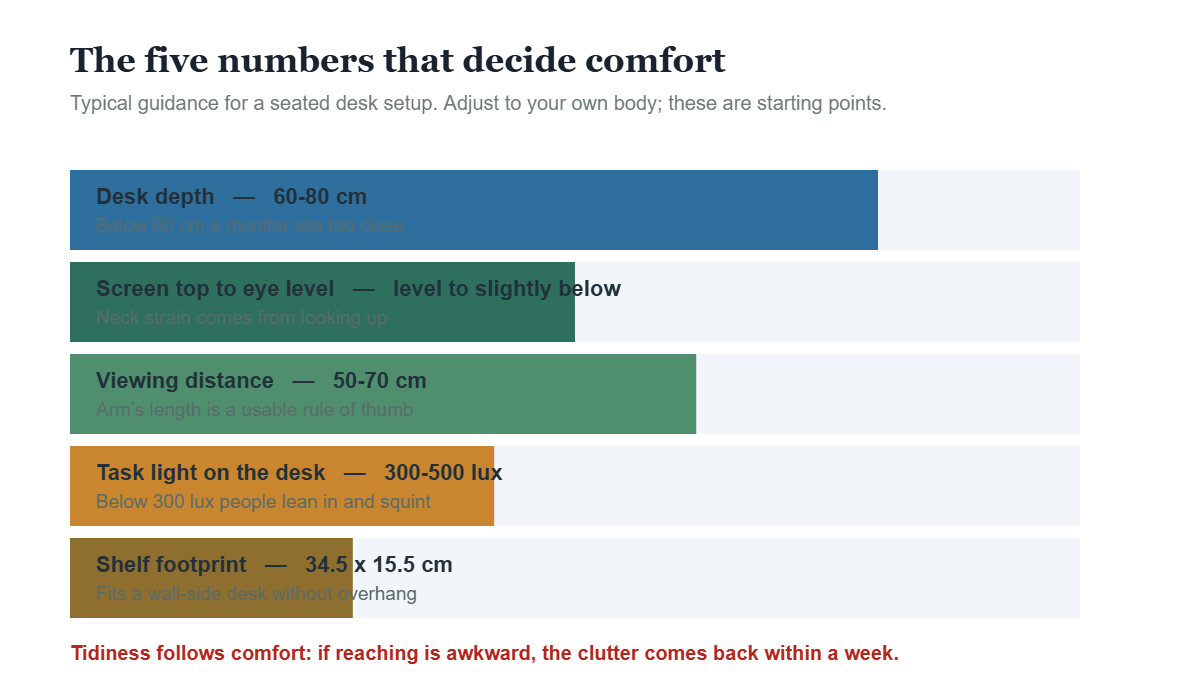
| Measurement | Typical starting point | What goes wrong otherwise |
|---|---|---|
| Desk depth | 60-80 cm | Screen too close; no working zone in the middle |
| Screen top edge | Level with, or slightly below, eye level | Neck strain, and people push the screen back oddly |
| Viewing distance | 50-70 cm | Eye fatigue; leaning in |
| Task light at the working surface | 300-500 lux | Squinting and leaning, which flattens the elbow space |
| Keyboard height | Elbows at about 90 degrees | Shoulders creep up; the mouse area fills with junk |
Why vertical storage beats drawer storage
Anything you use daily should be reachable without standing up or clearing a space first. That argues for a shelf at the back of the desk rather than a drawer at knee level: a small multi-tier unit lifts books, notebooks and a tablet into the airspace you are not otherwise using, and it keeps the working surface clear for the one thing you are doing.
Size matters here. A unit roughly 34.5 cm wide and 15.5 cm deep sits against the wall on a standard desk without overhanging the front edge, which is the difference between a shelf you keep and one you knock over. Look for a stated load rating too – 20 kg across three tiers is enough for a full row of hardbacks.
Light: the measurement nobody takes
Task lighting on a desk is commonly put at 300 to 500 lux at the working surface. Below about 300 lux most people unconsciously lean forward, and leaning forward is what collapses your elbow space and turns the front of the desk into a dumping ground. Fixing the light often fixes the posture and the mess at the same time.
Colour temperature matters more than people expect. Around 2700-3000 K feels like evening and suits reading; 4000-5000 K is neutral and best for detailed work; above 6000 K looks clinical and is tiring over a long session. A lamp with an adjustable range covers all three, which is more useful than one with a higher peak output.
The cable problem, solved by distance
Most cable tangles are an artefact of length: a 1 metre cable forces the device to sit within one metre of the socket, so it ends up wherever that is, not where you want it. Before buying organisers, measure the run from socket to device and buy one cable of the right length – 2 metres usually covers a desk – then fix it in place with a single clip. A cable that is the correct length lies flat and needs no management.
- Screen top no higher than eye level; distance 50-70 cm
- Elbows at roughly 90 degrees when typing
- 300-500 lux on the working surface
- Daily items within arm’s reach, at the back of the desk rather than in a drawer
- Correct cable lengths before buying any cable management
The difference between storage and staging
Two kinds of clutter live on a desk, and they need opposite treatment. Storage is the fixed stuff – the lamp, the shelf, the monitor, the notebook you use daily – and it should have one assigned position that never changes. Staging is the transient stuff: keys, a wallet, receipts, a cable you unplugged an hour ago. Staging is what actually covers a desk, because it has no home and gets put down wherever a hand lands.
The fix is a single shallow tray for staging, placed at the front corner where your hand naturally falls. Everything transient goes in it, and once a week you empty the tray back into the world. One tray plus one weekly sweep removes more visible mess than any amount of reorganising, because it stops the transient layer from spreading into the working area.
Keep the two categories separate and the desk stops needing to be tidied. Mix them – put keys in the same drawer as the pens – and both end up on the surface again within days.
Frequently asked questions
How deep should a desk be?
60-80 cm is the useful range. Under 60 cm the screen sits too close and you lose the middle working zone; over 80 cm you start reaching for the mouse.
Should the monitor be at eye level or higher?
The top edge at, or slightly below, eye level is the usual guidance. Looking up at a screen is what produces neck strain, and it is also what pushes the keyboard into an awkward spot.
How bright should a desk lamp be?
Aim for roughly 300-500 lux at the surface where you work. Adjustable colour temperature (around 2700-6500 K) is more useful day to day than extra peak brightness.
Do I need a shelf if I have drawers?
For daily items, yes – a shelf at the back of the desk puts them within reach without pulling anything out. Drawers suit things you use weekly, not hourly.
What is the single best first change?
Measure your desk depth and screen height, then fix the light. Those three steps remove most of the reaching that creates clutter in the first place.
How often should I clear a desk?
A five-minute weekly sweep of the staging tray is usually enough. Daily clear-downs only work when every object already has an assigned position.
Is a standing desk worth the extra height measurement?
If you use it standing, set the surface so your elbows sit at roughly 90 degrees at both heights. A desk that is only comfortable seated is half used, and half-used desks collect clutter.
Gear referenced in this guide
Three desk items from our own range that match the measurements above – a compact organizer shelf, an adjustable task lamp and a small phone holder. None of them is required; the numbers matter more than the products.
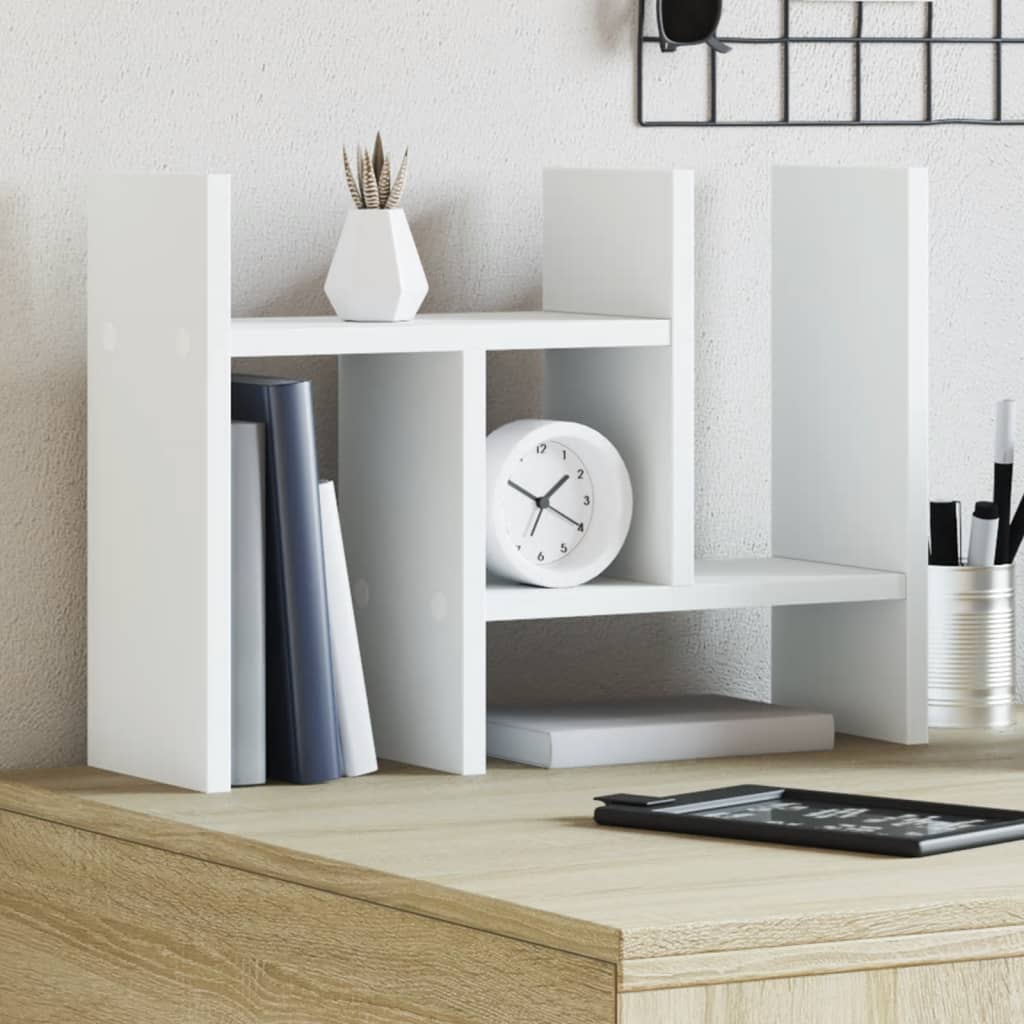 Engineered Wood Desk Organizer Shelf, 34.5 x 15.5 x 35.5 cm$67.99View product
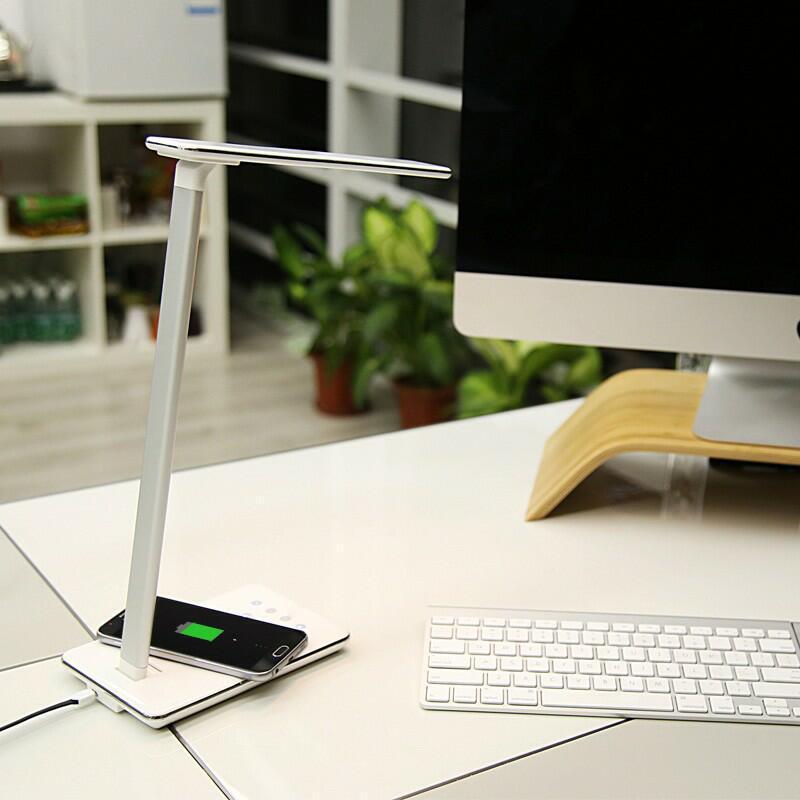 Dimmable LED Desk Lamp with Adjustable Head$79.99View product
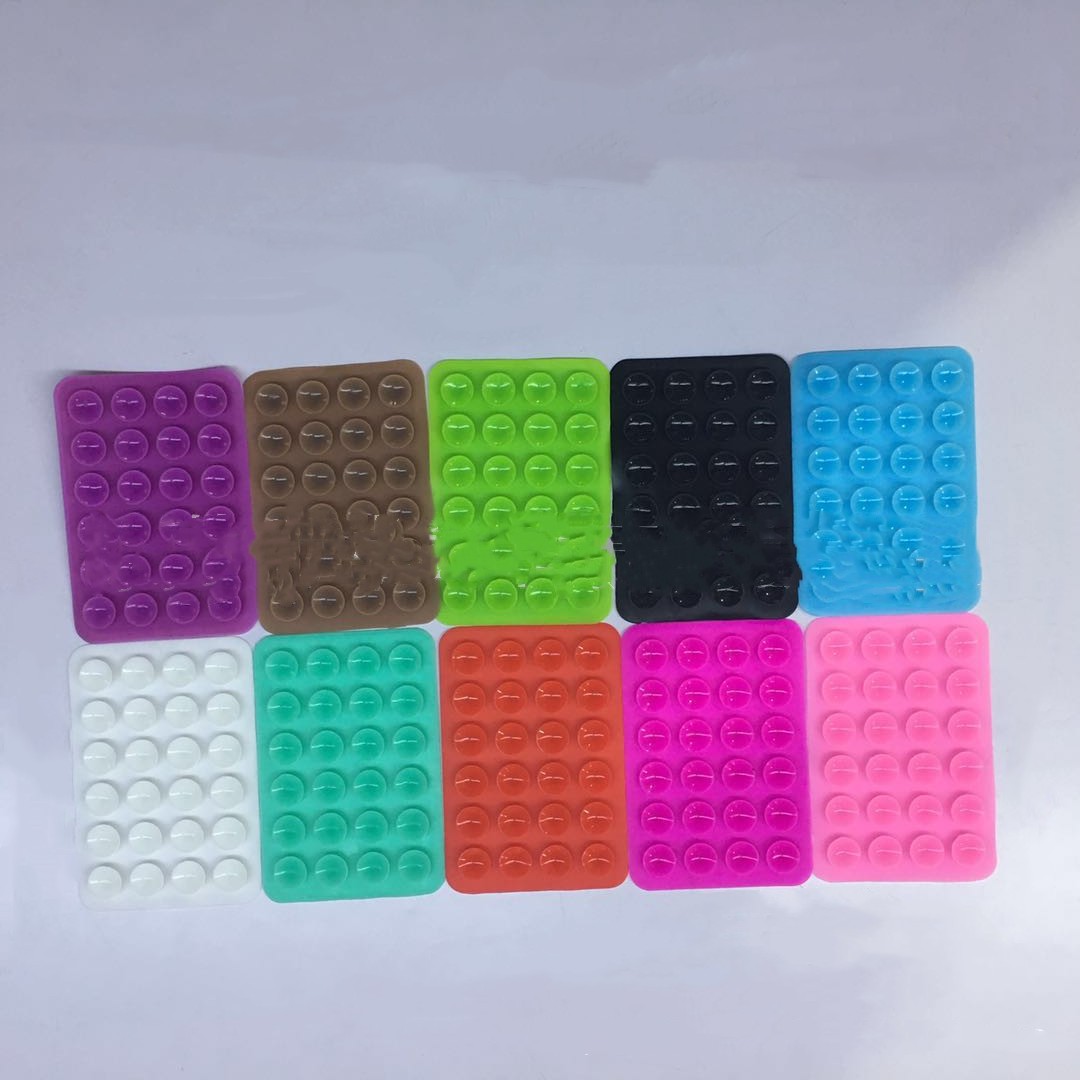 Square Suction Cup Phone Holder, Silicone Grip Stand$18.99View product
Written for ai-shoppers.com. Distances, lux levels and colour temperatures above are conventional guidance for a seated desk setup rather than specifications of any product; measure your own space and adjust to your body.
Compare on Amazon — this category usually has more brands, sizes and price points there.
Check current prices on Amazon →
As an Amazon Associate we earn from qualifying purchases. The price you pay is unchanged. Disclosure