A dorm room is a storage problem disguised as a bedroom. The typical allocation is nine to twelve square metres, one bed, one desk, one wardrobe, and a rulebook that forbids drilling holes. Everything you own has to fit inside that footprint without blocking the door, the radiator or the fire exit. This guide works through the measurements that decide what actually fits, and the storage that survives a year of use.
1. Start with the volume you actually have
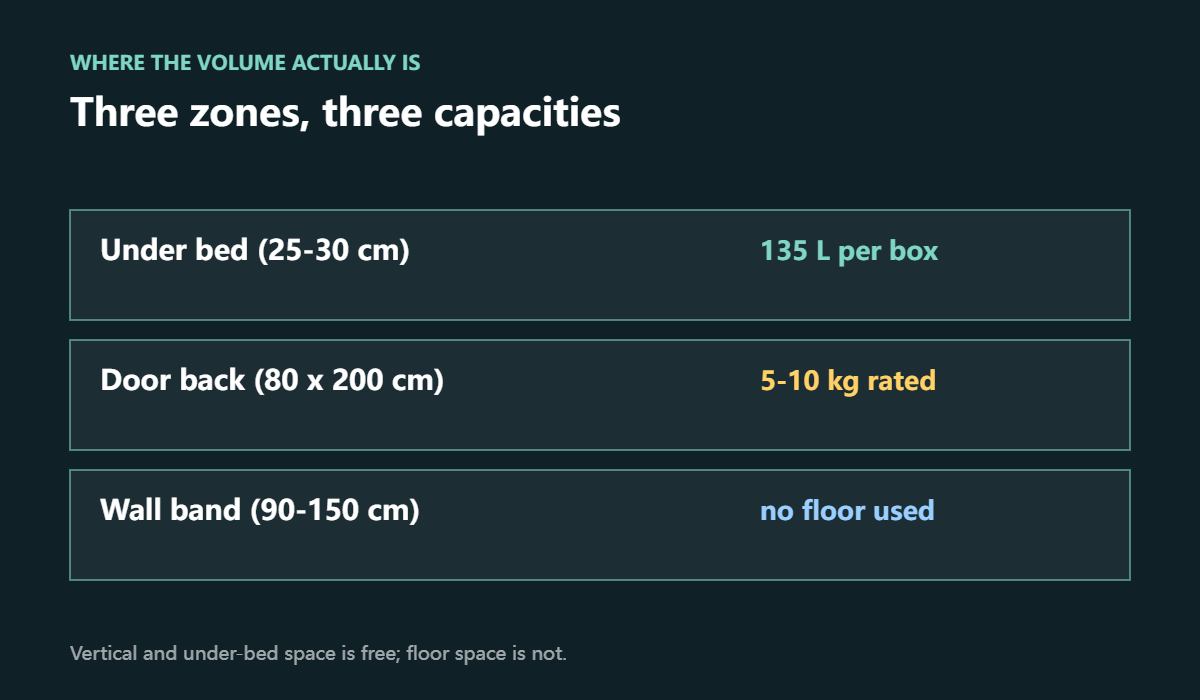
Measure three things before buying anything: the floor area, the gap under the bed, and the height of the wardrobe rail. A standard single bed is 90 by 200 cm; the frame usually leaves 25 to 30 cm of clearance underneath. That gap is the single most valuable storage space in the room – a 90 by 60 by 25 cm box is roughly 135 litres, and three of them hold more than the average wardrobe.
Nine square metres sounds generous until furniture lands. A bed takes 1.8 square metres, a desk 0.72, a wardrobe 0.4, and the door swing needs a clear 80 cm arc. What remains is circulation, not storage: roughly two square metres of floor you can stand on. Anything stored on the floor costs you walking space, which is why under-bed and vertical storage win.
2. Vertical beats horizontal, every time
Wall height is the only dimension a dorm gives you for free. Between 90 and 150 cm above the floor is the band you reach without bending or climbing; above 170 cm needs a step stool, which you should not be standing on in a room with a low ceiling and a smoke detector. A wall-mounted shelf at 110 cm uses space the desk cannot, and a hanging organizer on the back of the door uses the 4 cm between the door and the wall.
Over-door hooks are the cheapest vertical storage there is: a door is typically 200 cm tall and 80 cm wide, which is 1.6 square metres of unused surface. The catch is weight – most over-door hooks are rated 5 to 10 kg, and a wet towel plus a coat plus a bag gets there quickly.
3. The no-drill rules that actually hold
Dorms forbid drilling for good reasons: holes in fire doors and plasterboard cost more to repair than the deposit. That leaves three attachment methods. Adhesive strips and plates hold 3 to 5 kg on smooth, clean, dry paint or tile, and lose grip on textured walls and in humid bathrooms. Tension rods work between two parallel surfaces 40 to 70 cm apart and hold 2 to 4 kg. Freestanding units – shelving that leans or stands – carry the most weight but eat floor area.
The failure mode is always the same: the surface was dusty, the adhesive was applied to cold paint, or the load was hung at the far edge of the bracket. Clean with alcohol, let it cure for the full 24 hours the packet specifies, and keep heavy items near the wall.
4. What to store where
| Zone | Measure | Belongs there | Watch out for |
|---|---|---|---|
| Under the bed | 25-30 cm clearance | Out-of-season clothes, bedding, spare shoes | Dust; use lidded boxes |
| Desk wall, 90-150 cm | Reach band | Daily items, charger, stationery | Do not block the socket |
| Door back | 80 x 200 cm | Coats, bags, towels | 5-10 kg hook limit |
| Wardrobe rail | 60 cm depth, ~100 cm rail | Hanging clothes, 15-20 items | Overloading bends the rail |
| Shared bathroom | Shelf at 110-120 cm | Caddy with bottles, razor | Must drain; nothing left behind |
5. The shared bathroom problem
Most dorm storage advice ignores the bathroom, which is where things actually go missing. A shared shower has no shelf you can claim, so the practical answer is a caddy that hangs over the screen or the door and travels back to your room with you. A double-basket aluminium caddy weighs under 500 g empty, holds two litres of bottles, and drains through slots instead of holding a film of water that turns pink within a week.
If your room has an ensuite corner, a rotating corner unit converts the dead triangle beside the basin into reachable storage: a 90-degree corner with 40 cm of wall on each side encloses about 0.08 square metres, and the swing adds 20 to 30 cm of reach at the front edge. That is the difference between using the corner and stacking bottles on the floor.
6. Packing for the trip home
Dorm life is seasonal: you move in, you go home for breaks, you move out. A flat toiletry and cosmetics organizer that weighs 450 g and folds into a drawer is worth more than a rigid box that only works in one room. Pack by frequency, not by category: the ten things you touch daily go in the top layer, everything else goes underneath, and the bag itself should weigh under a kilogram empty so it does not eat your luggage allowance.
7. A five-step setup that takes an afternoon
- Measure the under-bed clearance and buy boxes that slide in with 2 cm to spare.
- Mark 90 cm and 150 cm on the wall; put shelves and hooks inside that band.
- Add an over-door rack rated for at least 5 kg, and keep it under that.
- Choose one caddy for the shared shower and keep everything in it.
- Leave the 80 cm door swing and the radiator clear – a room that fails inspection is not a room.
Frequently asked questions
Can I use adhesive hooks on dorm walls?
Usually yes, if the paint is smooth and clean, and the load stays under the rated 3-5 kg. Avoid textured walls, cold surfaces and bathrooms where humidity weakens the adhesive. Remove them slowly, parallel to the wall, to avoid pulling paint.
How much fits under a standard single bed?
A 25-30 cm gap under a 90 by 200 cm bed takes boxes up to about 25 cm tall. Three 90 by 60 by 25 cm boxes hold roughly 405 litres between them – more than most dorm wardrobes.
What is the best storage for a shared bathroom?
A hanging caddy you carry in and out. It keeps your bottles off the floor, drains instead of pooling water, and does not require a shelf you have to share.
Do tension rods damage walls?
No holes, but they need two parallel surfaces and enough tension. They hold 2-4 kg and can slip on glossy tile; check them monthly.
How do I stop the room feeling smaller?
Keep the floor clear, use one consistent box size so stacks look intentional, and take storage vertical rather than outward. Visual clutter costs more perceived space than furniture does.
Honest disclosure: measurements are typical ranges for standard dorm furniture, not a guarantee for your room. Measure before ordering.
Gear referenced in this guide
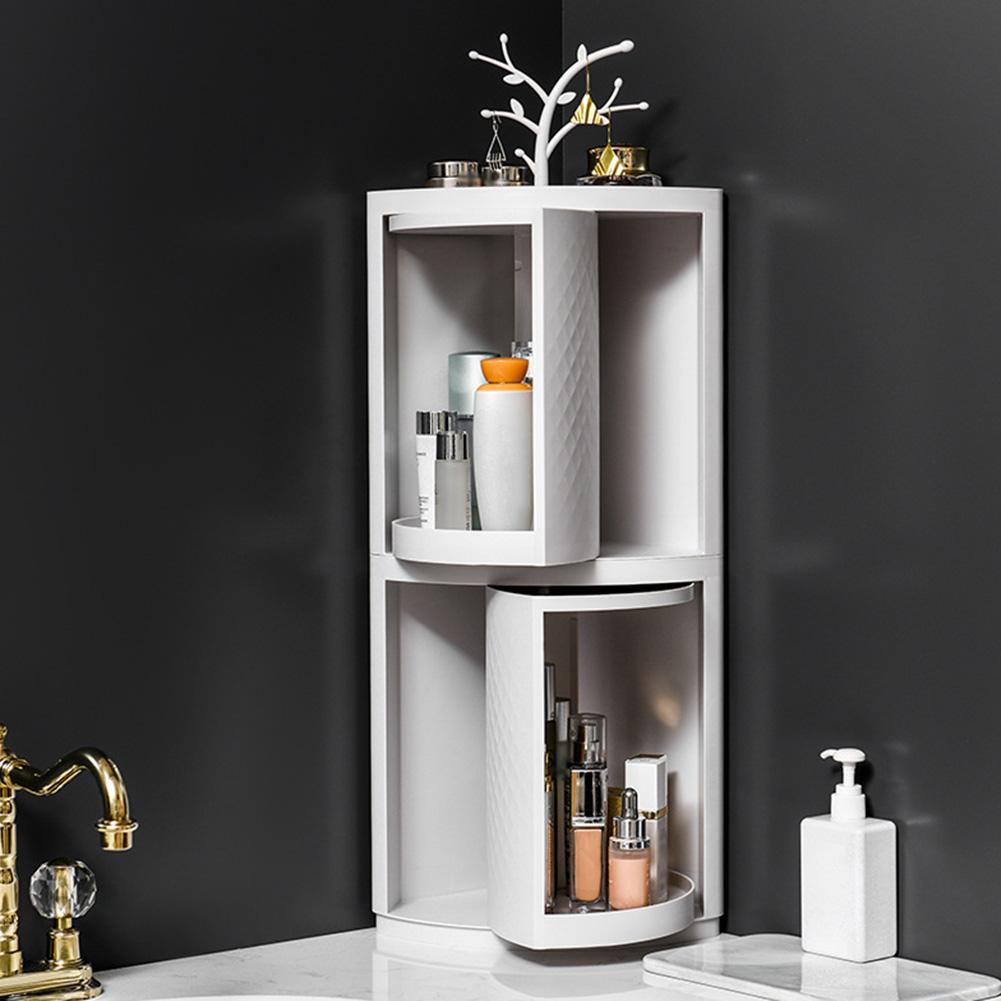
Rotatable Corner Bathroom Organizer, Wall-Mounted
Turns the dead corner beside a basin into reachable shelf space; wipes clean, no rust.
$54.99
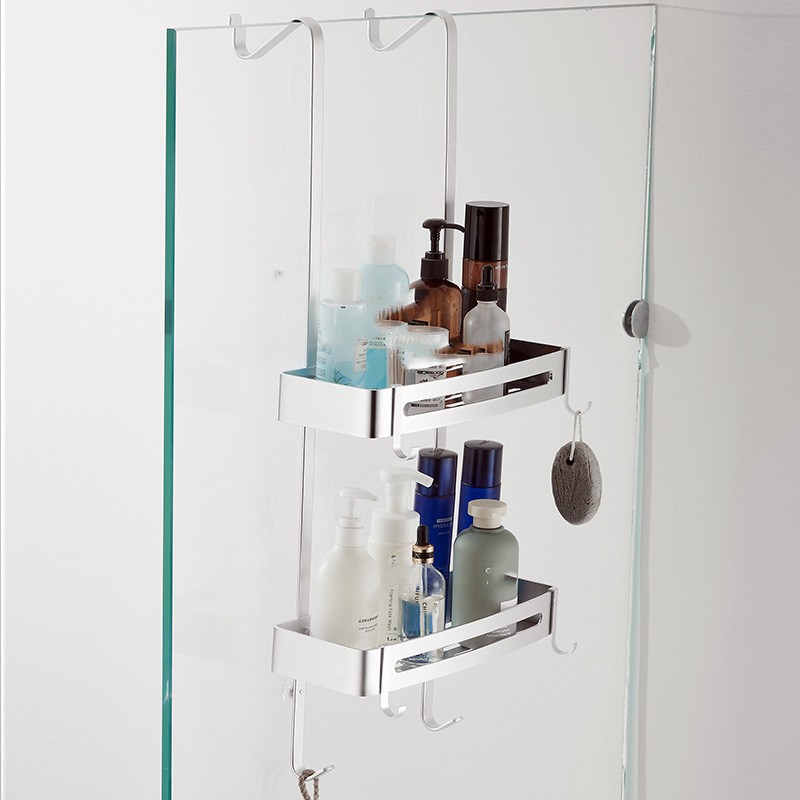
Aluminium Hanging Shower Caddy, Double Basket
Hangs over the screen, drains through the baskets, and comes back to your room with you.
$63.99
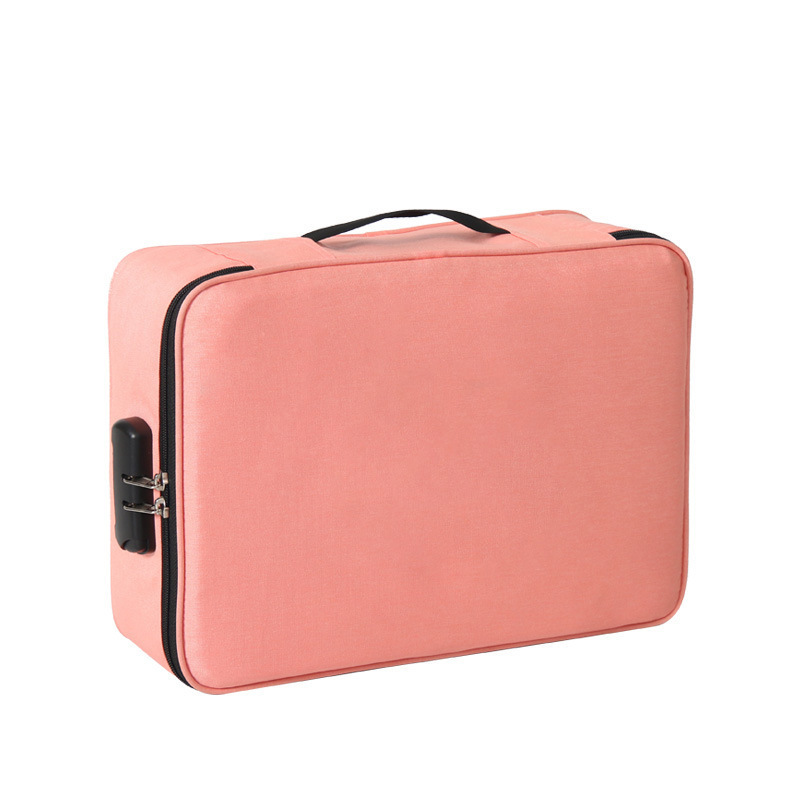
Cloth Card and Cosmetic Travel Organizer, 450 g
Flat, light and packable – the piece that moves between dorm, home and holiday.
$67.99
Compare on Amazon — this category usually has more brands, sizes and price points there.
Check current prices on Amazon →
As an Amazon Associate we earn from qualifying purchases. The price you pay is unchanged. Disclosure