A soft cooler bag is judged by one number: how long it holds ice on a hot day. Manufacturer claims range from 24 hours to keeps ice for days, and almost none state the conditions. The physics is simple – ice cools by melting, and melting depends on how much ice you packed, how well the bag is insulated, and how often the lid opens.
1. Ice is the fuel, not the bag
One kilogram of ice absorbs about 334 kilojoules while melting – roughly the energy needed to cool 20 litres of drink from 25 C to 4 C with margin. That is the whole budget: the bag only slows the melt. A 24-can bag with two kilograms of ice will outperform a premium bag with one kilogram, every time.
2. The two-to-one ratio
The practical rule is two parts ice to one part contents by weight, which is why a 24-can bag (about 9 kg of cans) wants 4-6 kg of ice, not a single tray. Below 1:1 the ice melts into water that no longer cools; above 3:1 you are carrying ice to keep ice cold.
3. What insulation actually buys you
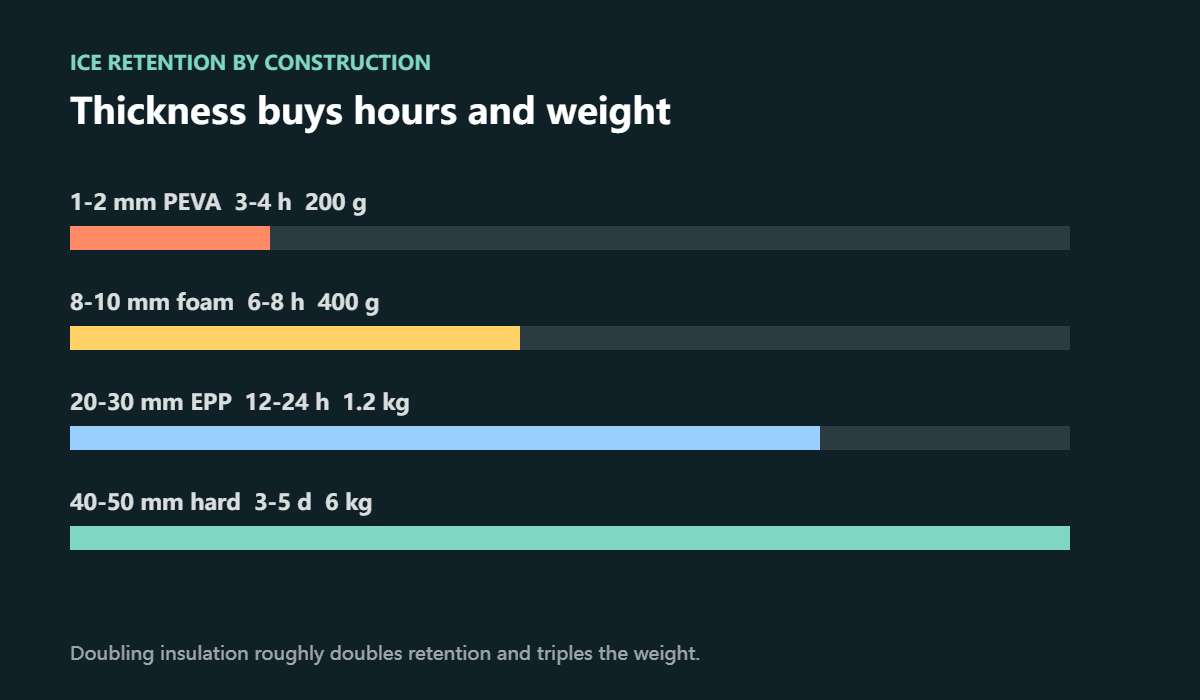
| Construction | Wall thickness | Ice retention (24 cans) | Weight |
|---|---|---|---|
| Single-layer PEVA | 1-2 mm | 3-4 hours | 150-250 g |
| PEVA plus 8 mm foam | 8-10 mm | 6-8 hours | 300-450 g |
| Moulded EPP or PU | 20-30 mm | 12-24 hours | 900-1,500 g |
| Hard rotomoulded | 40-50 mm | 3-5 days | 5-8 kg |
The jump from 8 mm to 25 mm roughly doubles retention and triples weight. That is the trade: a 12-hour bag is a 1 kg bag, and a 4-hour bag is a 300 g bag. Most day trips need the second one.
4. The four-hour window
A 300-450 g bag with 8-10 mm foam and a 2:1 ice ratio holds drinkable-cold contents for about four hours in 25 C shade, less in direct sun. That covers a beach morning, a commute with groceries, or a picnic lunch – and it is honest, unlike 24 hours, which assumes a pre-frozen bag, 3 kg of ice, and never opening it.
5. Lid openings cost you
Every opening dumps the cold air layer and lets warm air in. In practice each opening costs 10-20 minutes of retention on a soft bag. Ten openings over an afternoon is two to three hours lost – more than any difference between two mid-range bags.
6. Pre-chilling changes the result
Ice cooling 25 C cans spends its first hour just bringing them to ambient-cold. Cans chilled overnight in a fridge, then packed, keep the ice intact much longer: the same bag and ice can go from four hours to six. Pre-chilling is free and worth more than upgrading the bag.
7. Drainage and the soggy-sandwich problem
Ice melts into water at 0 C; if that water sits, food in contact gets wet and the bag becomes a pond. Look for a drain plug or a raised base grid. A 24-can bag with 4 kg of ice produces 4 litres of meltwater over a day – that is the volume you are managing.
8. Zips, seams and the first failure
Soft coolers fail at the zip and the seam, not the foam. A moulded zip with a waterproof flap survives hundreds of cycles; a plain nylon zip on a stitched seam starts leaking cold air within a season. Check inside: welded seams beat stitched ones, which wick water along the thread.
9. Size against the car boot
A 24-can bag is roughly 40 x 30 x 30 cm when full – about 36 litres – and weighs 10-13 kg with ice and drinks. That is a two-handed lift, and it needs a flat base in the boot. A 70-litre trunk organizer gives it a wall to lean against; without one, the bag slides forward under braking and the lid pops open.
10. What 24-hour claims assume
Usually: bag pre-chilled, filled two-thirds with ice, kept closed in 20 C shade, and measured to a still-cold threshold rather than still-has-ice. If a manufacturer does not state ambient temperature, ice quantity and opening frequency, the number is marketing, not a specification.
11. The five-point buying check
- Wall thickness: 8-10 mm for a day bag, 20 mm or more for overnight.
- Ice ratio: can it hold 2:1 by weight without deforming?
- Seams: welded inside, not stitched.
- Drain: plug or raised grid, not a flat base.
- Weight: under 500 g empty for a day bag, or you will leave it at home.
12. The honest summary
For a day out, a 300-450 g bag with 8-10 mm foam, 2:1 ice, pre-chilled cans and ten lid openings will hold cold for four hours. For an overnight you need 20-30 mm walls and 1 kg of bag weight, and you should accept it is a different product. Buying the heavy one for day trips means carrying three times the weight for retention you never use.
Frequently asked questions
How much ice for 24 cans?
About 4-6 kg, following the 2:1 ratio. A single 1 kg tray melts within two hours and stops cooling.
How long does a soft cooler keep ice?
8-10 mm foam: 6-8 hours sealed, about 4 hours with regular opening. 20-30 mm moulded: 12-24 hours. Claims beyond that assume pre-chilled bags and no openings.
Is a hard cooler worth the weight?
Only for trips over 24 hours. A hard cooler is 5-8 kg empty and holds ice for days; a day bag is 300-450 g and holds cold for a morning.
Why does my cooler fill with water?
Ice melting, at about 1 litre per kilogram. Use a bag with a drain plug or raised grid and keep food above the waterline.
Can I use freezer packs instead of ice?
Yes, and they avoid meltwater, but they carry less cooling energy per kilogram. Use about 1.5 times the weight of ice for the same result.
Honest disclosure: retention figures are typical ranges measured with a 2:1 ice ratio in 25 C shade; real performance depends on load, openings and ambient temperature.
Gear referenced in this guide
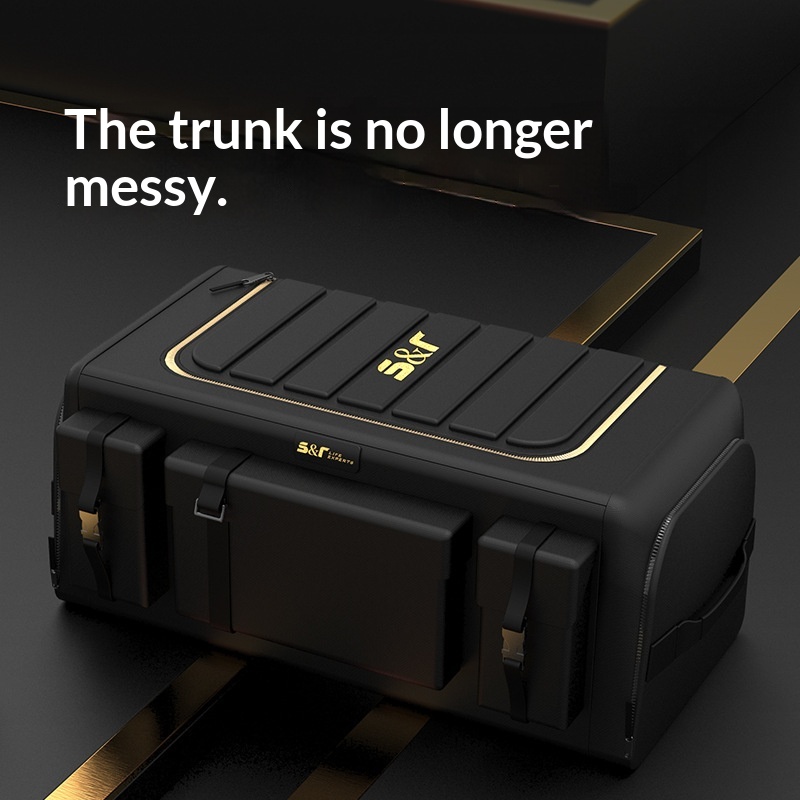
Folding Car Trunk Organizer Storage Box, 70 L Oxford
Gives the cooler a wall to lean against so it stops sliding and popping open.
$65.99
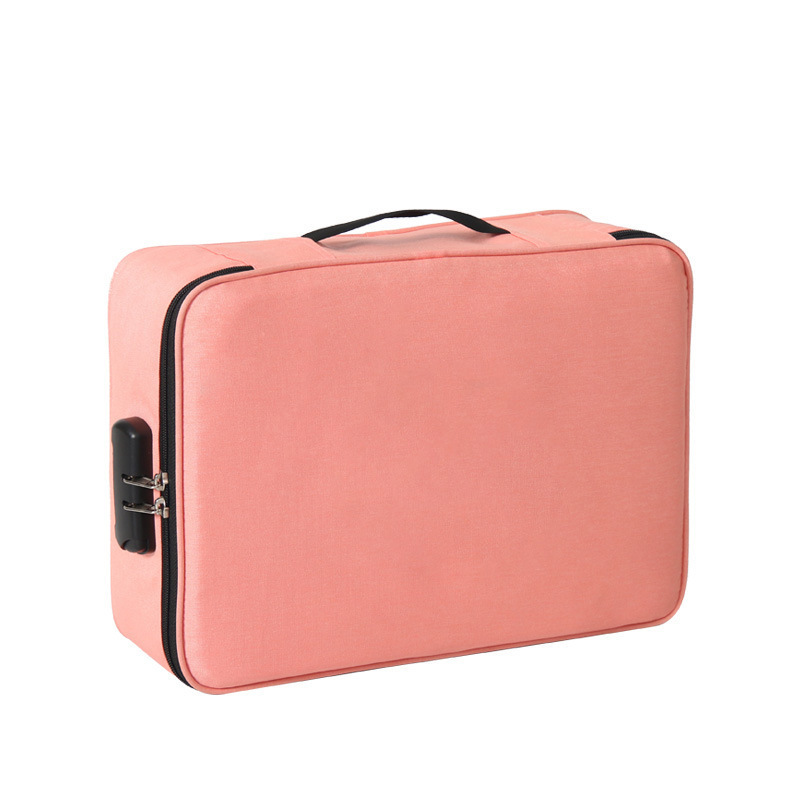
Cloth Card and Cosmetic Travel Organizer, 450 g
For the small dry bag that keeps sandwiches out of the meltwater.
$67.99
Compare on Amazon — this category usually has more brands, sizes and price points there.
Check current prices on Amazon →
As an Amazon Associate we earn from qualifying purchases. The price you pay is unchanged. Disclosure