A product listing with eight photos looks trustworthy. A listing with two looks cheap. Neither impression is evidence. What images can prove is narrow and specific – dimensions, colour, texture, condition – and everything else they suggest (durability, ease of use, real-world fit) is a claim the photo cannot support. Here is how to audit a listing in about ninety seconds.
1. What a photo can prove
Five things, and only five: shape, colour under one lighting condition, surface texture, visible defects, and scale if a reference object is present. Everything else is inference. A photograph of a storage box on a shelf does not prove the shelf is standard depth; it proves the box sat on one shelf once.
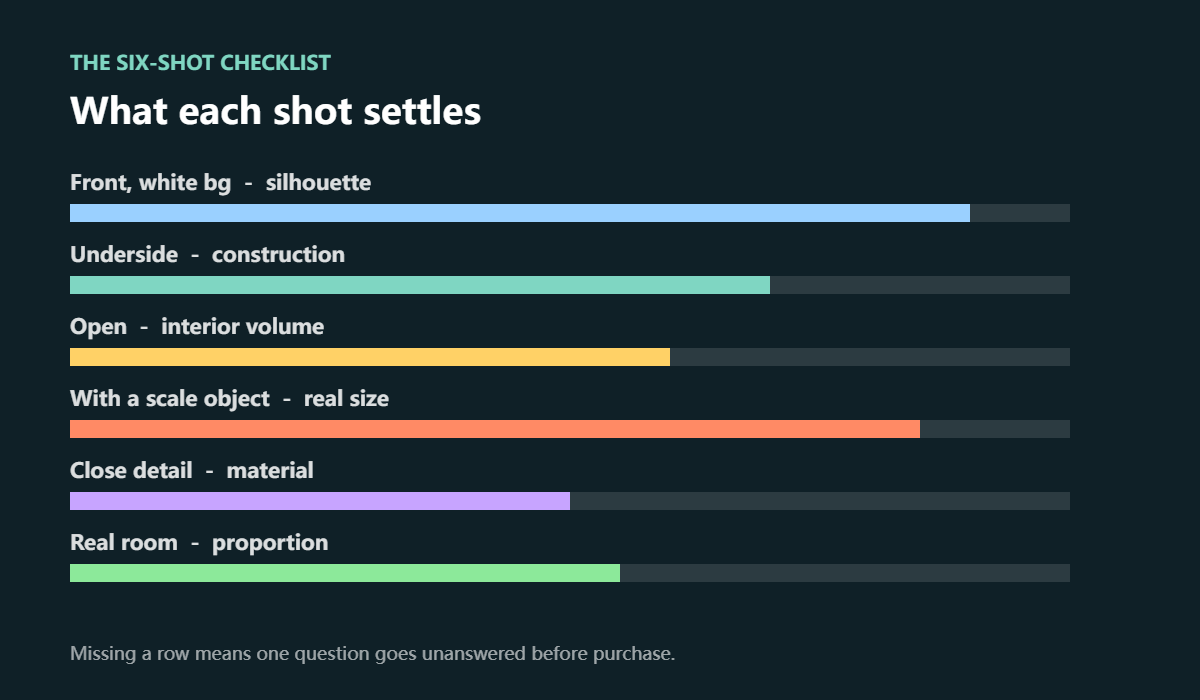
2. The six shots a complete listing needs
| Shot | What it settles | Missing means |
|---|---|---|
| Front, white background | Silhouette and proportions | No baseline |
| Back or underside | Construction, feet, seams | Hidden weak points |
| Open / in use | Interior volume, access | Volume is a claim |
| Scale with a common object | Actual size | You guess, and guess wrong |
| Detail at close range | Material and finish | Texture unknown |
| In a real room | Proportion in context | Looks bigger than it is |
Eight images is the working number because these six plus two lifestyle shots is the practical minimum for a physical product. Fewer than six means at least one question is unanswered before you buy.
3. The scale problem, quantified
Without a reference object, buyers overestimate size by 20-40%. This is consistent enough to be a rule: a product shot on a clean background reads larger than the same object on a table. If the listing gives dimensions in text and shows no scale shot, trust the text – and check whether the dimensions are external or internal, because a 30 cm box with 2 cm walls holds 26 cm.
4. Colour is the least reliable thing in a photo
Two variables destroy colour accuracy: white balance and screen calibration. A “beige” photographed under 4000 K looks grey; the same item under 6500 K looks cream. If colour matters, look for a shot with a white or grey card in frame, or a photo taken in daylight. Listings that show the same item in three lighting conditions are usually run by sellers who understand returns.
5. Lifestyle photos are staging, not evidence
A styled room shot is a rendering of intent: the shelf is deeper than yours, the ceiling is higher, and the props are chosen to match. That does not make it dishonest – it makes it non-informative about your room. Use lifestyle shots for proportion and style, never for capacity. The number of items shown is not the number that fits.
6. What resolution actually buys you
Zoom depth comes from pixels, not from the zoom button. To judge a seam or a weave, you need roughly 1000-1200 px on the long edge and a crop that is actually close, not a full-frame shot upscaled. If the largest available image is 600 px, you cannot evaluate material quality – and a listing that hides this is usually hiding something else.
7. Reverse image search: the 30-second check
Run one product photo through a reverse image search. Three outcomes matter: the same photo appears on many unrelated stores (a catalogue image, not the seller’s own product); the photo appears on a manufacturer’s site (you have found the source, and often the real spec sheet); or it appears nowhere else (either original photography or a render). The first outcome is the one to slow down for.
8. The five red flags in a photo set
- All images are the same angle with slightly different crops.
- No underside, no interior, no seam.
- Dimensions only in the title, never in a photo.
- Backgrounds that change colour between shots of the same item.
- A single image reused across a whole category.
9. How sellers should shoot, in order
Front on white, back or underside, open, scale with a ruler or a hand, close detail, one real room. Six shots minimum, eight preferred. Keep the background consistent so buyers can compare, and put the dimension line in the image, not only in the description. The scale shot is the one that reduces returns most, because most returns are size surprises.
10. When photos are not enough
If two of the six shots are missing and the seller will not send them, that is the answer. Asking for one photo of the underside is a cheap test of a seller: it takes a minute, and a refusal tells you more than any review.
11. Why the seventh and eighth photos exist
Six shots answer the questions a buyer already has. The seventh and eighth answer the questions they will have after delivery: what the item looks like after three months of use, and how it behaves when it is full. A shot of a full drawer, a loaded shelf or a worn edge is worth more than another angle of the same pristine object, because returns are usually driven by the gap between the imagined product and the real one.
For sellers, this is cheap to produce and disproportionately effective: one photo of the loaded state pre-empts the review that says “smaller than expected” even when the dimensions were listed correctly.
12. A ninety-second audit you can run
Open the listing. Count the shots that answer the six questions above – most listings have four. Check the largest image: if the long edge is under 1000 px, material quality is unknowable. Compare the stated dimensions against the scale shot, if there is one; if not, assume 20-40% overestimation. Finally, reverse image search one photo to see whether the images are original or shared catalogue stock.
Sixty seconds of that tells you more than five hundred reviews, because reviews describe experiences and photos describe the object. Neither is complete without the other, but the photos are the part you can verify yourself, today, without trusting anyone.
Frequently asked questions
How many photos should a product listing have?
Six is the working minimum: front, back, open, scale, detail and a real-room shot. Eight is comfortable. Fewer than six leaves a real question unanswered.
Can I judge quality from photos?
Partly. You can judge texture, seams and visible defects if the image is around 1000-1200 px and actually close. You cannot judge durability or weight.
Why do products look bigger online?
Without a scale reference, buyers overestimate size by 20-40%. Check the stated dimensions and whether they are internal or external.
Are lifestyle photos misleading?
They show proportion and style, not capacity or fit. The number of items in a styled shot is not the number that fits in your space.
What does a reverse image search tell me?
Whether the photo is original or a shared catalogue image, and often where the real specification sheet lives. The same shot on many unrelated stores is the main warning sign.
Honest disclosure: the percentages and pixel guidance here are practical ranges from product photography and retail practice, not guarantees for any specific listing.
Gear referenced in this guide
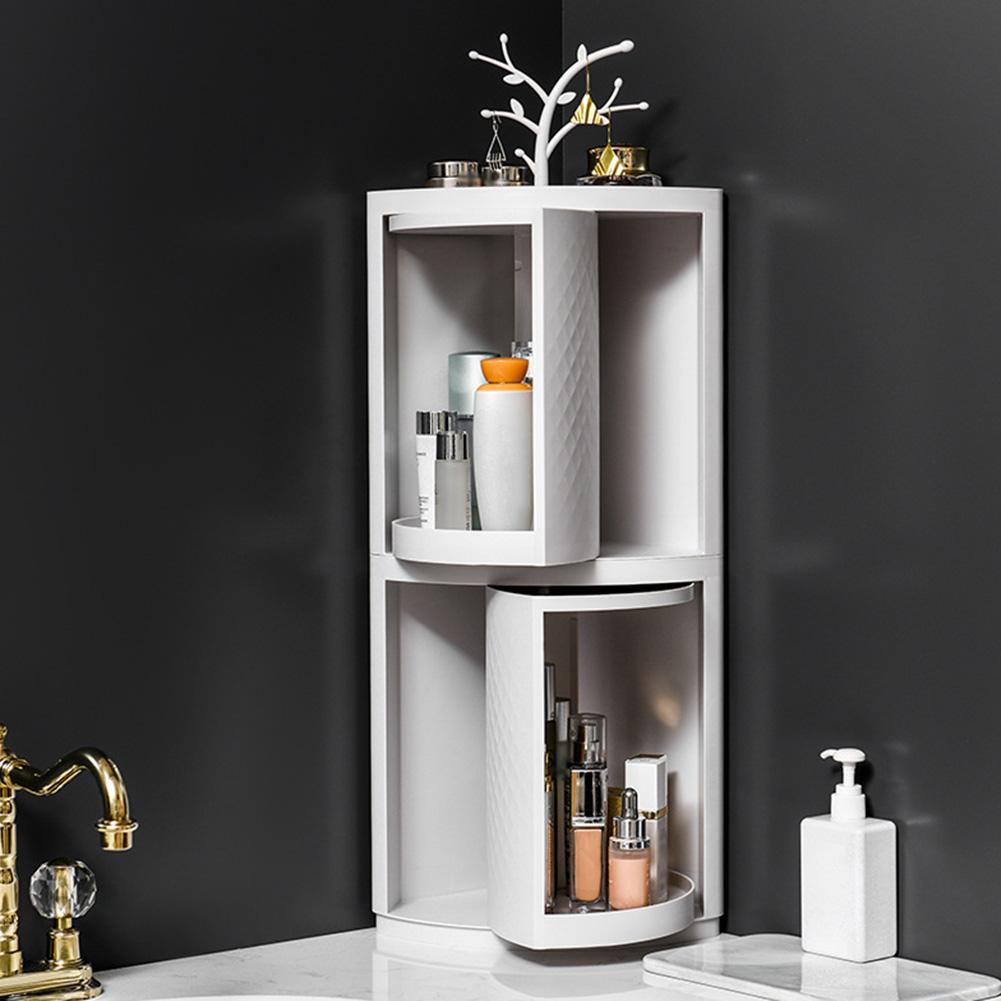
Rotatable Corner Bathroom Organizer, Wall-Mounted
Shot from six angles including the underside – the one that shows how it is fixed.
$54.99
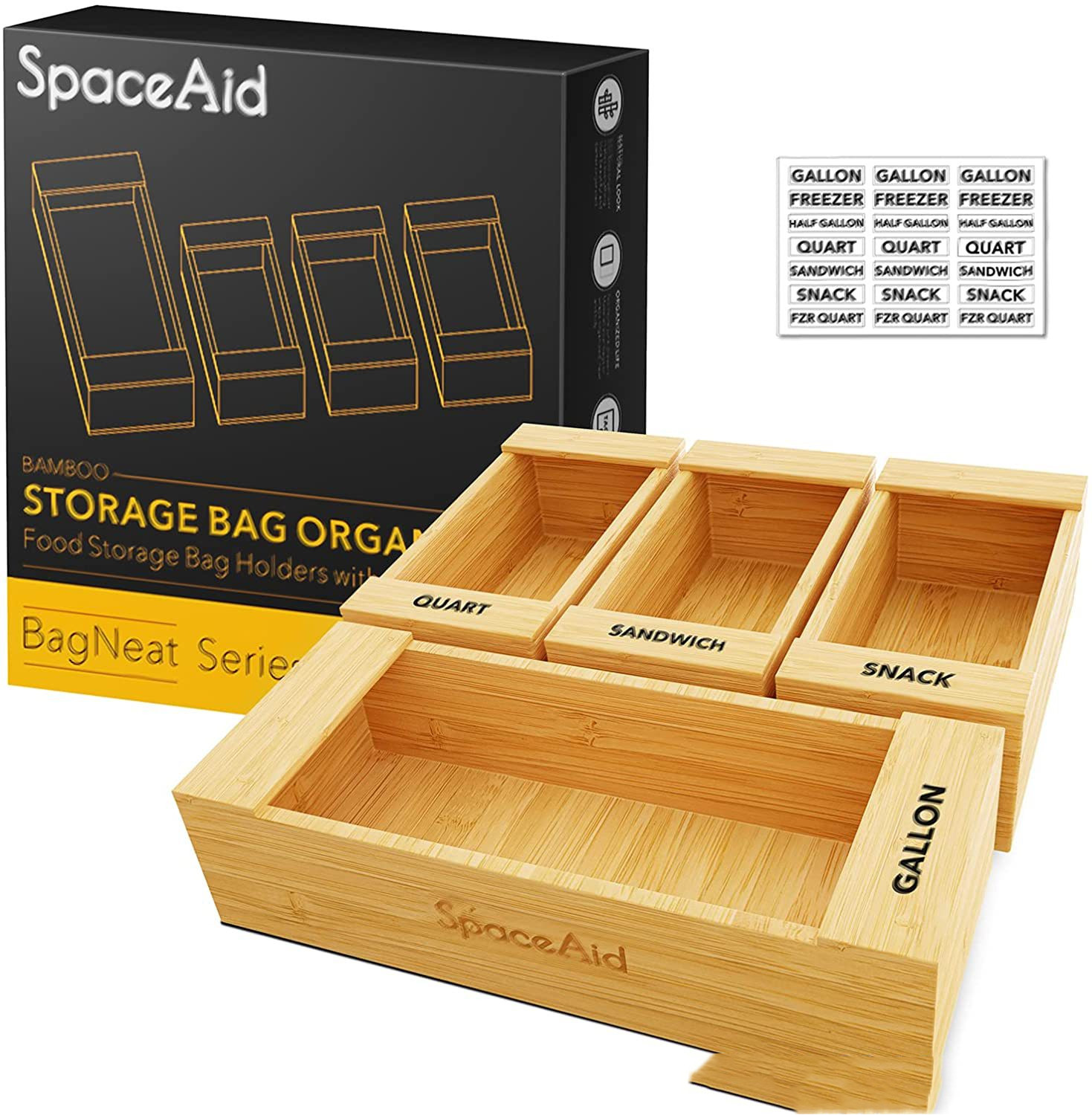
Bamboo Kitchen Drawer Organizer, Expandable
Expandable width is where scale photos matter most: 33 to 55 cm is a big range.
$54.99
Compare on Amazon — this category usually has more brands, sizes and price points there.
Check current prices on Amazon →
As an Amazon Associate we earn from qualifying purchases. The price you pay is unchanged. Disclosure