
Most bad nights under canvas are decided before the tent goes up. A site that looks idyllic in the afternoon can be a cold, lumpy, wind-hammered mistake by 2am. These nine checks take about ten minutes and cover almost everything that actually ruins sleep.
1. Slope first, view second
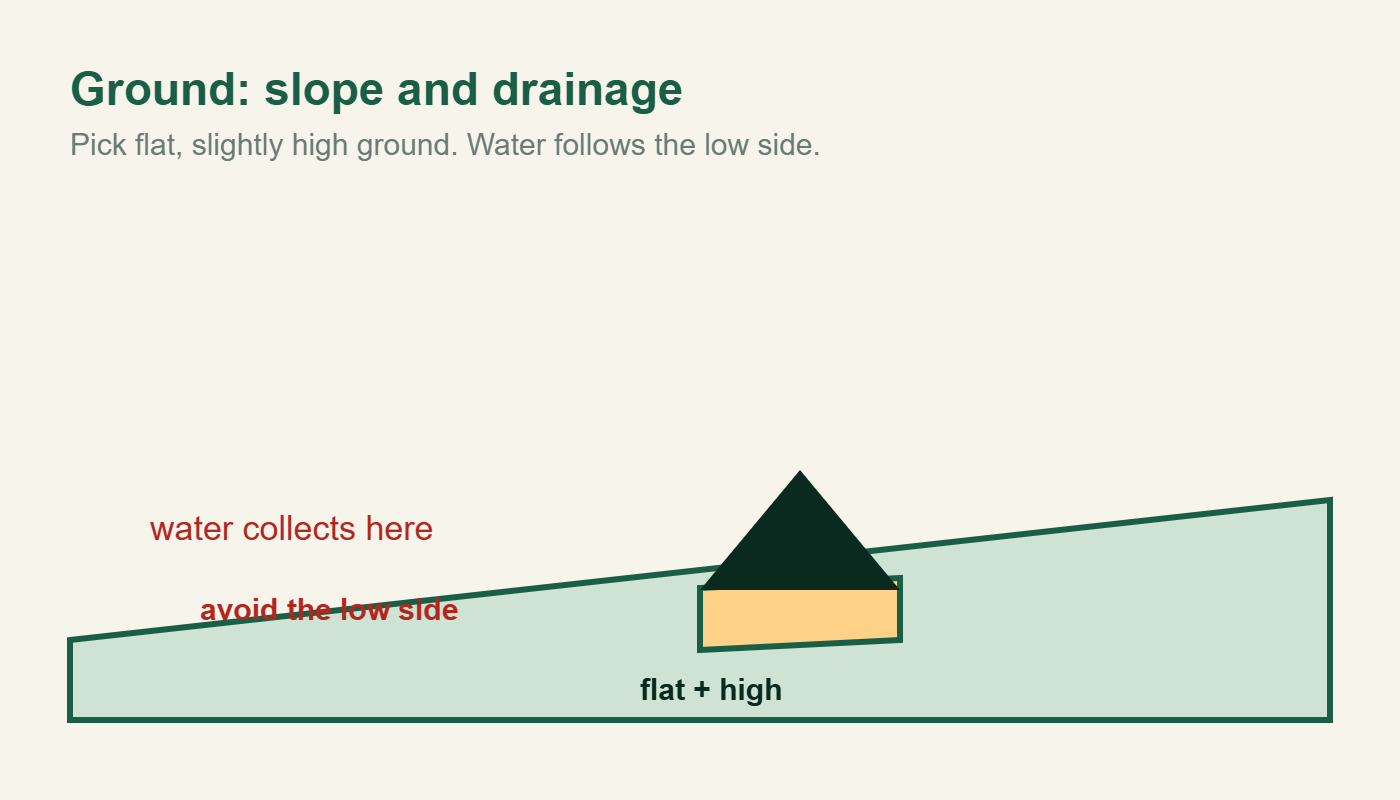
A two-degree slope feels fine standing up and becomes unbearable lying down: you slide towards the low corner all night. Look for ground that is flat where you will lie, even if the view is better three metres away. If the only level patch is right at the edge of a drop or under a tree, keep looking.
2. Test the ground with your palm
Kneel down and press your palm into the spot where your hips will be. You are feeling for three things: small stones, roots, and how firm the surface is. Sand and dry soil drain well but shift; hard-packed clay holds water; a bed of pine needles is soft but hides roots.
| Ground | Sleeps well? | Watch for |
|---|---|---|
| Bare soil, slightly raised | Best | Compaction after rain |
| Grass meadow | Good | Night dew, uneven tufts |
| Sand | Fair | Shifting, cold at night |
| Pine needles | Fair | Hidden roots, fire risk |
| Rock or gravel | Poor | No stakes, cold transfer |
3. Work out which way the wind blows
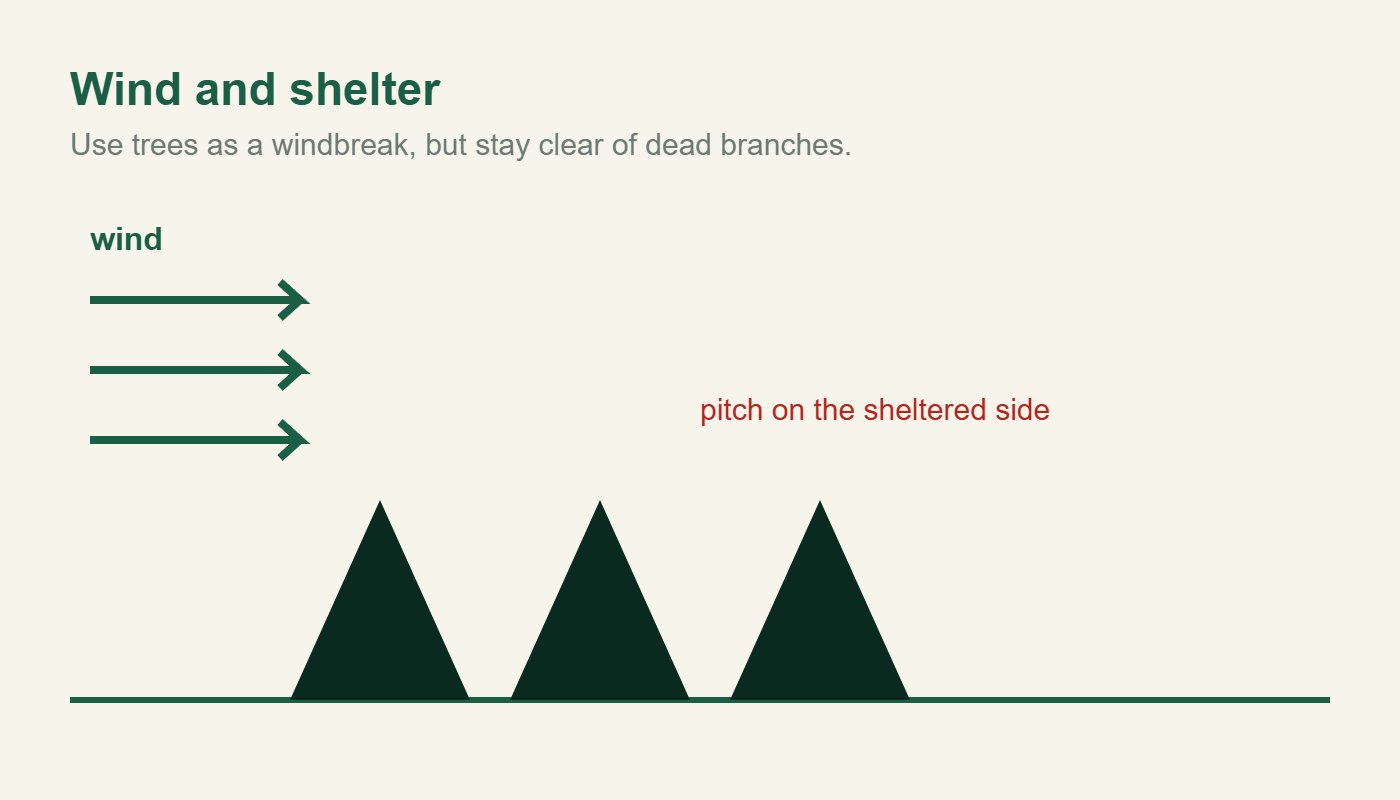
Wind is the difference between a mild night and a miserable one. Watch the tops of the trees for a minute and note the direction; if you have a weather app, check the overnight forecast too. Pitch with your lowest side into the wind, and use trees, a hedge or a bank as a windbreak, leaving a gap so air still moves through.
4. Watch where the sun will go
Morning sun dries condensation and warms you up; afternoon sun turns a tent into an oven. If you want a slow start, shade on the east side helps. If you want to dry gear, pick open ground. Either way, think about where the shadows will be at 7am, not where they are at 4pm.
5. Look up before you lie down
6. Keep your distance from water
Camping beside a lake or stream is beautiful and usually a mistake. Cold air pools near water, condensation is worse, and river levels can rise fast after rain upstream – long before the rain reaches you. Stay at least 60 metres back from lakes and streams, both for safety and to keep the bank intact.
7. Expect insects where the vegetation is dense
Midges and mosquitoes gather near long grass, reeds and standing water. Open, breezy ground is far quieter. If you must camp near vegetation, pitch a few metres away from it rather than in it.
8. Think about the walk back
Ten minutes from the car feels great in the morning and awful at 11pm with a torch. Also check the route for trip hazards you will meet in the dark, and know where the nearest toilet or bush-with-a-plan is before it matters.
9. Know the rules and the neighbours
Dispersed camping is not the same as wild camping: many public lands allow it, many do not, and fire rules change with the season. Check the local land agency before you travel, keep fires in existing rings, and respect quiet hours – most complaints about campers are about noise, not tents.
- Flat where you will lie, not just where you stand
- No roots or stones under the hip area
- Nothing dead overhead
- Lowest side of the ground into the wind
- At least 60 metres from water
- Route to the car and the toilet checked in daylight
- Fire permitted, and only in an existing ring
Cooking and lighting at camp
Your choice of pitches decides what kitchen you can actually use: a windy ridge rules out an open flame, and a ban on ground fires means everything happens on a stove. Plan the kitchen around the pitch rather than the other way round.
Gear referenced in this guide
Nothing here is essential on a first trip – a borrowed pot and a phone torch will get you through one night. But if you are building a kit, these are the items this guide assumes.

View details
View details

View details
Frequently asked questions
Is it warmer to camp near trees or in the open?
Trees reduce wind chill and radiate less heat away than open sky, so a sheltered pitch usually feels warmer. Just avoid dead wood overhead.
Should I camp on grass or bare ground?
Bare, slightly raised ground drains best. Long grass stays damp and hides uneven tufts, which is what makes a pitch feel lumpy.
How far from water is far enough?
Sixty metres is a common rule of thumb. It protects you from flash flooding and keeps the bank and its vegetation intact.
What if the only flat spot is on a slope towards a stream?
Move. Sleeping head-up on a slope is manageable; being in the path of water is not. A 30-second walk often finds a better patch.