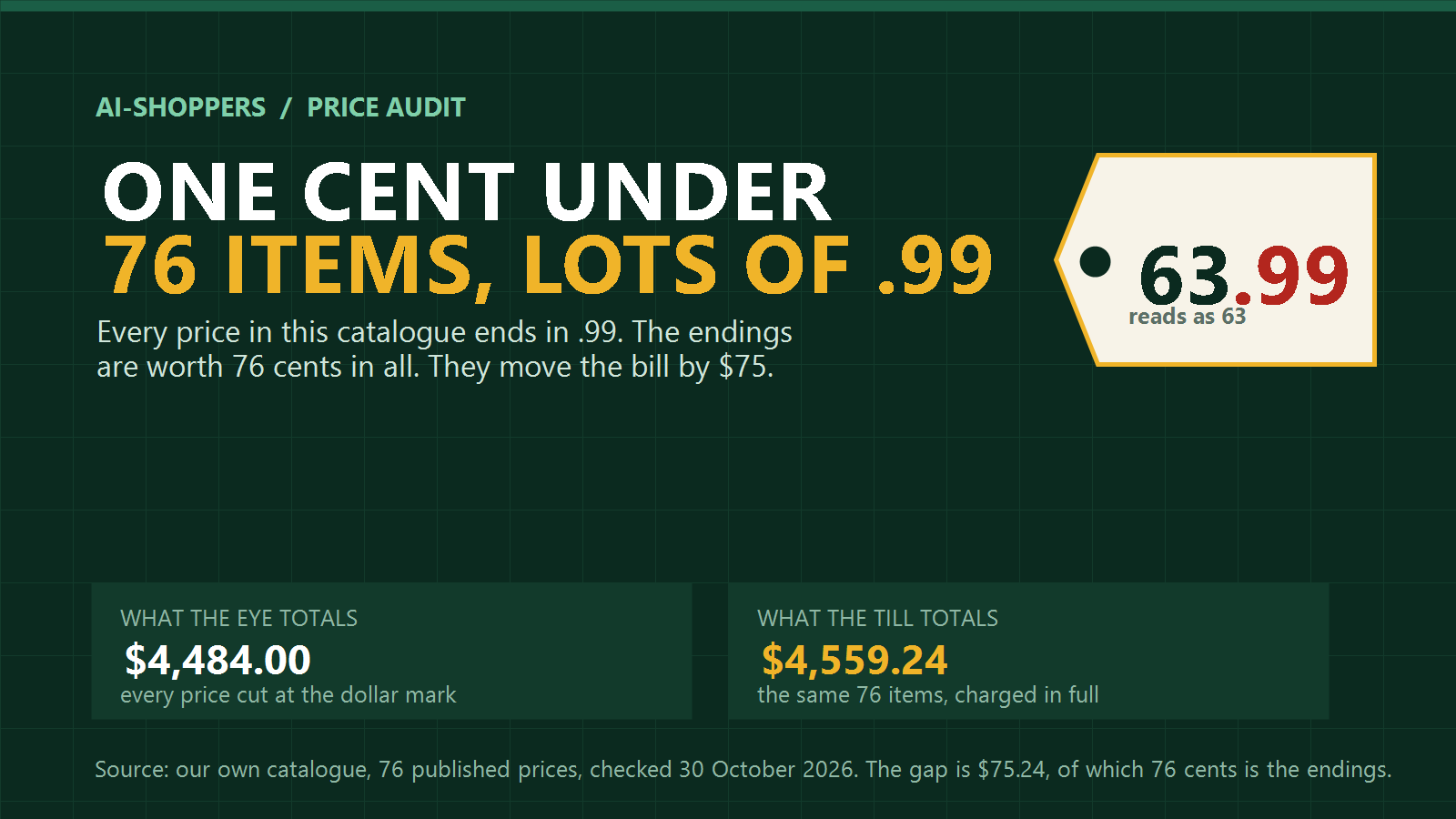
There are 76 items in this catalogue. Every single one of them is priced one cent below a whole dollar, from $21.99 at the bottom to $102.99 at the top. Add all 76 prices together and you get $4,559.24. Cut every price at the dollar mark instead and the same shelf totals $4,484.00 — a difference of $75.24, of which the endings themselves account for 76 cents. That is the whole trick, and it fits in a coin pocket.
1. Two cents that were never about money
The most repeated explanation for the nine-ending is a story about theft. In the years after James Ritty patented the first reliable cash register in 1879, shopkeepers whose staff made change out of a drawer full of cash needed a way to know when money had gone missing. A till that records every transaction does that job by itself; a till that has to be trusted does not. The story goes that prices were deliberately made awkward — forcing a clerk to open the drawer and give change — so that a sale always left a record. The awkwardness became the .99.
It is a good story, and it is probably only part of it. The other part is competition. In the 1880s, big-city newspapers and department stores experimenting with volume retailing discovered that a price just under a round number moved more stock, and the technique spread from advertising into shelf tickets. Historians of retailing disagree about which came first, and the honest answer is that nobody can prove it. What is not in doubt is the result: by the middle of the twentieth century, the nine-ending was the default in the United States and Britain, and it still is.
Two things are worth noticing about that history. First, the price ending is older than the price tag itself — it grew up when goods were sold over a counter by a person, not scanned by a machine. Second, it is a convention, not a law. Plenty of markets never adopted it: in much of continental Europe and Japan, round-number pricing is ordinary and a .99 is read as a discount signal rather than a default. When you see a .99 in those markets, it means something different from a .99 in Ohio.
2. The first second: what the eye finishes and the brain does not
Read these two prices the way you actually read them, quickly: $63.99, and $64.00. The second one feels meaningfully higher. It is one cent higher.
This is the left-digit effect, and it is one of the most reliably reproduced findings in consumer research. People do not read a price as a quantity so much as a string that starts somewhere. The first digit sets the scale, and the remaining digits get compressed. A price of $63.99 is filed under “sixty-something”, while $64.00 is filed under “sixty-four” — and in the mind those two sit further apart than one cent. The effect is strongest when the leading digits differ, which is exactly what a .99 guarantees.
The research literature has a well-known field test behind it: an MIT group ran identical merchandise at $34 and at $39 in a real catalogue and found the higher price sold more units, not fewer, because the two prices shared a leading digit and the $39 simply read as the better number against a round benchmark. Whatever you make of a single experiment, the direction has been reproduced often enough that retailers treat it as settled. That is why the ending exists, and why it is one cent rather than one pound.
A .99 ending is worth exactly one cent per item. On a $63.99 item it is 0.016 percent of the price. To produce the same effect with a real discount you would need about $6.40 — ten times more — and the customer would feel less of it. The ending is the cheapest instrument in retail because it costs the seller almost nothing and moves the buyer’s estimate of the number.
3. The audit: 76 items, 76 endings
Because this is our own shop, the audit is not an estimate. Every published price on this site ends in .99 — 76 out of 76, no exceptions, no .95s, no .00s. Here is how they are distributed.
| Price band | Items | What sits in it |
|---|---|---|
| $20 – $29.99 | 22 | The impulse shelf: gap fillers, small organizers, accessories |
| $30 – $39.99 | 8 | Bracelets and rings, mostly at $28.99 to $37.99 |
| $40 – $49.99 | 0 | Nothing. The band is empty |
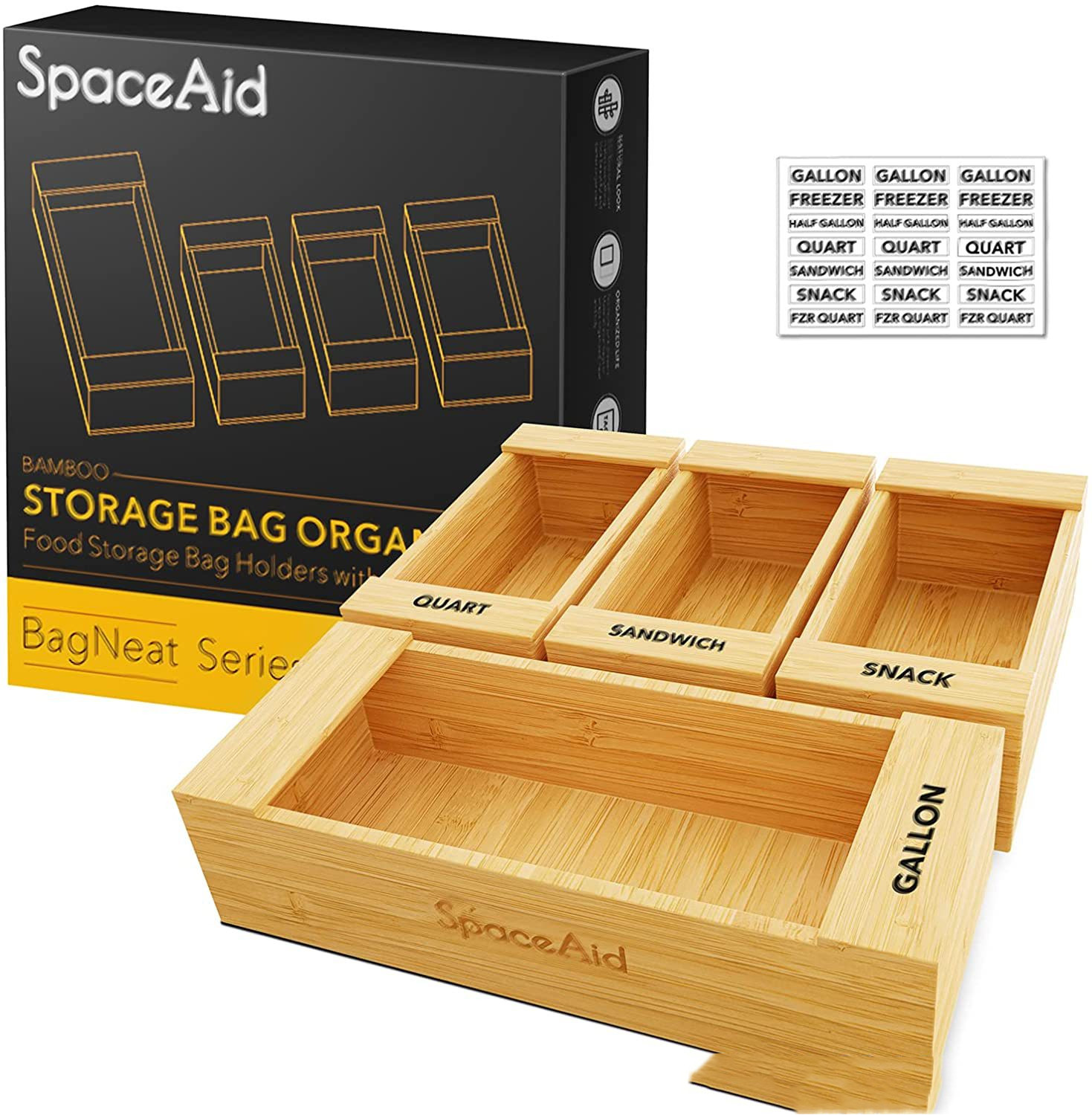
| $50 – $59.99 | 2 | Drawer and kitchen organizers |
| $60 – $69.99 | 6 | Storage and grooming tools, $63.99 to $68.99 |
| $70 – $79.99 | 19 | The heaviest band: 16 of them at exactly $79.99 |
| $80 – $89.99 | 16 | Care devices, mostly at exactly $80.99 |
| $90 – $99.99 | 2 | Skincare, $97.99 |
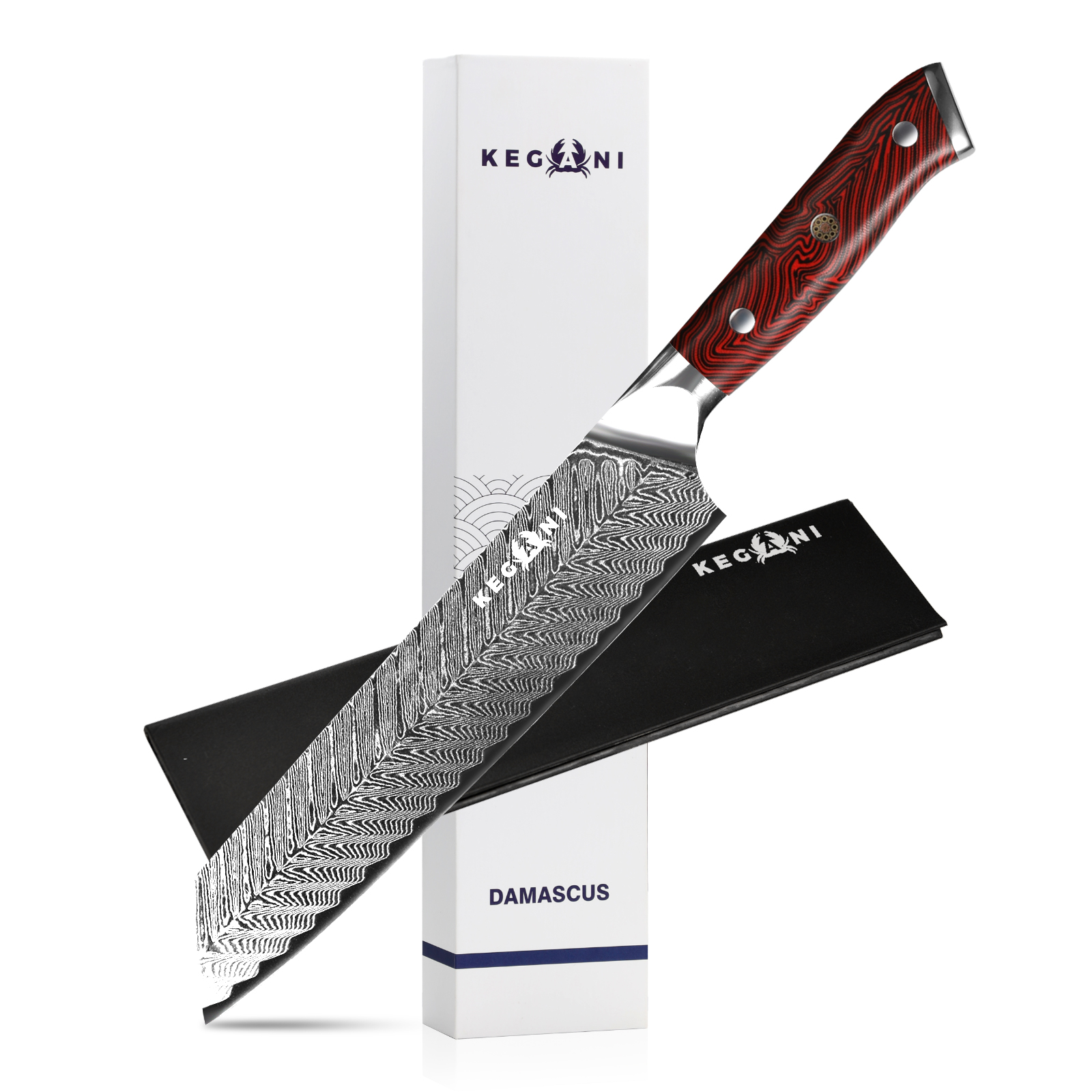
| $100 – $109.99 | 1 | A 7-inch Damascus cleaver at $102.99 |
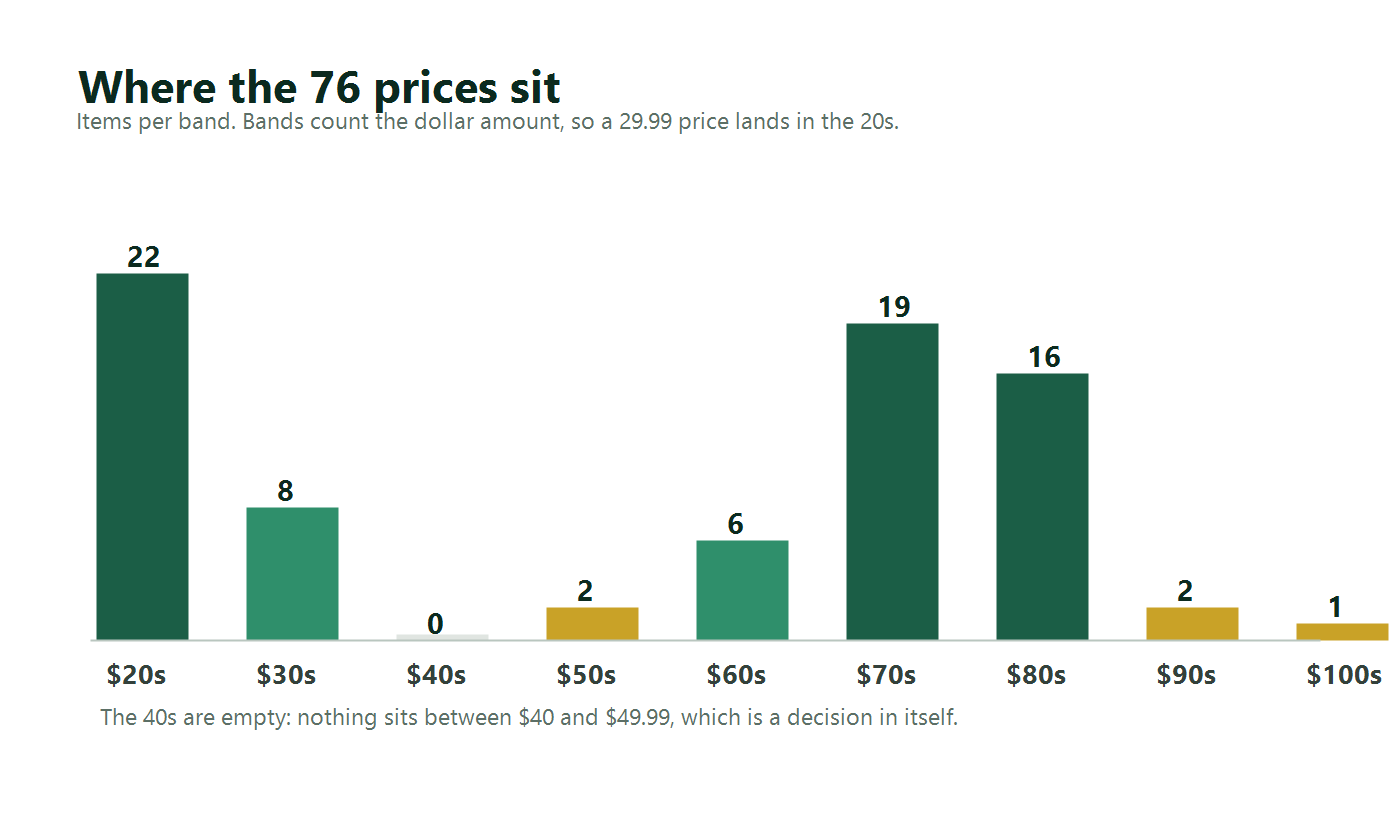
Three numbers in that table are worth more than the rest. The median price is $74.49, which is high, and it is high because 35 items cluster at $79.99 and $80.99. The mean is $59.99 — a coincidence so neat it looks staged. And 12 items are priced at $29.99 while 7 sit at $28.99, a spread of one dollar that exists so that the shelf has a $29.99 in it without every cheap item being identical.
Now the part that matters to a buyer. Sum the whole catalogue at the printed prices: $4,559.24. Sum it again with every price truncated at the dollar — that is, at the number the eye actually registers: $4,484.00. The endings are worth $0.76 in total across 76 items. Seventy-five dollars and twenty-four cents of that difference exists only in the reader’s head.
4. The $80 line, and the twelve items on the wrong side of it
The most interesting thing in the audit is not the .99. It is that we stock 16 items at $79.99 and 12 at $80.99 — and both groups are, in substance, the same class of product: small body-care and comfort devices from the same fulfilment network. If .99 were doing the work, everything would be $79.99. It is not, because a price ending is a weak instrument compared with a threshold.
Eighty dollars is a real line. It is roughly where a gift stops being casual, where a person starts asking who it is for, and where a “treat yourself” purchase turns into a decision that gets slept on. A $79.99 tag says “under eighty” in a way that $80.00 cannot, and a $80.99 tag says “this is a considered object, priced honestly” to the subset of shoppers who distrust exactly the kind of tag the first group wears. Two prices, one cent apart in perception, aimed at two different people.
You can see the same structure at the bottom of the catalogue: 22 items under $30, and a hard cliff after that. Nothing at all between $40 and $49.99. If you have ever wondered why a shop’s stock seems to have a hole in it, it is usually this: the tiers are chosen first, and the products are bought to fit them.
5. Three prices, three different decisions
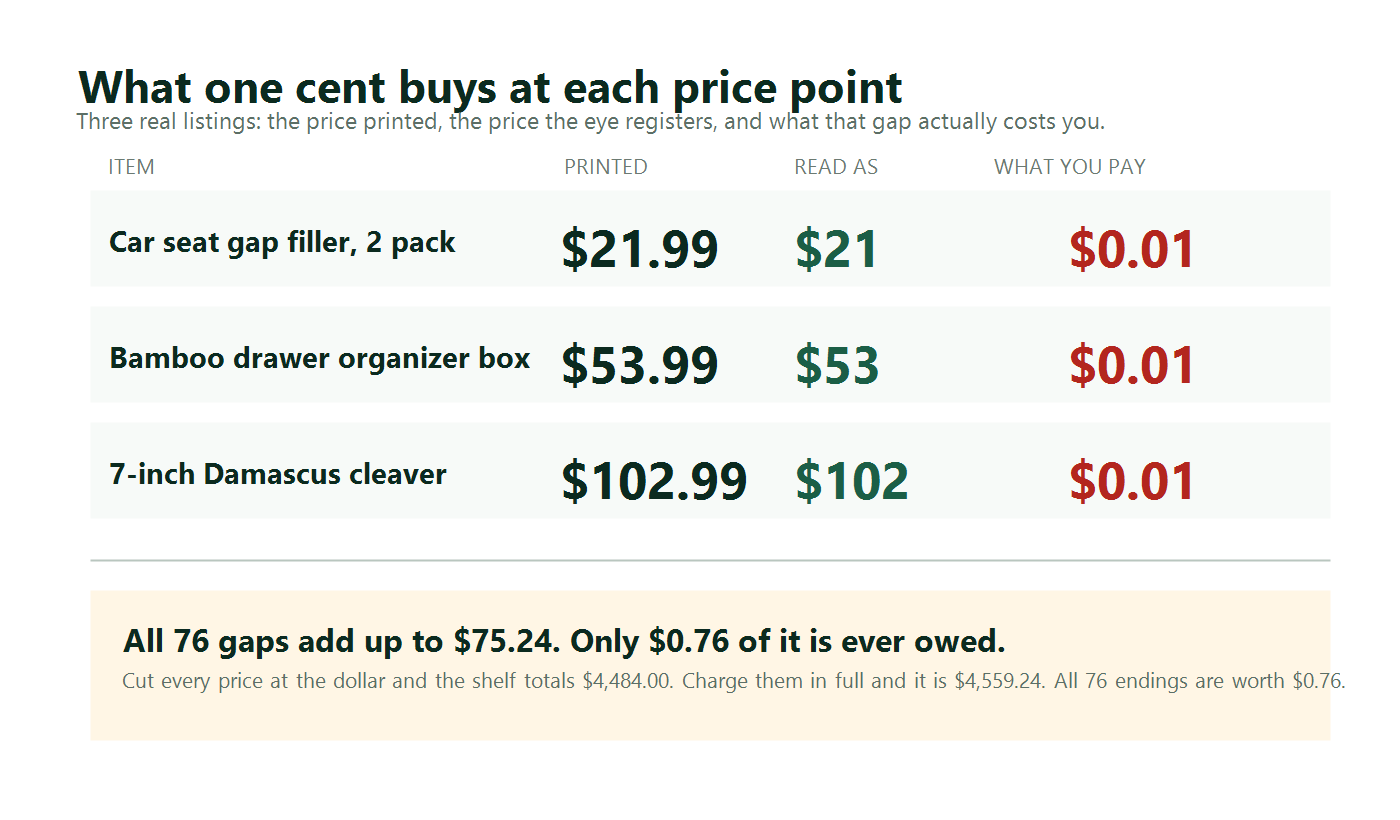
The ending does different work at different price points, and the three items below show the range better than any abstract rule.
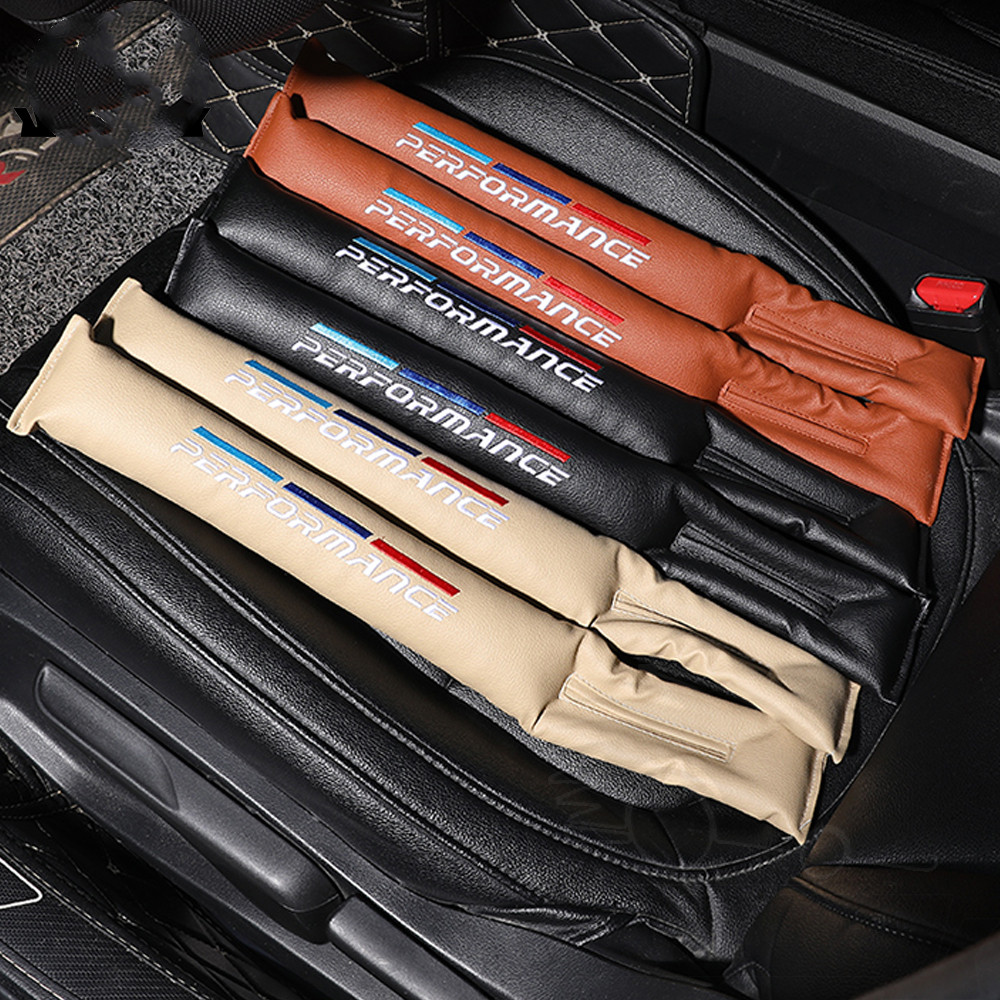
$21.99. The car seat gap filler is a two-pack of leather-covered strips that close the 2 cm gap between a seat and the centre console. At this price the ending is doing its job on an unconsidered purchase: nobody researches a gap filler, nobody compares unit costs, and the decision is made in about four seconds. Here the .99 is not manipulation so much as a language — it says “small, cheap, buy it and move on”.
$53.99. The 30.5 × 10.2 × 7.6 cm bamboo drawer box is a much more deliberate purchase. At this price a shopper does compare: they measure the drawer, they check the depth against their cutlery, and they ask whether bamboo is really better than the plastic tray they already own. The .99 is nearly irrelevant here, and it is slightly counterproductive — a considered kitchen object at a charm price looks like it is trying.
$102.99. The 7-inch cleaver in 73-layer AUS-10 steel is the top of the catalogue. Above about $100 the ending stops being a nudge and becomes a costume: the buyer is comparing steel grade, layer count and edge geometry, and a .99 on a knife reads as a discount-store habit rather than a considered one. It is on the shelf at $102.99 because the whole catalogue is priced in one convention, not because that convention is helping.
6. When the ending works against the seller
Charm pricing has a cost, and it shows up in exactly the place a shop cares about: trust. A buyer who knows that $63.99 and $64.00 are the same number also knows that the price is a message, not a measurement. Once that is noticed, every other number on the page gets re-read with suspicion — the “was $89.99”, the “save 30 percent”, the crossed-out figure that was never charged. A shop that prices everything at .99 and then marks things down is stacking two signals that cancel each other.
Regulators have taken a view on the second of those. Reference pricing — a “was” price shown next to a “now” price — is constrained in the United States by the FTC’s guides against deceptive pricing, which require the former price to have been a genuine, recent offering rather than a number invented for the tag. The rule is not about the ending; it is about the claim. But the two live on the same tag, and a shopper who has learned to distrust one has learned to distrust both.
7. Five steps that strip the ending
None of this requires a calculator. It requires a habit of rounding up before you decide, and a refusal to compare two prices that were designed not to be compared.
- Round up first. Read $63.99 as $64 before you read anything else, then decide whether $64 is a fair price. It is the same number, and it is the number you will actually pay after tax.
- Convert to a unit. Price per kilogram, per litre, per use, per drawer. A $53.99 box that holds three rows and a $21.99 box that holds one are not 2.5 times apart; they are a capacity question first. The method is set out in this piece on cost per use.
- Ignore every “was”. A crossed-out price is an advertisement, not evidence. If you would not pay the “was” number today with your own money, it is not a reference point.
- Apply a 24-hour rule above $50. Time is the one thing the tag cannot manipulate. A price that survives a night is a price; one that does not was a mood.
- Compare landed cost, not sticker. Tax, shipping and the return trip belong in the number. Two items priced $53.99 and $59.99 can end up $7 apart or $0.50 apart depending on which one ships free.
8. What the ending cannot do
Take it to its limit and the whole apparatus looks absurd. At an 8 percent sales tax rate, $63.99 becomes $69.11 and $64.00 becomes $69.12. The ending saves you a penny at the till after having moved your estimate of the price by about a dollar. Across every item we sell, buying the entire catalogue at the printed prices costs $4,559.24; buying the identical catalogue with every price rounded up to the nearest dollar costs $4,560.00. The difference is 76 cents — less than a stamp.
So the ending is not really a price at all. It is a small piece of typography that sits between you and the number, and once you have seen it, it stops working. That is the whole reason this article exists: an ending you have noticed is an ending that has already failed. The useful habit is not to hunt for .99 tags and feel clever; it is to do the rounding automatically, on every page, until the second digit is all you ever see.
The rest of the method for reading a listing — what a spec sheet leaves out, what a photograph cannot show — is in this buyers’ checklist. Prices are the easiest part of a listing to decode. They are just the part designed to be decoded first.
Frequently asked
Is a .99 price actually cheaper?
By one cent, yes. That is the entire discount. Against a whole-dollar price the ending saves $0.01 and moves the perceived price by roughly a dollar, because the eye files $63.99 under sixty-three rather than sixty-four. The effect is in the reading, not the arithmetic.
Why do some shops use .95 or .00 instead?
Different signals. .95 is common in wholesale and trade catalogues, where the buyer is comparing quotes and a mechanical convention reads as businesslike. .00 is common in luxury and in markets that never adopted the nine-ending, where a round number signals confidence rather than a discount. The ending is a dialect, not a universal law.
Does the ending work on expensive items?
Less well, and sometimes backwards. Research on the left-digit effect finds the strongest response when the leading digits differ and the purchase is made quickly. Above roughly $100, where buyers read specs and compare, a .99 can read as discount-store signalling — which is why luxury goods almost never use it.
What is the fastest way to stop being moved by it?
Round up before you decide. Read $63.99 as $64, $102.99 as $103, and then ask whether that number is fair. It takes about a second, it survives every redesign of the tag, and it makes the last two digits irrelevant instead of invisible.
Are the prices in this article current?
They were read from our own published listings on 30 October 2026: 76 items, $21.99 to $102.99, median $74.49, mean $59.99, total $4,559.24. If a price changes, the audit changes with it; the method does not.
Prices in this article were read from our own product pages on 30 October 2026: the car seat gap filler at $21.99, the bamboo drawer organizer at $53.99 (30.5 × 10.2 × 7.6 cm), the 7-inch 73-layer AUS-10 cleaver at $102.99, out of 76 published prices ranging from $21.99 to $102.99, with a median of $74.49, a mean of $59.99 and a printed total of $4,559.24. The band counts, the truncated total of $4,484.00 and the 76-cent figure are arithmetic on that data set, reproduced in the two charts so you can check them yourself. The history of nine-ending pricing is contested and is presented here as two competing accounts, not as settled fact; the left-digit effect and reference-price rules (FTC guides against deceptive pricing) are described from published research and regulation, without quoting a percentage we could not verify.
Gear referenced in this guide
None of these are needed to use the method. They are the three listings this article’s price examples were written against, one from each tier, so the numbers can be checked in the same order.
Compare on Amazon — this category usually has more brands, sizes and price points there.
Check current prices on Amazon →
As an Amazon Associate we earn from qualifying purchases. The price you pay is unchanged. Disclosure