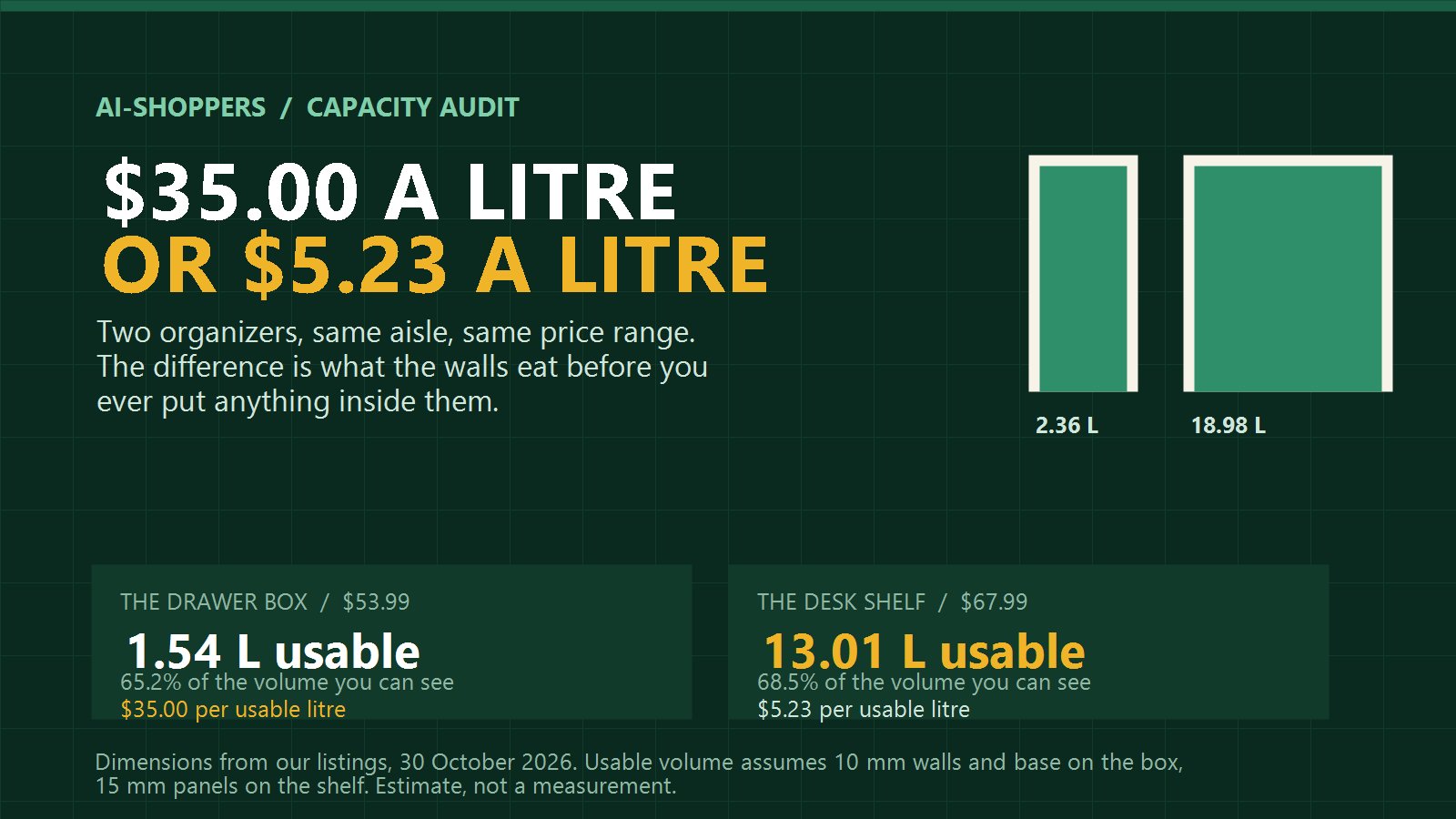
Two organizers in our catalogue do the same advertised job — hold the small things that otherwise slide around — and one costs $35 a litre while the other costs $5.23. Neither listing says so, because neither listing prints litres. It prints a footprint, in centimetres, and leaves you to work out that the walls and the base eat a third of what you paid for. This piece does the arithmetic on four organizers we stock, all priced on 30 October 2026, and then does what the arithmetic cannot: fit, drainage, load and the minutes you will spend cleaning them.
1. Gross litres and usable litres are not the same number
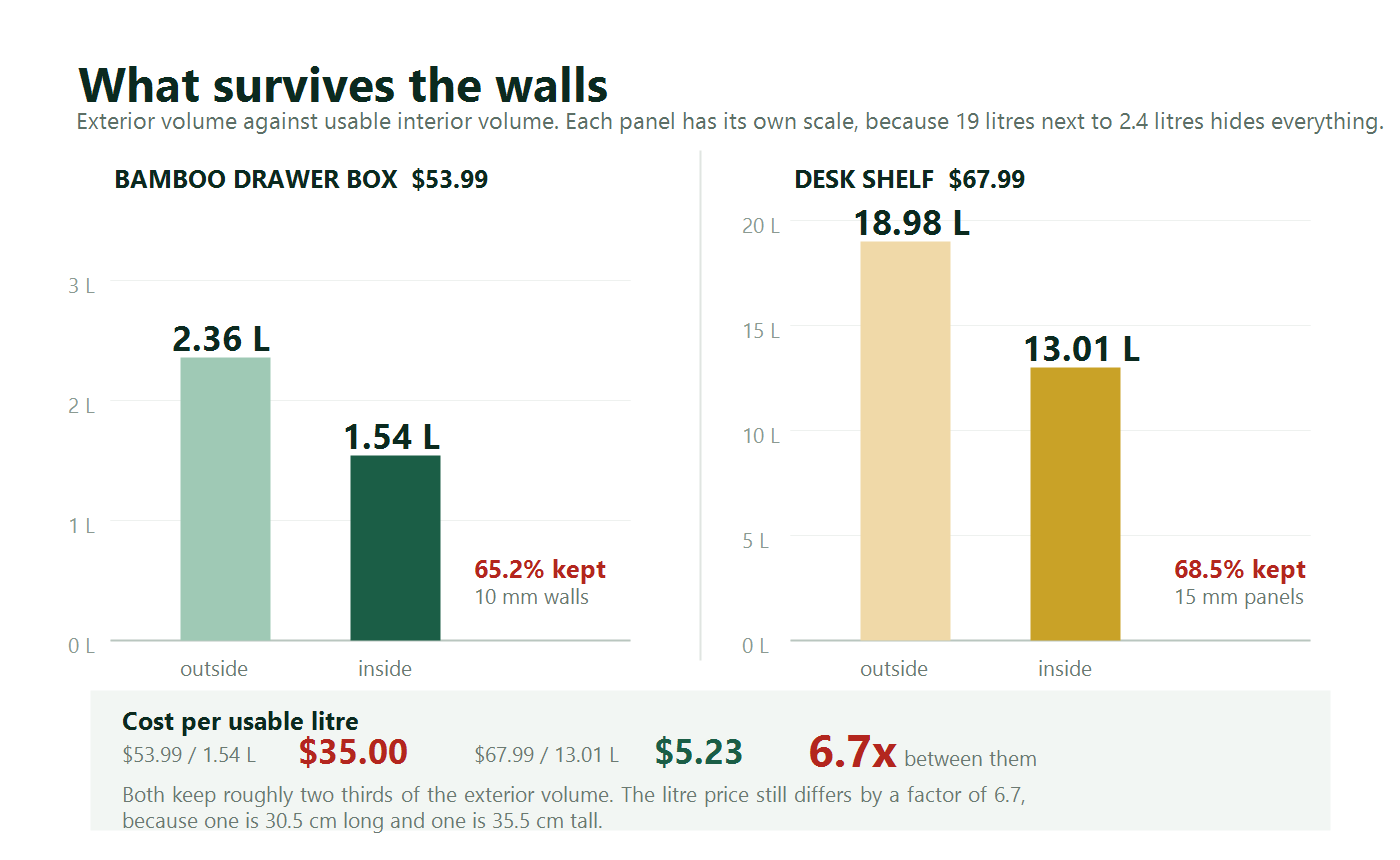
A box is priced by its outside, and used by its inside. The difference is the material that makes it a box: two side walls, two end walls and a floor. Take the bamboo drawer organizer at 30.5 × 10.2 × 7.6 cm. Multiply and you get 2,364 cubic centimetres, or 2.36 litres of exterior volume.
Now subtract a 10 mm wall on four sides and a 10 mm base, which is what a box built from bamboo strip panels looks like in this size. The interior is 28.5 × 8.2 × 6.6 cm, or 1,543 cm³ — 1.54 litres. You keep 65 per cent of the volume you can see from outside. The other 35 per cent is the product.
Run the same subtraction on the engineered wood desk shelf. Its published footprint is 34.5 cm wide, 15.5 cm deep, 35.5 cm tall, which is 18,986 cm³, or 19.0 litres — about five US gallons. Its panels are 1.5 cm composite board, and there are four of them stacked vertically. Interior: 31.5 × 14.0 × 29.5 cm, or 13.0 litres. You keep 68.5 per cent.
Two products, two materials, two assembly methods, and the usable ratio lands within 3.3 points of each other. That is the first useful thing in this article: for box-shaped storage, plan on keeping roughly two-thirds of the advertised volume, whatever the material. If a listing quotes a big number and the photo shows thick walls, the two-thirds rule will tell you what you are actually buying.
2. Four listings measured the same way
Here are the four organizers this piece was written against, with the numbers that can be computed from published dimensions. Where a listing does not publish a dimension, the cell says so — that is information too, and section 3 explains why it matters more at the sink than at the desk.
| Item | Price | Published size | Exterior volume | Usable volume | Cost per usable litre |
|---|---|---|---|---|---|
| Bamboo drawer organizer box | $53.99 | 30.5 × 10.2 × 7.6 cm | 2.36 L | 1.54 L (est.) | $35.00 |
| Engineered wood desk shelf | $67.99 | 34.5 × 15.5 × 35.5 cm | 18.98 L | 13.01 L (est.) | $5.23 |
| Kitchen sink caddy | $65.99 | not published; 800 g | — | — | not computable |
| Aluminium hanging shower caddy | $63.99 | not published; two tiers | — | — | not computable |
Six point seven times. That is the gap between the two rows where the arithmetic works: $35.00 a usable litre against $5.23. The shelf holds roughly 8.4 times as much as the box for $14 more, which sounds like the bargain of the century until you ask what the box is for.
3. Why the drawer box costs what the shelf costs, per litre
Three things are being paid for in the $53.99, and none of them is volume.
Length without width. A drawer box has to span the drawer. At 30.5 cm it costs $1.77 for every centimetre of that span, and the span is the whole point: wrap, foil and sandwich bags are long, and a long shallow trough lets you read a whole row at a glance. A 20 cm cube holds more litres and holds none of those things well.
A finished surface. Bamboo strip board, sanded, radiused at the corners so it does not catch a drawer liner. Compare the material cost honestly: a 1.5-litre plastic tub at a hardware store is a couple of dollars. What the extra $50 buys is a box that will not flex, will not yellow, and can be wiped — and that is a real thing, but it is not a litre.
A shape that fits a mass market. Thirty centimetres is the compromise width in the standard 45–60 cm kitchen drawer: two fit side by side with room to slide, three do not.
The shelf, by contrast, is cheap per litre for a boring reason: much of its 13 usable litres is air above the books. Open shelving is sold as a vertical column, and a vertical column is the cheapest volume in furniture. You are paying for the panels, the finish and the 20 kg rating, not for the emptiness.
The comparison that survives the maths: per square centimetre of surface it occupies, the shelf is $0.127 and the drawer box is $0.174. The box is 37 per cent dearer per unit of counter or drawer it takes up. If floor space is your constraint, that is the number to use; if capacity is, use the litre.
4. Fit decides more purchases than price does
Every one of these four products fails in the same way when it fails: it does not fit the hole it was bought for, and it goes back in the box. Four measurements catch almost all of it.
Drawer height. A standard kitchen drawer box gives 8 to 10 cm of clear internal height once the runners are accounted for. At 7.6 cm tall, the bamboo box leaves 0.4 to 2.4 cm of headroom. That is enough — until you stack a second box on top, at which point one of them is touching the counter and the drawer will not close. Buy one row, not two.
Clearance, not exact size. Our own listing for the box says to leave at least a centimetre of clearance, which is the right advice for a different reason than most people assume: a full box bows very slightly at the long side, and a box that touches both drawer walls is jammed by friction the moment it is loaded. Measure the internal width, subtract 2 cm, and buy to the number you have left.
Depth on a desk. The shelf is 15.5 cm deep, which is roughly a laptop and a mug side by side. On a 60 cm desk it leaves 44.5 cm for a keyboard and your forearms; on a narrow windowsill it may overhang, and an overhanging shelf gets knocked every time somebody stands up. Measure the surface, not the wall.
The gap behind the tap. The sink caddy’s listing does not print a footprint — only an 800 g weight — but its own help text gives the number that matters: if the gap between the tap base and the wall is under 12 cm, check the photographs before ordering. A caddy that sits in the tap’s splash line stays wet all day, and a caddy taller than the spout gets in the way of filling a pan. Neither is a defect; both are a measurement taken too late.
Edge thickness on a shower screen. The hanging shower caddy transfers its entire load to the top edge it hangs on. A hook shaped for 6 mm glass will not sit safely on a 20 mm door frame, and one built for a frame rattles on thin glass. That single dimension is printed on no specification sheet; it is the first thing to check with a ruler.
5. In the wet zone, you are buying drainage, not litres
Move a storage product within a metre of running water and the economics change. Nobody has ever complained that a sink caddy held too few litres. They complain that it smells.
Here is the arithmetic of the smell. Suppose a caddy’s tray is 20 × 12 cm and has a solid base. A 1 mm film of water across it — the amount left after a sponge is set down — is 24 ml. In a bathroom at roughly 20 °C with still air, free water evaporates at about 0.5 kg per square metre per hour, which over 240 cm² is 12 ml an hour. That film takes about two hours to disappear. A 10 × 7 × 3 cm sponge has 210 ml of physical volume and, wrung out once, still holds something like 70 ml. Resting on a solid base, it sits in its own reservoir and re-wets the tray every time it is picked up.
A slotted base does not absorb anything. It shortens the path: water leaves by gravity in seconds instead of evaporating in hours. That is why the sink caddy at $65.99 and the shower caddy at $63.99 — both with open bases, one slotted, one wire — are worth more than a prettier solid tray at half the price. The cheap version is not cheaper. It is the same product with the water moved 2 cm to the left.
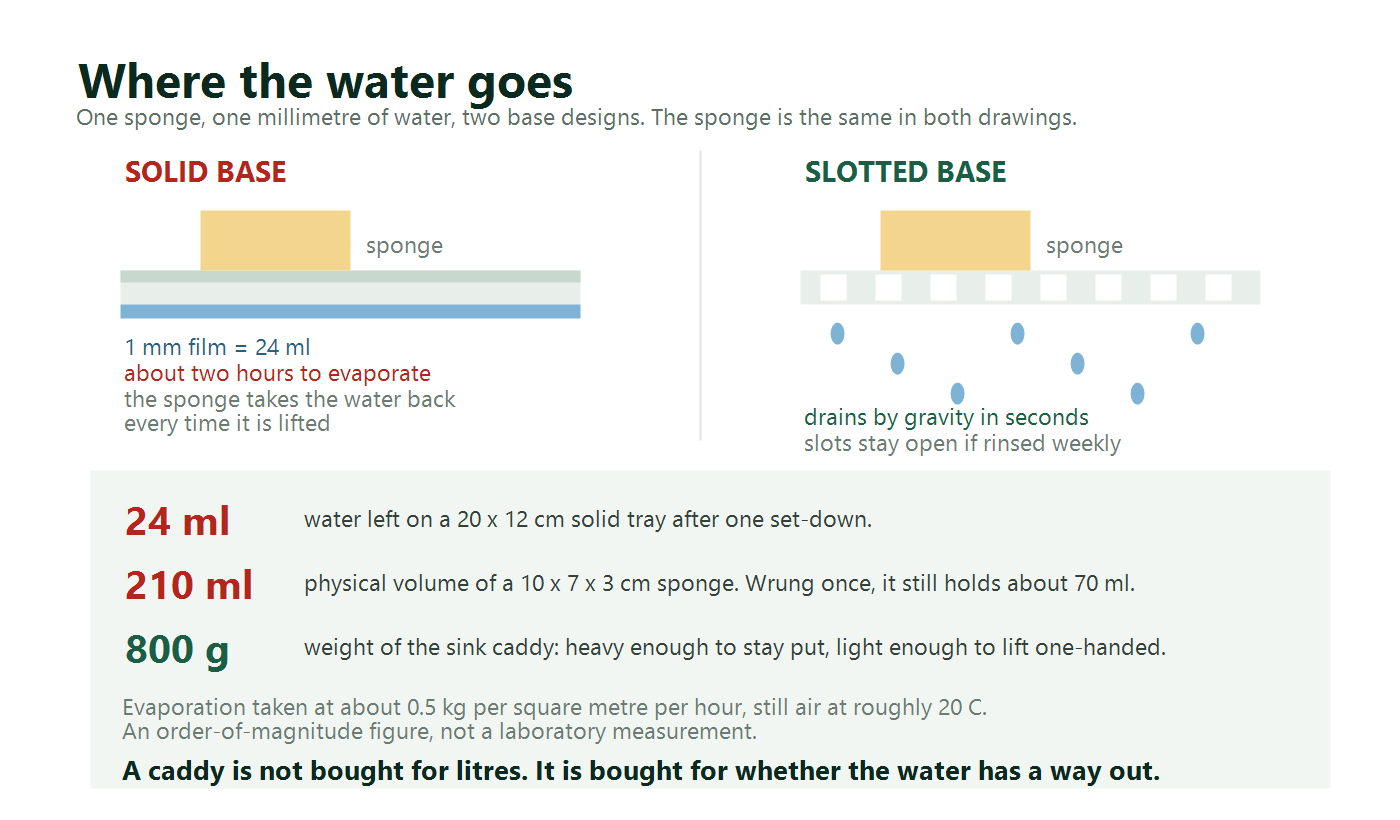
The 800 g weight of the sink caddy is part of the same design decision, and it is a good number: heavy enough that a loaded brush does not slide it, light enough to lift with one hand. A caddy that needs two hands to move stops being rinsed weekly, and that is how residue collects at the base.
6. Load has a direction, not just a size
The desk shelf is rated to 20 kg, which is 196 newtons across a footprint of 535 cm² — 374 kg per square metre, a number that sounds alarming and is not, because it is spread over three tiers and carried by four panels.
The useful version of the rating is per tier: about 6.7 kg each if you fill it evenly. Put that on a 31.5 cm span of 15 mm composite board and the sag is negligible — for a board with a stiffness of roughly 2.5 GPa, the deflection at 6.7 kg works out around 0.25 mm, or one part in 1,280 of the span. Deflection is not what fails on this shelf. The fixings are: cam locks and screws in particleboard lose grip when they are overtightened, and a shelf that has been re-tightened twice will wobble before it ever bends.
The hanging caddy is the opposite case, because its load has a lever arm. A 500 ml bottle of shampoo is 0.5 kg. Hanging 12 cm out from the hook, it produces 0.59 newton-metres of torque about the screen edge; at 8 cm it is 0.39. That is the entire argument for putting the heavy bottles on the lower tier and keeping the top for soap and razors: the same mass, half the leverage, and a caddy that stays level instead of tilting away from the glass.
7. The cost that repeats is minutes
Purchase price is paid once. Maintenance is paid every week, and it is the number that decides whether a $66 caddy is still in use in three years. The routine for the sink caddy is a weekly rinse and a monthly soak: 52 rinses and 12 soaks a year, perhaps an hour in total. That is cheap. What is expensive is skipping it, because the film described above becomes a pink biofilm in about a week in a warm kitchen, and biofilm on a slotted tray clogs the slots that were the entire reason for buying it.
For the dry-zone products the recurring cost is different. Bamboo should be wiped, not soaked: water sitting in the joint where the base meets the sides is the one place it cannot dry, and that joint is where mould starts. The engineered wood shelf has the same weakness at its cut edges — composite board swells at an exposed edge and does not come back. Both are one-cloth products. Neither tolerates a dishwasher, and neither needs one.
The rule that replaces the price tag. Count the number of times a year you will touch the thing to keep it working. A product that needs 52 minutes of attention and costs $66 is a better purchase than one that costs $30 and gets thrown out in year two — but only if you actually spend the 52 minutes. If you will not, buy the version whose neglect is cheapest: slotted base, open wire, no bare steel.
8. When price per litre is the wrong metric
The litre is a comparison tool, not a verdict. It is the right metric in exactly one situation and misleading in four.
- Right: two containers of the same type, same material family, both closed and both holding the same category of object. Then $/L tells you what the walls cost.
- Wrong, open shelving: most of the volume is air above the contents. Compare footprint and load instead.
- Wrong, wet zone: drainage and cleanability dominate. A 24 ml film is worth more of your attention than 2 litres of capacity.
- Wrong, long objects: a drawer box is bought for its 30.5 cm span. Capacity in litres says nothing about whether a roll of foil fits.
- Wrong, visibility: shallow and open beats deep and lidded for anything you reach for daily. Access time is the metric, and nobody prints it.
Applied to the four products here, that gives a short answer. If the problem is a drawer of loose cutlery and cling film, the $53.99 bamboo box solves it and the litre price is irrelevant. If the problem is a desk with no vertical storage, the $67.99 shelf is the cheapest volume in this article by a factor of 6.7. If the problem is a sponge that smells, neither of them helps, and the $65.99 caddy with the slotted base is the only one of the four that addresses the actual failure. And if the problem is bottles on the shower floor, the $63.99 hanging basket is a load-path decision, not a storage decision.
Four products, four different jobs, one shared number that no listing prints. The litre is worth computing once — and then worth putting down.
Frequently asked questions
Is $35 a litre normal for a drawer organizer?
For a finished, sanded bamboo box in this size, yes. The litre price of small finished goods is always high because the walls, the base and the finishing are fixed costs that do not shrink with the contents. The litre is useful for comparing two boxes; it is not a fair price for a box.
Will the bamboo box fit a standard kitchen drawer?
Its length is 30.5 cm, so it suits a 45–60 cm drawer with room to slide and space for a second box. Measure the internal width and leave at least 2 cm of total clearance — a full box bows slightly at the long side and jams against both walls if it is an exact fit.
Why does the sink caddy listing have no dimensions?
Because we publish only what the manufacturer publishes, and this one lists weight (800 g) rather than a footprint. The practical check is the gap between the tap base and the wall: under 12 cm and you should look at the photographs before ordering, since a caddy in the splash line never dries.
Can the bamboo organizer go in a dishwasher?
No. Heat and prolonged soaking dry out the strip board and eventually split the base panel. Wipe it with a barely damp cloth, let it air before closing the drawer, and oil it lightly once a year if the surface starts to look grey.
Does a 20 kg shelf rating mean 20 kg on the top tier?
No — it is a total across the unit. Distribute heavy books low, keep the top tier for light objects, and do not overtighten the cam fixings, because the fixing points in composite board are what actually fail, not the panels.
Gear referenced in this guide
None of these are required to measure a drawer or compute a litre. They are the four listings the arithmetic and the field notes above were written against, all priced on 30 October 2026.
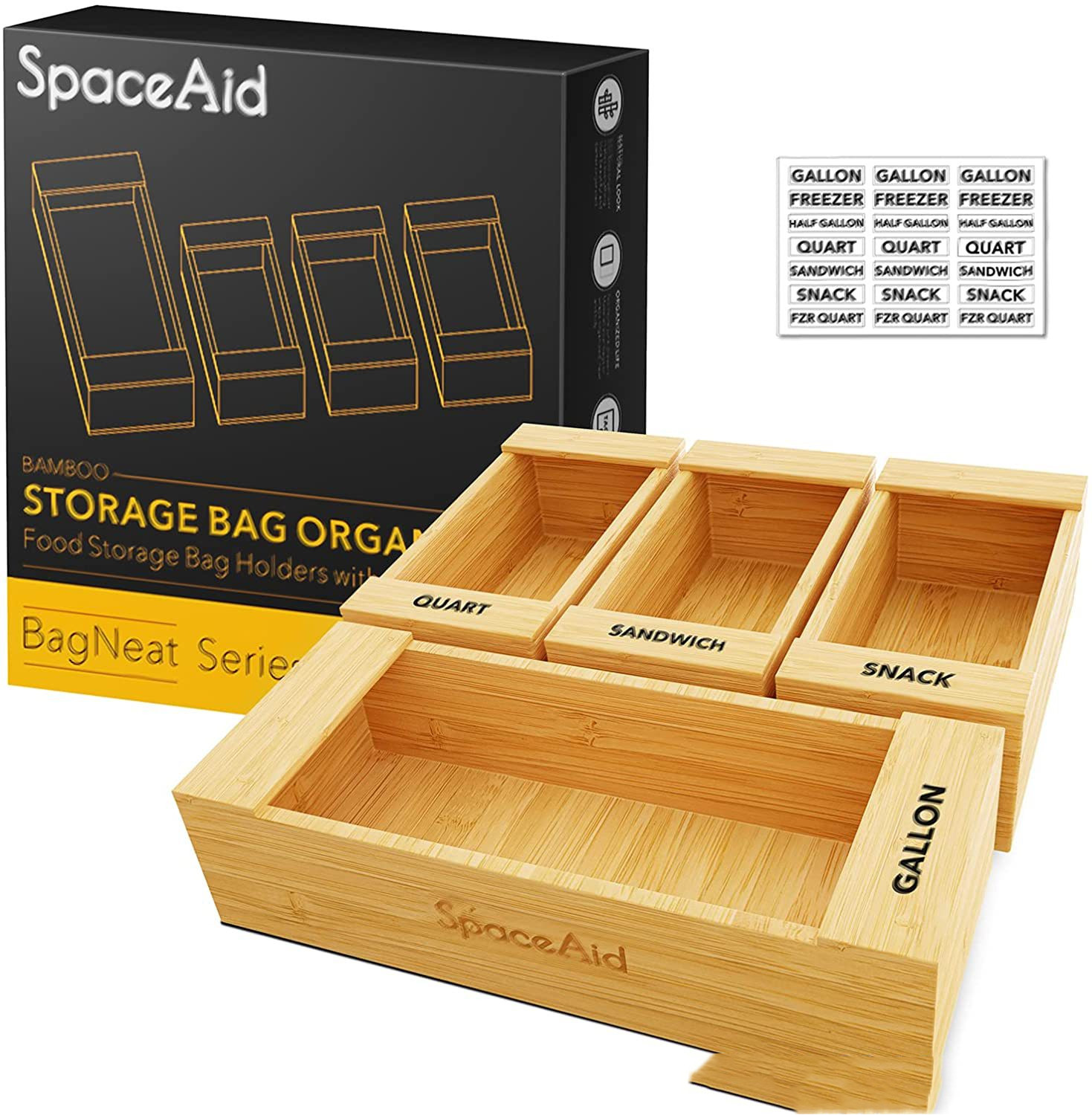 Bamboo Drawer Organizer, 30.5 cm$53.99View details
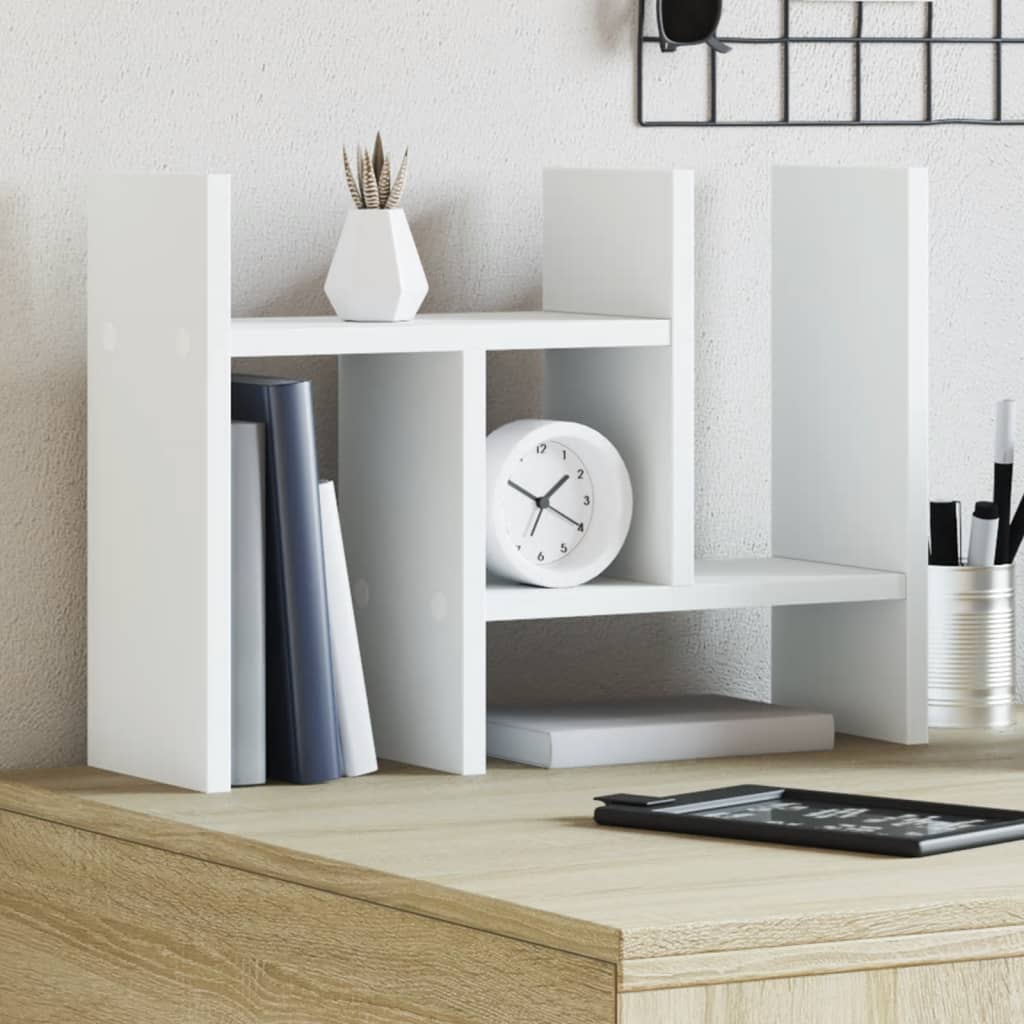 Desk Organizer Shelf, 20 kg$67.99View details
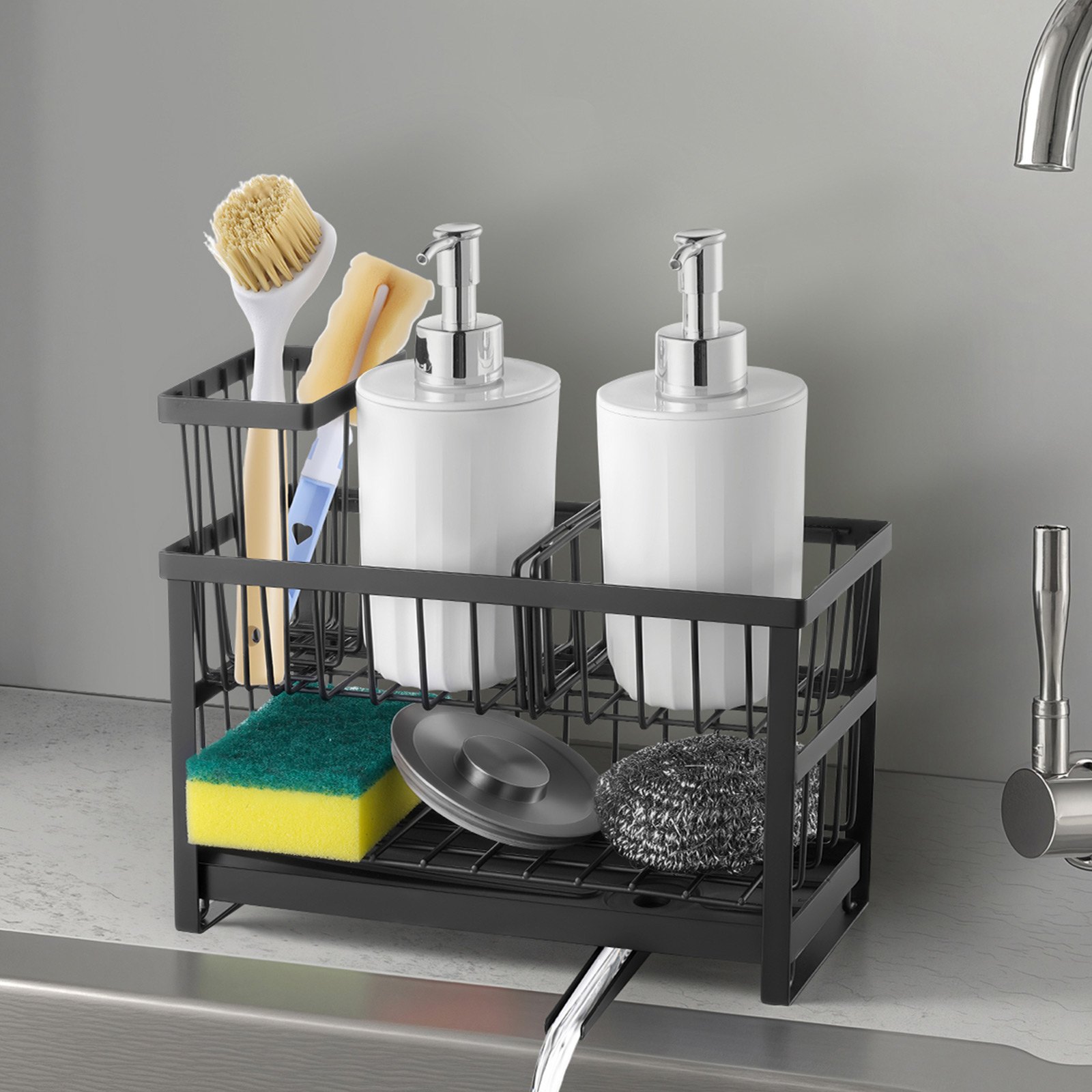 Kitchen Sink Caddy, Slotted Base$65.99View details
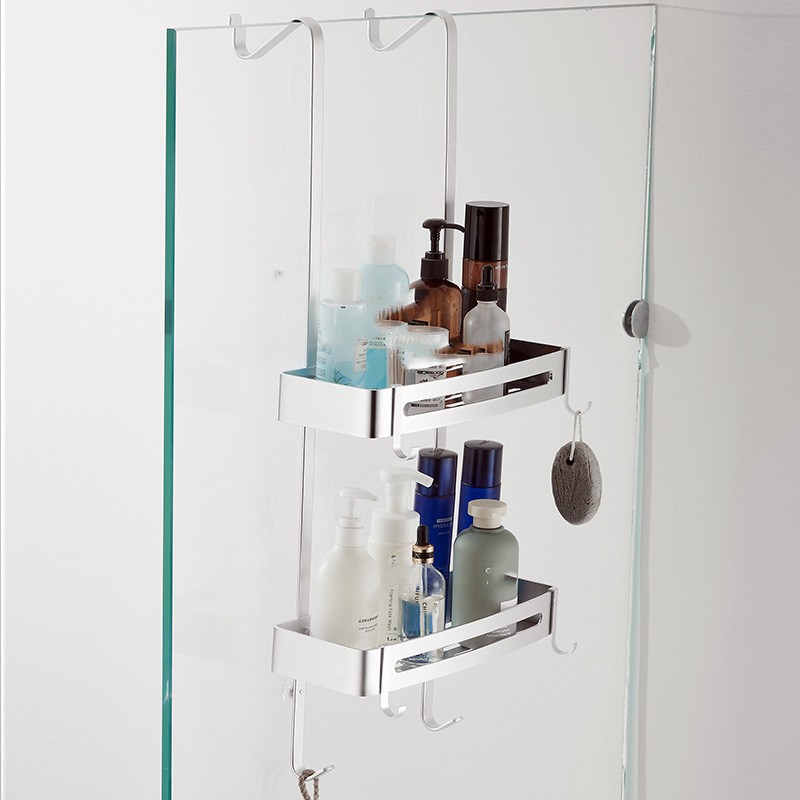 Hanging Shower Caddy, Aluminium$63.99View details
Prices are read from our own listings on 30 October 2026. Dimensions, weights, materials and load ratings are the manufacturer’s published figures; every usable-volume figure marked est. assumes 10 mm walls and base on the bamboo box and 15 mm panels on the shelf, and should be read as an estimate rather than a measurement. The evaporation rate (0.5 kg per square metre per hour) and the composite-board stiffness (about 2.5 GPa) are order-of-magnitude figures used to size the problem, not laboratory values for these two products.
Compare on Amazon — this category usually has more brands, sizes and price points there.
Check current prices on Amazon →
As an Amazon Associate we earn from qualifying purchases. The price you pay is unchanged. Disclosure
[…] — cost per usable litre, and why two boxes with the same footprint hold different amounts — the capacity audit of four organizers works through the same products from the other […]
[…] It has no pocket, no lip and no place to put the phone. If the goal is somewhere to put things, a rigid console-side organizer is the right product and this one is the wrong […]