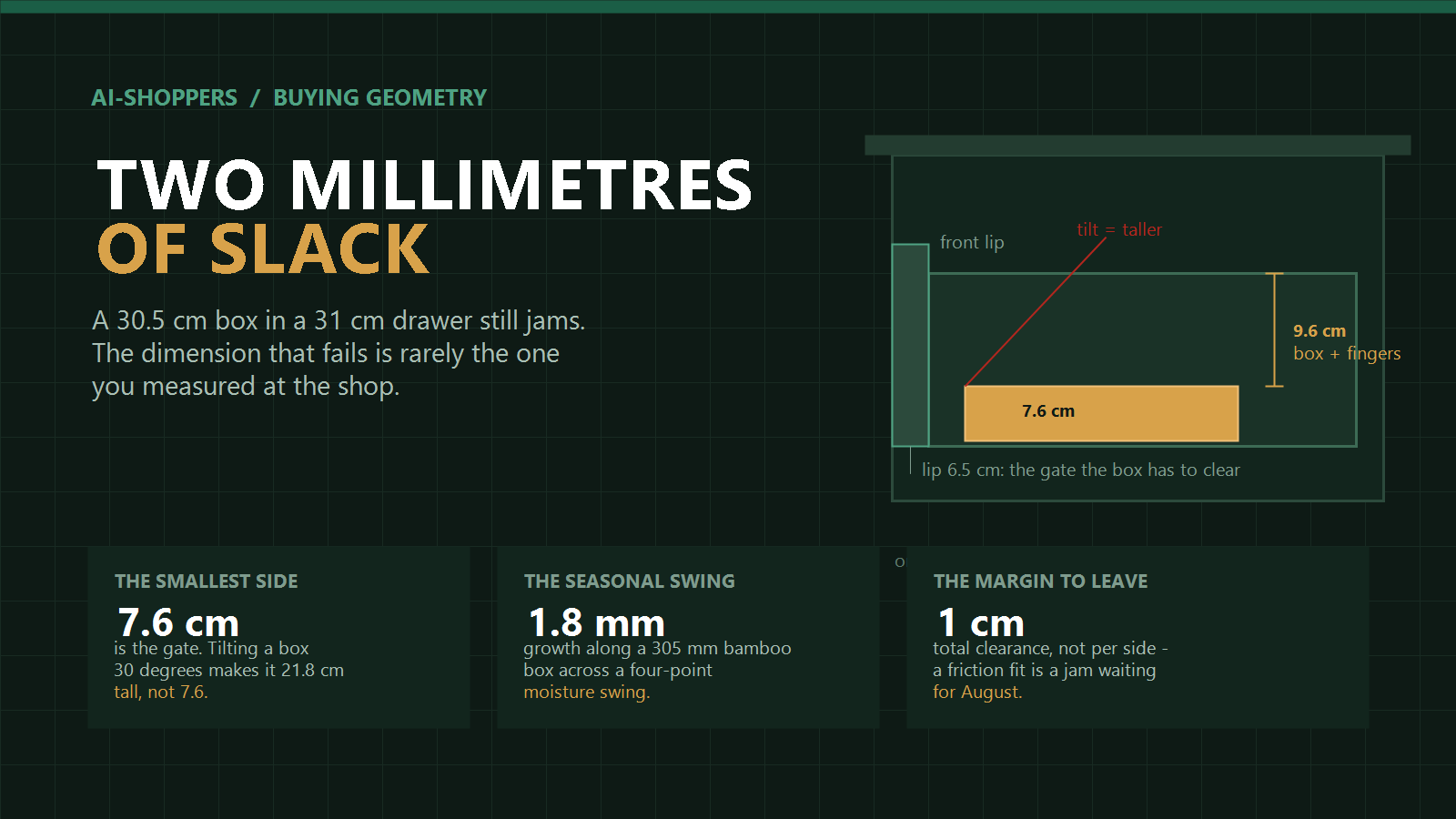
The bamboo box on our shelf is 30.5 cm long, 10.2 cm wide and 7.6 cm tall. Nearly every review that goes wrong around a box like this one fails for the same reason, and it is not the box. Someone measured the inside of the drawer, found 31 cm against 30.5, ordered, loaded it, and discovered on the first pull that the dimension they checked was the only one that was never going to bind. Storage does not fail on one measurement. It fails on the fourth.
1. The first gate is a slot, and a rigid box cannot be tilted through it
Drawers are not open trays. A typical kitchen drawer has a front panel that stands a few centimetres above the drawer’s own sides, because the panel has to cover the cabinet opening when the drawer is closed. That overlap is the lip, and on the inside face of the drawer it is a slot you have to get the box past. People measure the drawer’s internal width — the easy number, the one printed on the tape — and never measure the height of that inside face at the front.
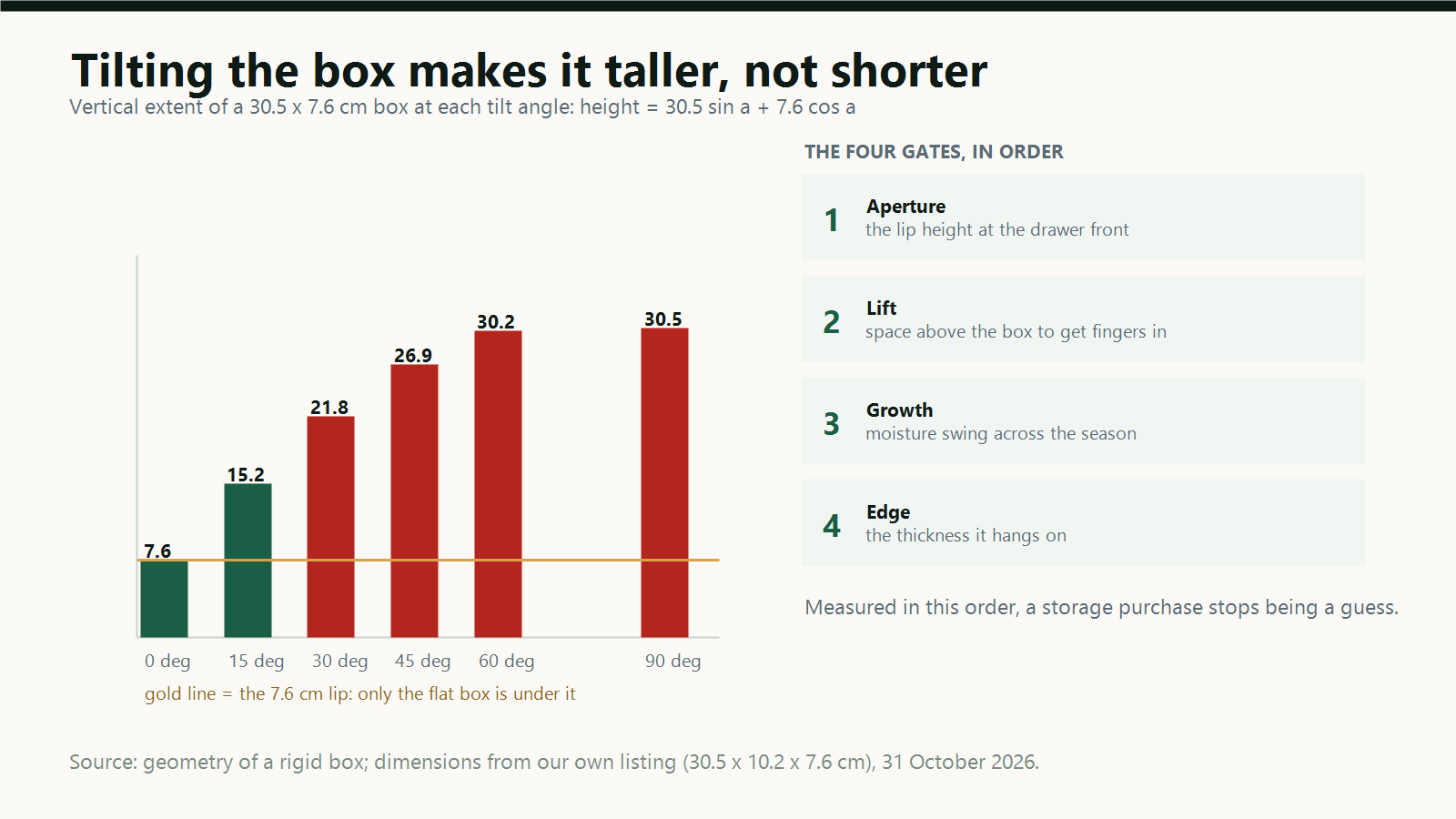
The intuitive fix is to tilt the box. It does not work, and the reason is one line of geometry. When a box of length L and height H is rotated by an angle θ, the vertical space it occupies is L·sin θ + H·cos θ. That expression has a maximum in the middle of its range and its smallest value at the ends, which means the smallest vertical extent a rigid box can present is its own smaller side. Tilting never buys clearance. It spends it.
| Tilt angle | Vertical extent of the 30.5 × 7.6 cm box | Verdict against a 6.5 cm lip |
|---|---|---|
| 0° (flat) | 7.6 cm | Does not clear. The box is 1.1 cm too tall. |
| 15° | 15.2 cm | Twice as tall as flat. |
| 30° | 21.8 cm | Three times as tall as flat. |
| 45° | 26.9 cm | Worse again. |
| 60° | 30.2 cm | Now the box is nearly at its full length vertically. |
| 90° | 30.5 cm | The full length. This is the worst case, not the trick. |
So the only question that matters at the front of the drawer is whether the lip is shorter than 7.6 cm. If it is, the box cannot enter from the front at all, no matter how you hold it, and the way in is from above: pull the drawer out, lower the box in, and accept that you will never be able to lift it back out past that same lip without pulling the drawer clear of the cabinet.
2. The second gate is the lift, not the slide
A drawer that slides is not a drawer you can use. To take a full box out you need to get your fingers down both long sides, which costs about 2 cm of vertical clearance above the box, and you need the box to rise without meeting whatever is above the drawer. Against a 7.6 cm box that is 9.6 cm of clear height between the drawer floor and the nearest obstruction — usually the counter overhang, the next drawer, or the underside of a wall cabinet if the drawer sits under one.
This is where the arithmetic gets uncomfortable for shallow drawers. A drawer with a 9.5 cm internal height and a 7.6 cm box leaves 1.9 cm, which is 1 mm short of the finger gap. The box will go in and it will come out — tilted, pinched, and only after you have taken the contents out first. That is the difference between storage you use and storage you avoid, and it is invisible on a product listing, because the listing quotes the box and not the drawer.
The second half of this gate is the drawer’s travel. Kitchen drawers are commonly 40–60 cm wide, and the box is 30.5 cm long, so a 40 cm drawer leaves 9.5 cm of slack — enough to slide, not enough to lift one end while the other stays under the lip. A drawer that only pulls out to 80 percent of its depth, which is common in a corner run where a cabinet or an appliance blocks the front, turns that 9.5 cm into almost nothing.
3. The third gate is the material, and it moves after you install it
Every wood product in a kitchen changes size with the seasons, and bamboo is a wood product in the way that matters here: it is a bundle of fibres that swell across the grain when the air is damp and shrink when it is dry. Published movement coefficients for wood put the change at roughly 0.1–0.2 percent per percentage point of moisture content along the grain, and 0.25–0.35 percent across it. Across a normal kitchen year — a drawer near a dishwasher or a sink can swing four moisture points between a wet January and a dry August — those coefficients do real arithmetic:
- Along the 305 mm length: 0.15 percent per point × 4 points = 0.6 percent, or 1.8 mm.
- Across the 102 mm width: 0.3 percent per point × 4 points = 1.2 percent, or 1.2 mm.
Two millimetres sounds like nothing, and against the 5 mm of slack in a 31 cm drawer it is nothing. Against a box pushed into a drawer with 1 mm spare on each side it is the whole margin, twice over. This is the mechanism behind the most common seasonal complaint in kitchen storage: a box that slid in easily in spring and has to be levered out in July, or the reverse in a dry flat with the heating on. It also explains why a friction fit feels clever in the shop and turns into a jam at home — the fit was measured on one day of the material’s life.
The practical rule is the one our own listing states, and it is worth stating as a rule rather than a suggestion: leave at least a centimetre of total clearance, not a centimetre per side. A centimetre of total clearance survives the seasonal swing with room to spare; half a centimetre does not. And do not fill the gap with felt pads or a rubber liner without counting them, because 3 mm of pad on each side is 6 mm of the clearance you just budgeted.
4. The fourth gate is the edge you hang it from
Not every storage decision is a drawer. Hanging bathroom caddies transfer their load to the top edge of a shower screen or a door frame, and that edge is a dimension almost nobody measures. A hook shaped for 6 mm glass will not sit safely on a 20 mm door frame; it will rock, and a rocking hook walks itself off the edge the first time someone grabs a bottle. A hook built for a thick frame will rattle on thin glass for the same reason in reverse.
The load side is easy to underestimate. A litre of shampoo and a litre of body wash is 2 kg of product, carried on a 6 mm edge of tempered glass through a hook with a few square centimetres of contact. That is not a structural problem for the glass — tempered glass is strong in compression along its face — but it is a problem for the hook’s grip, and it is why the sensible loading order for a two-tier caddy is heavy bottles on the lower tier, where the load hangs below the pivot rather than above it.
5. The route: five measurements, in this order
Measured in the wrong order, each number seems to cancel the last. Measured in this order, each one eliminates a category of product before you spend anything.
- The lip. Inside the drawer, at the front face, from the drawer floor to the top of the inside front. If that number is under the box’s height, the box only goes in from above.
- The aperture, front and back. Width and depth at the front opening and again at the back wall. Cabinets taper, and a drawer that is 31 cm at the front is often 30.4 cm at the back because of the runner housing.
- The lift zone. With the drawer fully open, the clear vertical distance from the drawer floor to whatever is above it. Subtract the box height. What is left should be more than 2 cm.
- The seasonal margin. Take the clearance you calculated in step 2 and subtract the movement from section 3 — about 2 mm in each direction for a 30 cm bamboo box. What remains is your real clearance, and it should still be around a centimetre.
- The support. For anything that hangs rather than sits, the thickness of the edge, measured with a ruler rather than estimated by eye, plus the weight of what will hang on it.
6. When it is already two millimetres too tight
The box is bought, the drawer is tight, and the returns window is open. There are three fixes worth trying before the parcel goes back, in order of how much they cost you. Take out the drawer liner: a rubber mat is 2–3 mm thick and it is the cheapest millimetre in the kitchen. Move the box to a different drawer and use the tight one for something soft. Or accept the box as a friction fit and stop loading the ends, which reduces the pressure on the sides but does not fix the seasonal swing — that one comes back every year, which is why the liner is the better answer. What does not work is sanding a laminated bamboo box to fit: the laminate is thin, and a sanded edge drinks water and swells more than the surface it replaced.
For a wider view of how storage is priced once it fits — cost per usable litre, and why two boxes with the same footprint hold different amounts — the capacity audit of four organizers works through the same products from the other direction.
Frequently asked questions
How much clearance should a drawer organizer have?
About a centimetre in total, not a centimetre on each side. A 10.2 cm wide box wants a drawer that is at least 11.2 cm wide inside. That margin absorbs the 1–2 mm of seasonal movement in a wood or bamboo box and leaves enough gap that the box lifts out without levering.
Can I tilt a box to get it past a low drawer front?
No. Tilting a rigid box increases the vertical space it occupies, always. The 30.5 × 7.6 cm box in this guide is 7.6 cm tall flat and 21.8 cm tall at 30 degrees. If the inside front of the drawer is shorter than the box’s height, the box has to go in from above, with the drawer open.
Why does my bamboo box jam only in summer?
Because it grew. Bamboo and wood swell across the grain as humidity rises, at roughly 0.25–0.35 percent per point of moisture content, which is about 1.2 mm across a 10.2 cm width over a four-point swing. A box fitted with 1 mm of slack per side has no margin left by July.
Will a hanging shower caddy fit my screen?
Only if the hook matches the edge thickness. Hooks sized for 6 mm glass do not sit safely on a 20 mm door frame, and hooks built for a thick frame rattle on thin glass. Measure the edge with a ruler, then check the listing’s stated range rather than assuming.
Is a 15.5 cm deep shelf too deep for a desk?
It depends on the desk, not the shelf. A 15.5 cm deep shelf suits a 60 cm desk with room for a keyboard in front; on a 45 cm desk it eats a third of the working depth. Measure the desk’s depth and leave at least 25 cm in front of the shelf for a keyboard and your hands.
Gear referenced in this guide
Three more items from our own listings, priced on 31 October 2026. None of them is necessary for the measurements above: a tape measure and a ruler will do the whole route, and the section on the lip applies to any box you already own. They are here because each one is an example of a different gate — the counter item governed by the splash line, the shelf governed by desk depth, the hanging caddy governed by edge thickness.
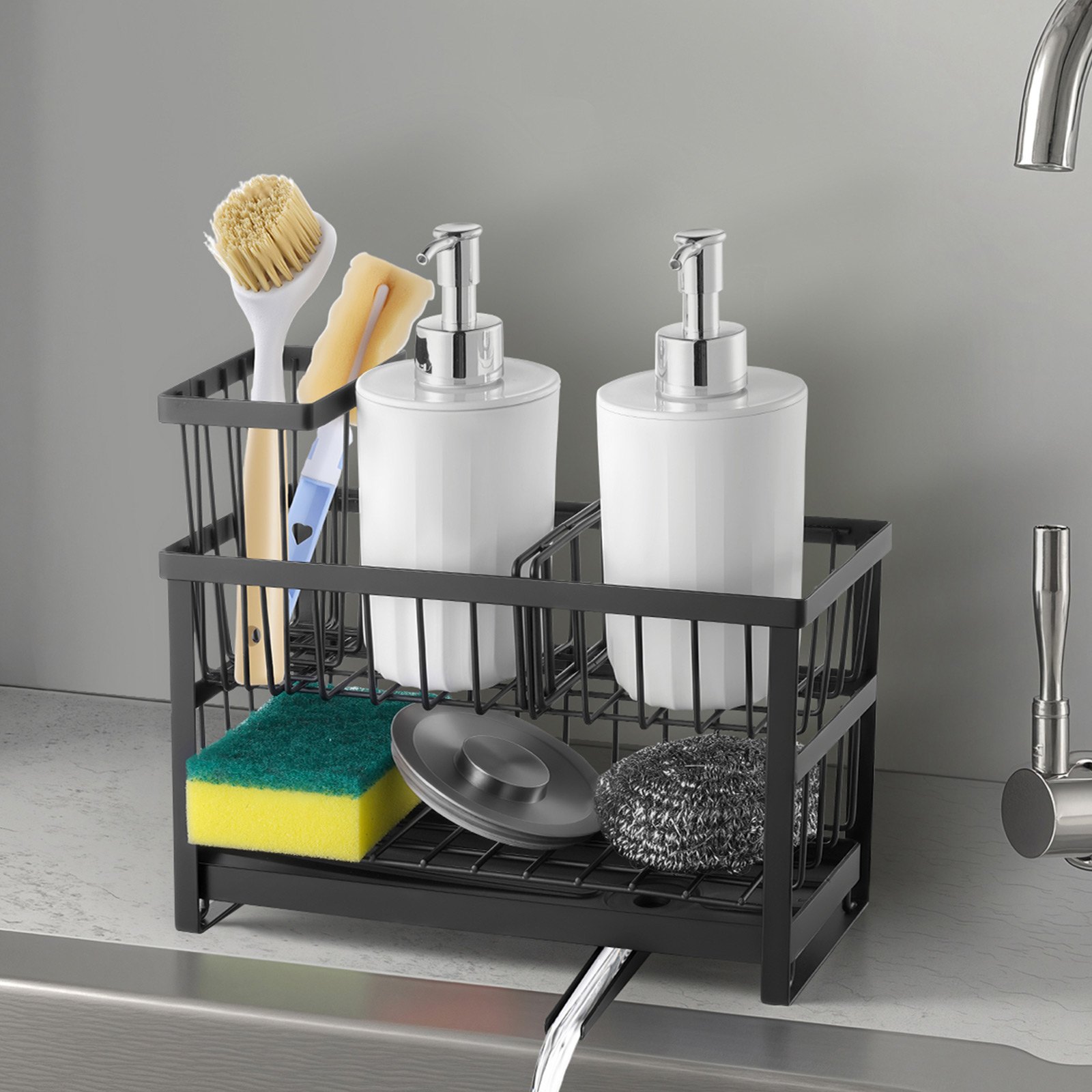 Kitchen Sink Caddy$65.99View details
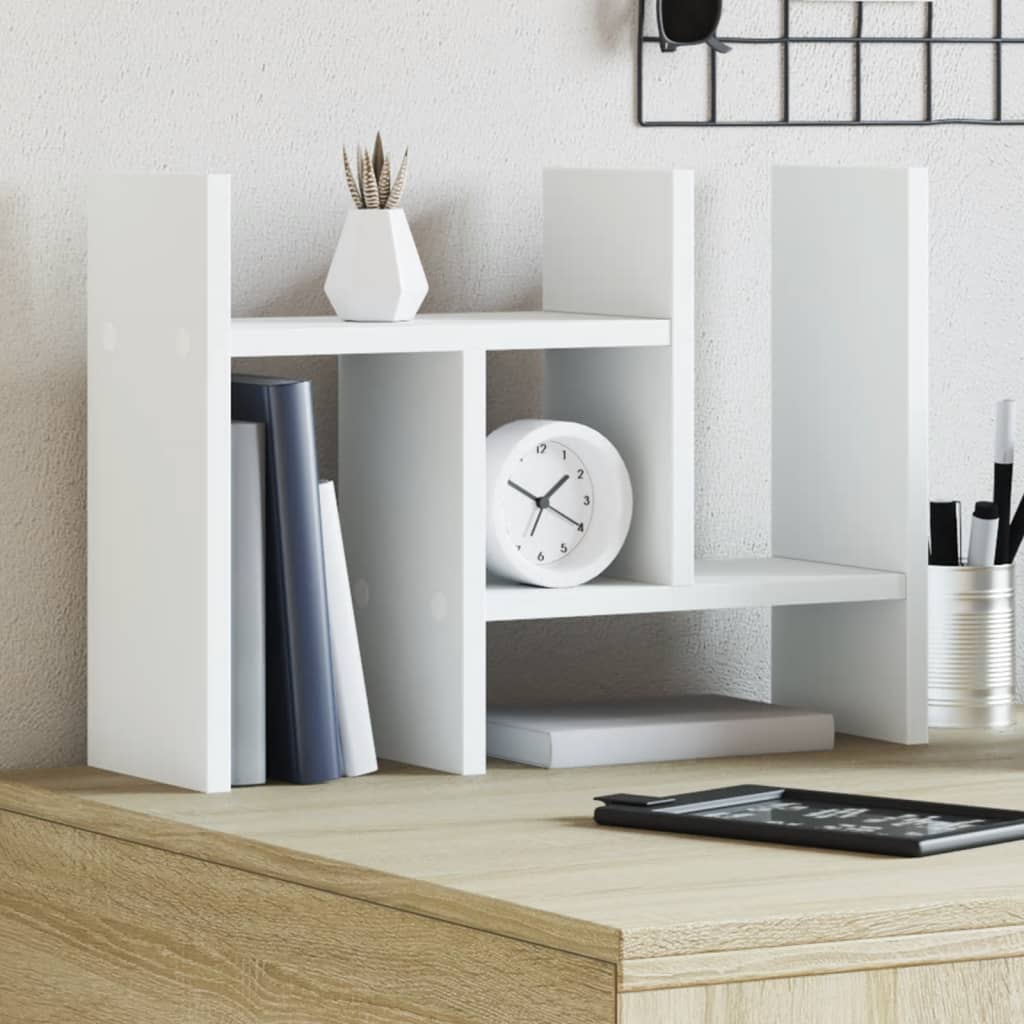 Desk Organizer Shelf$67.99View details
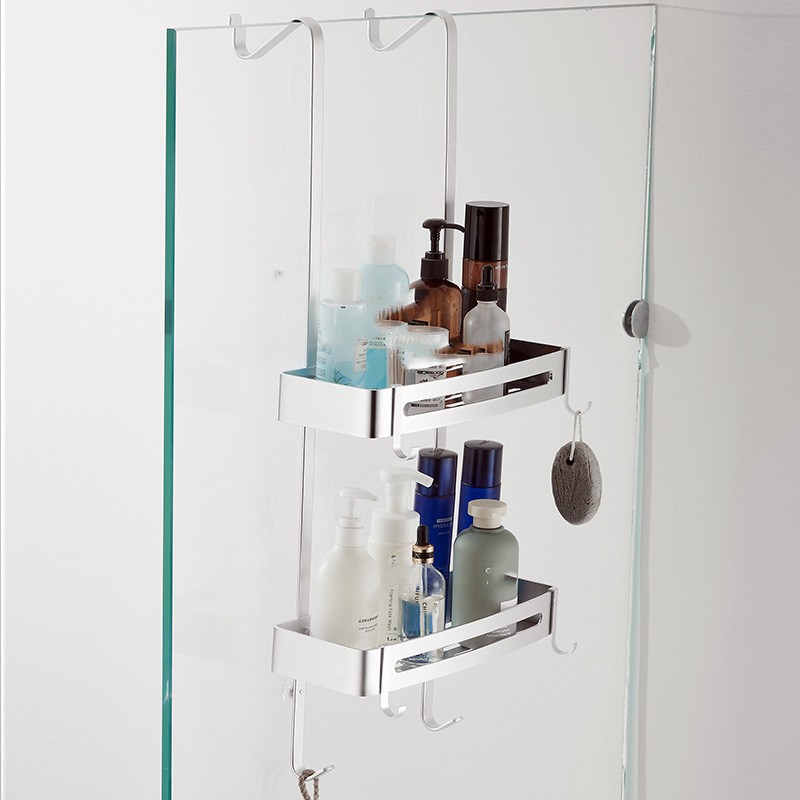 Aluminium Shower Caddy$63.99View details
The dimensions, prices and warehouse terms in this article — the box at 30.5 × 10.2 × 7.6 cm and $53.99, the caddy at $65.99 and about 800 g loaded, the shelf at 34.5 × 15.5 × 35.5 cm and $67.99 with a 20 kg rating, the shower caddy at $63.99 with its 6 mm and 20 mm edge note, the one-centimetre clearance rule and the 30–40 cm splash reach — are read from our own product listings on 31 October 2026. The moisture-movement figures are the standard published coefficients for wood and bamboo (about 0.1–0.2 percent per point along the grain and 0.25–0.35 percent across it), applied to these dimensions; the four-point moisture swing is a working assumption for a kitchen drawer near a sink or dishwasher, not a measurement, so substitute your own climate if it is drier. The tilt figures and the 9.6 cm lift height are arithmetic on the box’s dimensions — sin and cos of the angle, plus 2 cm of finger clearance — and every one of them can be re-run with a calculator and your own drawer.
Compare on Amazon — this category usually has more brands, sizes and price points there.
Check current prices on Amazon →
As an Amazon Associate we earn from qualifying purchases. The price you pay is unchanged. Disclosure
[…] reading: why a container’s inside dimensions beat its stated size, in two millimetres of slack; how volume per dollar exposes a bad buy, in $35 a litre or $5.23; why one attempt at a craft kit […]